A 17-Year-Old in a McKenzie Hoodie Just Destroyed the Entire Coworking Industry With One Question.

LinkedIn Show Notes #37 from the Coworking Values Podcast Bullpen.
🎙️ Listen to these stories and hundreds of others on the
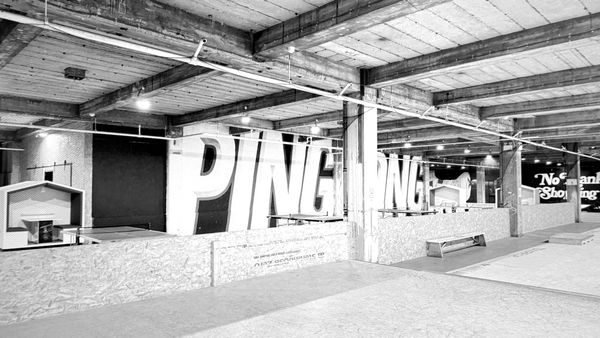
Coworking Values Podcast.In 2019, a 17-year-old in a McKenzie hoodie at
Mainyard Studiosin Hackney shouted at me from the back of a workshop:
"What the fuck is coworking? Why don't you just call it work?"
He was right.
The trans inclusion consultant in London, the Armenian revolutionary in Yerevan, and the cooperative director in Finsbury Park all stopped playing word games and started building actual infrastructure.
Turns out McKenzie Lad understood something the venture capital crowd still doesn't.
This week from the Coworking Values Podcast Bullpen:
We've been tracking why some spaces feel essential to their communities while others feel like expensive libraries with good WiFi.
Turns out it's not about amenities or scale.
It's about whether you're building infrastructure or extracting money.
We found three infrastructure builders across two continents. Here's what they built.
The Assignment
Tash Koster-Thomasruns equity and inclusion workshops for organisations across London, including companies like
WE CREATE SPACE.
She knows something most diversity consultants don't: sometimes safety requires exclusion.
Sara AnjargolianImpact Hub Yerevanwith glass walls in post-Soviet Armenia.
Then watched those walls become the rehearsal space for a peaceful revolution.
Natasha NatarajanSPACE4in Finsbury Park as co-director of Outlandish Cooperative.
She's delivering £2.5 million in social value to Islington Council while most coworking chains extract value from communities.
None of them took venture capital.
None of them scaled globally.
None of them was optimised for "premium amenities."
Instead, they built infrastructure.
The Injustice We're Tracking
Here's the tribal identity driving coworking's yuppification:
"People like us deserve premium amenities."
Scale fast, attract enterprise clients, monetise every square foot, exit to a bigger player.
Chase the premium market when the middle class gets squeezed.
Turn community spaces into luxury products for Young Urban Professionals whilst pricing out the people who actually need it.
Seth Godin talks about how "people like us do things like this" drives decisions.
The corporate coworking story performs this tribal exclusion:
"People like us optimise personal brands and choose from premium menus."
This isn't just market competition.
It's investors who extract profit, pricing out the very diversity that makes coworking valuable in the first place.
I know coworking brands we all worship on LinkedIn whose main investors are also investors in battle tech, bankrolling companies like Elbit Systems.
When profit becomes the only metric, community becomes collateral damage.
Like the space my mate ran in in Old Street, owned by overseas investors, that shut without notice.
A lawyer walked in: "We need to close the building now. The company has decided to stop operating as it's no longer profitable."
They fired a missile from far away and walked away.
The tribal message becomes clear:
"People like us can afford to disrupt McKenzie Lad's day for better quarterly returns."
The market won't fix this. The state won't fix this. People do.
Tash Koster-Thomas: The Infrastructure of Safety
Tash spent a decade watching organisations talk about inclusion while systematically excluding the people who most needed safety.
As an equity, diversity, and inclusion consultant, she'd seen the pattern: "We want to be inclusive" followed by policies that chose comfort over safety.
Then came the test.
During a virtual LGBTQ+ workshop with 200 attendees, racist comments started appearing in the chat. Comments she couldn't see until they were displayed publicly on screen.
"I had this real visceral reaction that I couldn't control, and I started to cry," Tash recalls.
"I'm not going to hide my tears right now. I'm not going to apologise for what I share today... So often people sit behind keyboards and write these comments and they don't see the impact of their words. And today I want you to see the impact."
That moment revealed something critical: the difference between performative inclusion and infrastructure.
Real safety infrastructure requires hard choices.
As Tash puts it: "A safe space can't always be a space that everybody comes to, because then by default, it stops being a safe space for the core demographic that you're trying to defend and support."
This isn't about being "nice to everyone."
It's about building systems that protect people when legal systems create fear and instability.
The infrastructure she builds is simple and specific: gender-neutral bathrooms or explicit signage saying "you have the freedom to use whatever bathroom feels right for you."
Consistent, non-performative allyship.
Clear processes for handling conflict in real time.
When UK legal rulings create confusion about trans rights, coworking spaces become essential civic infrastructure—places where people can exist safely while everything else shifts around them.
Sara Anjargolian: The Infrastructure of Democracy
Sara was an American lawyer who could've stayed comfortable in Los Angeles.
Instead, she moved to post-Soviet Armenia because she saw civic activism beginning and "absolutely wanted to be part of it."
In 2015, they opened Impact Hub Yerevan with walls of glass.
This wasn't an aesthetic choice. It was political infrastructure.
"We built it all with glass so everyone could see what everyone else was doing," Sara explains.
"We were turning that idea upside down and pushing forth that collaboration is actually power and sharing is power."
In a country where power came from secrecy, transparency was revolution.
The organic collaborations were proof-of-concept: an architect, a winemaker, and a crowdfunding platform working together to "empower our grape farmers... to actually build tasting rooms on their land" instead of just selling grapes.
Then came the real test: the 2018 Velvet Revolution.
"Many of the people who were on the streets were our members, myself included," Sara recalls.
The values they'd been practising inside those glass walls—transparency, collaboration, shared power—"started to spill out onto the streets."
The revolution was peaceful. Not one person died.
"All of a sudden, the country outside of the walls of Impact Hub started to espouse the same values as what we had been talking about inside the walls of our Impact Hub."
This is infrastructure working at scale.
The space wasn't just hosting democracy; it was rehearsing democracy.
When war came in 2020, that infrastructure adapted instantly:
"We turned from a coworking space... into almost a humanitarian centre, trying to help... our boys on the front lines... and all of the people who were displaced from their homes."
You can't plan for every crisis.
But you can build infrastructure that adapts to whatever comes.
Natasha Natarajan: The Infrastructure of Economic Justice
Natasha came to Space4 in Finsbury Park three years ago to research cooperatives for her master's thesis.
Maddy Neghabianco-run Outlandish Cooperative, both the tech agency and the physical space.
Space4 is different: they don't pay rent to Islington Council. Instead, they pay in social value.
Islington Council's affordable workspaces. We got that deal by having an organisation called Founders & Coders as one of our anchor tenants."
The result: Natasha and Maddy have delivered £2.5 million in social value so far.
Dan SoferFounders and Coders—free coding bootcamps that turn people into developers. It's one of the longest-running, most important stories in community-driven tech education. And one of my favourite London coworking examples to share.
Dan's graduates go on to create cooperatives like
Gaza Sky GeeksYalla Cooperative—proving that peer-led learning beats any curriculum when it comes to economic infrastructure.
Corporate coworking will never understand this:
The most valuable stuff doesn't fit in the council's spreadsheets.
"It's definitely tricky to track all these socially valuable interactions that happen in our space," Natasha admits.
She's literally "sitting at our desk and we see two people meeting in a meeting room, and we're like, Oh, what's that about? That is social value."
Every Wednesday, they run their legendary community lunch.
Someone in the space organises it. They buy from local businesses. Freelancers find clients.
"It's a really good way to help businesses network with each other in a really nice, friendly, informal way."
When Natasha walks down Finsbury Park, "people wave at me so much that I feel like a minor celebrity... because I just know loads of people through using their businesses."
That's not in the social value framework.
That's worth more than any corporate membership fee.
The space also runs Finsbury Park Job Club every Friday—run by
Williamz Omopewith "open doors, no signups required," helping people with everything from CV writing to using AI tools to draft letters to landlords about mould.
Cooperative ownership changes everything:
"There's two of us women running the space. I think that's really special, actually, because we have complete independence and control over what we do here."
Two women of colour running economic infrastructure in North London, proving that ownership changes everything.
The Pattern
McKenzie Lad was right.
Tash Koster-Thomasdoesn't talk about "inclusion frameworks." She makes sure trans people can use the bathroom safely.
Sara Anjargoliandidn't build a "collaborative workspace." She built a place where democracy could be practiced before it was needed in the streets.
Natasha Natarajandoesn't run "community events." She runs Job Club every Friday because people need work.
They answered McKenzie Lad's question by stopping the jargon and starting the work.
The corporate story says: scale fast, monetise everything, optimise for premium amenities.
The infrastructure story says: show up for your neighbourhood when official systems fail.
Your coworking space is already this infrastructure. The question isn't whether to do this work. The question is whether you're naming it.
How to Answer McKenzie Lad in Your Space
There's a 25-minute film called
ACTionismthat does exactly what Tash, Sara, and Natasha do.
It cuts through the jargon and gets to the work. It follows 16-year-old
Ellie Meredithfrom climate anxiety to collective action.
No theory. No frameworks. Just: "Here's what happens when people sit together, talk honestly, and leave with next steps."
More and more coworking spaces are hosting ACTionism screenings.
It's the perfect McKenzie Lad test—25 minutes of film plus conversation that actually works.
Today (Wednesday 3-7PM) at Urban MBA near Old Street:
Jon Alexanderis screening it with the current cohort. Food by
Urban MBAgraduates who started African and Caribbean businesses!
This is what neighbourhood workspace looks like when it supports everyone, not just the laptop class.
At least ten coworking spaces are already hosting screenings.
They've figured out what we keep trying to complicate:
- Show film.
- Start a conversation.
- Stop pretending community happens by magic.
After 25 minutes, you'll know whether this works in your space.
You'll have felt what happens when people realise they're not alone with their concerns.
Anyone can host a screening—a WeWork in Moorgate or a co-op in Ilford for Grime artists.
Request your ACTionism screening here.This is the citizen response to consumer coworking.
This is how you answer McKenzie Lad.
Who This Is For
If McKenzie Lad would look at your space and ask, "Why don't you just call it work?" this is for you.
If you're tired of performing "people like us deserve premium amenities" when specificity is your strength, this is for you.
Your tribe chooses: "People like me host screenings and build tables for others."
You don't need venture capital to pass the McKenzie Lad test. Start with who needs you most. Measure success by whether they'd wave at you in the street.
You're not failing because you haven't yuppified. You're building civic infrastructure.
If that's your tribe, McKenzie Lad was right—you don't need permission to just call it work.
Fearless Front-Facers Recognition
Urban MBAhosting ACTionism tonight with Jon Alexander.
Shout-out to the ten+ spaces already hosting screenings across London. Shout-out to everyone choosing "just call it work" over jargon.
You're answering McKenzie Lad's question with action, not explanations.
The movement needs your story.
We're documenting next from the Bullpen
More ACTionism screenings. More McKenzie Lad moments. More infrastructure builders choosing work over jargon.
If you're building civic infrastructure disguised as a coworking space, we want to hear about it. Even after 300+
Coworking Values Podcast'swe're still meeting new stories every week!
Do The Work
ACTionismscreening
Host 25-minute film + conversation.
Request your ACTionism screening here.Ten spaces are already hosting. Don't be the one who waits!
2️⃣ McKenzie Lad Test your space
Could a 17-year-old in a hoodie understand what you do without jargon? If not, start there.
3️⃣ Start thinking about European Coworking Day 2026
One of the best ways on earth is to join with other like-minded coworking community builders in your local area and collaborate on
European Coworking Day 2026.Marko OrelHelga Moreno,Jeannine van der Linden
On November 27th, online, they discuss the development of coworking support for Ukraine since the Russian invasion on February 24, 2022.
RSVP here5️⃣ Join the London Coworking Assembly, February 2026,
Unreasonable Connection Going Live!150 coworking community builders choosing "build tables for others" over "optimise personal brands."
It's not a 'coworking super club', it's 'find the others'. The alterative already exisits.
Join the co-creation list.
Connect with today's infrastructure builders:
Dan SoferSara AnjargolianNatasha NatarajanMaddy NeghabianWilliamz OmopeTash Koster-Thomas🎙️ Listen to their stories and hundreds of others on the
Coworking Values Podcast.Thank you for your time and attention today!
Written by
What's Next?
It's Not the Brand Partnerships. So What Actually Keeps Your Members Coming Back?
LinkedIn Show Notes #33 from the Coworking Values Podcast Bullpen. 🎙️ Listen to these stories and hundreds of others on the Coworking Values Podcast. Refugees. Social capital. Citizens. Three answers to the same question—people stay when they're citizens, not consumers. At yesterday's Unreasonable Connection , we asked: "What keeps your members coming back when they could work from home for free?" Most answers were real, human, and straightforward. No one said the flying trapeze, ice ba
Democracy Won't Be Born in Westminster. It's Being Built in Back Streets and Coworking Spaces.
LinkedIn Show Notes #39 from the Coworking Values Podcast Bullpen. 🎙️Listen to these stories and hundreds of others on the Coworking Values Podcast. Three people. Two continents. One pattern: They stopped waiting for the state to fix what's broken and started building the infrastructure themselves. This week from the Coworking Values Podcast Bullpen: We've been tracking a question that keeps showing up in different forms. What happens when the systems we rely on—democracy, childcare, the
At 30,000 Feet the Rules Work. At Ground Level They Don't.
LinkedIn Show Notes #36 from the Coworking Values Podcast Bullpen. 🎙️ Listen to these stories and hundreds of others on the Coworking Values Podcast At 30,000 feet, physics works. Checklists save lives. You follow the rules, you survive.At ground level, the checklists are rigged depending on who you are. This week from the Coworking Values Podcast Bullpen: We've been tracking how three people landed in broken human systems and built their own cockpits. Where marginalised people write the r
They Built Infrastructure for the Energy Money Can't Capture
LinkedIn Show Notes #35 from the Coworking Values Podcast Bullpen. 🎙️ Listen to these stories and hundreds of others on the Coworking Values Podcast. Three community builders. Three continents. One pattern: They stopped selling memberships and started building movements that run on relationships, not transactions. This week from the Coworking Values Podcast Bullpen: We've been tracking how coworking spaces can become laboratories for post-capitalist organising. Not in theory—in practice. W
They Host Church, Stop Brain Drain, and Won't Put Their Film on Netflix—And They're Winning
LinkedIn Show Notes #34 from the Coworking Values Podcast Bullpen. 🎙️ Listen to these stories and hundreds of others on the Coworking Values Podcast. Three different community builders. Two continents. One pattern: They stopped optimising for scale and started building for depth. And the people who needed them showed up. This week from the Coworking Values Podcast Bullpen: We've been tracking why some spaces feel like communities and others feel like expensive libraries with good Wi-Fi. T
Start With the Building, Miss the Person — It Happened Again This Week
I spent this week watching the same argument break out in different places, with different people, in completely different conversations. None of them planned it. * Caleb Parker published a manifesto for high street coworking. * Suzanne Murdock sent her monthly newsletter from The Hub Newry. * Parisa Wright kept resharing her Hope Hub episode. And * Ann-Marie Kinlock and Anna Chuicharoen finally opened KindHaus in Hackney after three years of hurdles, setbacks, and proving that a space wher
Start Cooking. The Recipe Will Follow.
We're moving everything up a gear. At the last Unreasonable Connection Live in Lewisham, you told us the groups were too random and the curation could be tighter. You were right. 75% of you left with more momentum than you arrived with. The room worked. The curation didn't. The people in the room, the conversations that happen, and how those conversations are curated—it all matters deeply. That's why on May 19th, Tilley Harris and the team from Akou are collaborating with us to facilitate