
Being Together Is the Point

Stop building programmes. Start building the community before you need it.
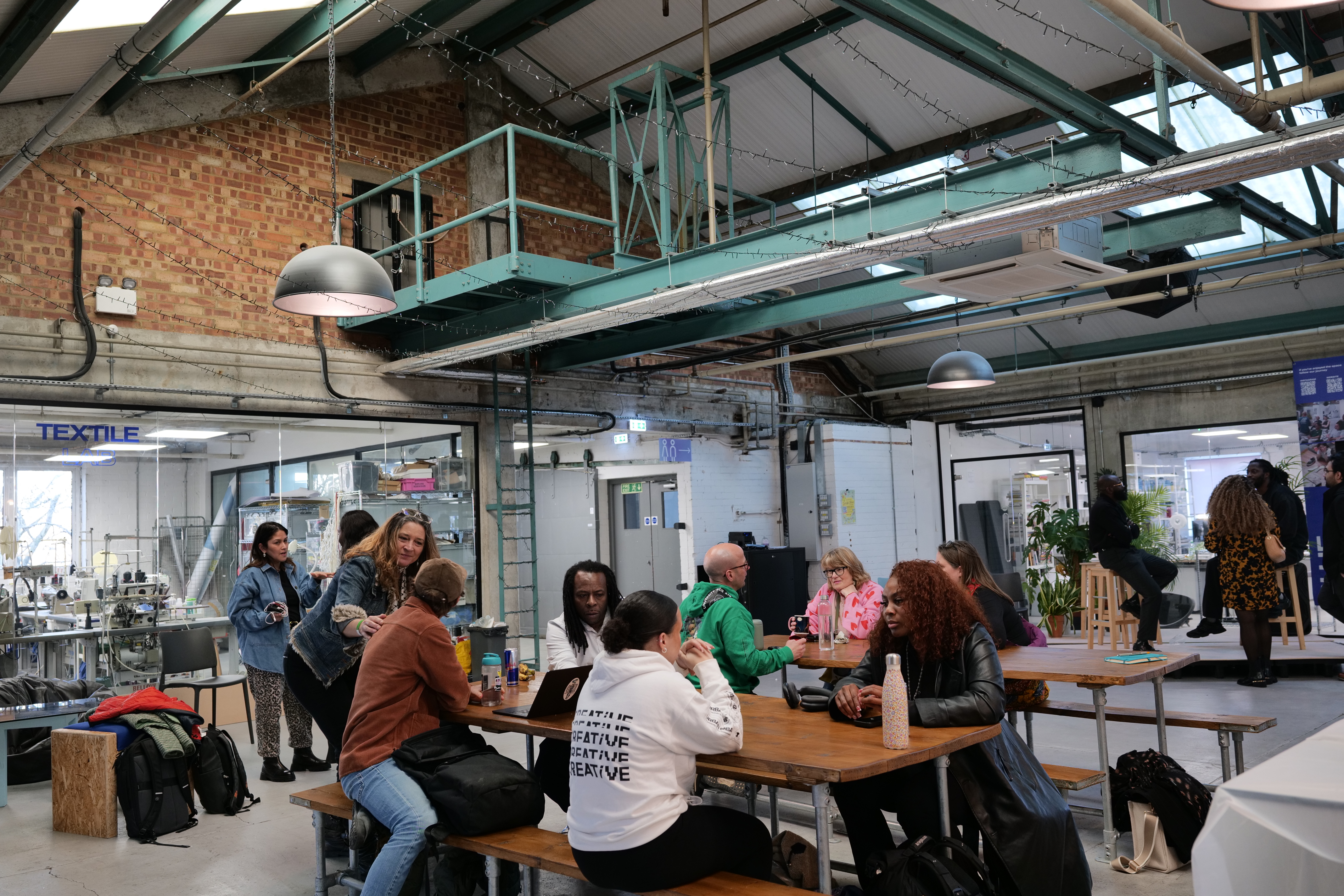
You're building another programme.
Workshop series. Speaker event. Networking night.
Something structured to bring people together.
And you're exhausted before it even starts.
You know how this goes:
-
Weeks of planning
-
Marketing anxiety
-
Worrying about attendance
-
Then on the day, a handful show up
-
The conversation is decent
-
And you wonder if it was worth the effort.
I've met operators from Warsaw to Lisbon who built the building first, hoping people would come.
Some of them I never saw again.
That's why paying attention to people like Mark Masters—who start with the room, not the programme—is the way forward.
Mark will be back on the Coworking Values Podcast next week talking about his Creator Day event. I'll be there in May.
Not because he's got it all figured out.
But because he's one of many people working this out in practice.
Running citizen-led, participatory communities is better for your mental health, attracts the right people, and builds the interdependence that actually sustains a space.
That's what this piece is about—reinforcing your own ability to do this, not positioning anyone as the guru.
Mark put it well:
"The format matters less than the atmosphere around it. The spaces people keep returning to are the ones where conversations continue, friendships form and people feel part of something rather than just attending it."
And then:
"People stick around because of you, not a format."
We keep getting this backwards.
We build the programme when we should be building the room.
People are telling us what they need
After Unreasonable Connection in February, I asked what you wanted.
Many of you filled that in.
Two-thirds of you said you'd come to a live event two to three times a year.
Not once.
Not every month.
Two to three times a year.
You want to gather. But you're selective.
You're not looking for another thing to attend. You're looking for somewhere you actually want to be.
That's why we run Unreasonable Connection online once a month for an hour—small groups, completely pitch-free, for you who run coworking spaces, work in them, or build communities.
A regular touchpoint with people on the same journey as you.
The quarterly in-person meetups came later because you asked for them.
One treats people as a resource to mine
There's a difference between building a business out of a community and building a community out of a business.
I talked about this on Caleb Parker's Friday Five this week.
When I ran a space in Euston with Phillip, connecting with the local neighbourhood was really, really tricky.
I know this struggle isn't abstract for you.
One approach treats people as a resource to mine.
The other creates the conditions for people to find each other—and the business becomes sustainable because people actually want to be part of it.
I've never been good with numbers.
That's why I hang around with Jeannine—lawyer by trade, who runs the De Kamer network of nine coworking spaces across the Netherlands, and directs the European Coworking Assembly.
She handles the economics. I write newsletters.
What I've learned from people good at numbers: you have to get your own shit together before you help other people.
Especially when you're building what you want to call a community.
Sustainability is a coworking value.
It means having money in the till AND not screwing up your environment.
The "Citizen Story" isn't tree-hugging. It's building sustainable projects and businesses that are needed in the marketplace and in the neighbourhood.
The Cluetrain Manifesto pointed this out in 1999:
"All markets are conversations."
In the post-COVID, ICE Agent, cost of living crisis, AI apocalypse we're existing in today, conversations and connections matter more than ever.
You're not the programme. You're the platform.
You're probably already doing this.
You just don't name it.
Hannah Philp from ARC Club came on the Coworking Values Podcast in February.
ARC is a network of calm, hosted spaces for focused solo work across London. They work with residential developers to activate ground-floor spaces.
She said:
"We can be a partner and a platform to brilliant organisations that already exist in the local neighbourhood."
And later:
"We're a platform, and that's key."
ARC doesn't helicopter into a neighborhood as a direct service provider.
They create the conditions for local people and organisations to connect.
The space becomes the infrastructure for that.
That's what you do.
Too many people try to sell "community" when they haven't got anyone in their building yet.
You're not the programme. You're the platform.
Business rates reclassification is forcing you into an impossible position
Your neighbourhood platform is under direct threat right now.
Jane Sartin, Executive Director of FlexSA (the Flexible Space Association), put it plainly:
"The looming deadline for CCAs is causing real alarm, set against the confirmation from the VOA that submitting one could lead to the reassessment of the whole workspace. It's placing workspace operators in an impossible position."
Read the full Property Week article here.
Can you afford to keep the lights on while local authorities figure out whether your neighbourhood space counts as an office or something else entirely?
Every £1 spent in a local business circulates four times in the neighbourhood (Islington Council, 2019).
That's the economic infrastructure business rates reclassification threatens.
The threat is real. And it's happening now.
You don't need anything global. You need neighbourhoods.
European Coworking Day is Wednesday, May 6th, 2026.
The Coworking Values Podcast is teaming up with ACTionism to help you host a screening in your space. More details here.
But here's the thing: you don't even need European. You need to think about your neighbourhood.
No one in your neighbourhood is going to be interested in "Coworking" or "European Coworking Day."
But they are interested in their community and their neighbourhood.
Our guest this week on the Coworking Values Podcast was Matt Golding, who runs "Screw This, Let's Try Something Else" with Maryam Pasha.
He's part of a group of people who spend their creative energy and time connecting with each other and finding others.
On their website for the Antidote Project, they have this line and an app:
"People are getting active to make our future better all across the UK. Find a project near you by popping your postcode into our new search tool."
In addition to talking to each other, you can use this tool to find people working on projects in your area.
Two ways to use it:
Invite them to participate in your space - Find local projects and offer your space as their platform
Support what's already happening - Connect with existing community projects and help them reach your members
Help connect your local community.
Find the others
Every Friday on LinkedIn, a group of us posts under #CitizenFriday.
Citizenship is showing up.
The neighbourhood is where it happens.
If you run a space and you're tired of feeling invisible—if you're done with the comparison game and ready to build something real—come and find the others.
Unreasonable Connection is online next Thursday, March 19th at 5pm GMT.
One hour. Small groups.
Operators talking about the things you can't Google.
And if you're in London: Unreasonable Connection is back in person on Tuesday, May 19th at Space4, Finsbury Park, 10am-3pm.
No keynotes. No panels.
Just the real conversations.
| Thanks again to Welcome Gate, Designed Learning, NOOK Event Pods® NexudusBaseworx, Tech Sapiens, Cobot | Coworking Software - for supporting people to attend at February's event @ Blue Garage. |
Being together is the point.
Your space is the platform for that to happen.
Don't let business rates reclassification kill it before people even know it exists.
Written by