Start With the Building, Miss the Person — It Happened Again This Week
I spent this week watching the same argument break out in different places, with different people, in completely different conversations. None of them planned it.
- Caleb Parker published a manifesto for high street coworking.
- Suzanne Murdock sent her monthly newsletter from The Hub Newry.
- Parisa Wright kept resharing her Hope Hub episode. And
- Ann-Marie Kinlock and Anna Chuicharoen finally opened KindHaus in Hackney after three years of hurdles, setbacks, and proving that a space where parents don't have to choose between work and their children was worth building.
They weren't on the same call. They weren't in the same room. But they all landed in the same place — and it's where the London Coworking Assembly has been trying to point people all year.
Start with the building, and you miss the person.
Suzanne Murdock: They Didn't Come for the Desk
Suzanne's June newsletter from The Hub Newry landed this week. I read it in one go. She's put words to something a lot of us have been carrying around without quite being able to say it.
"Small business owners don't lack ambition, they lack capacity."
The business owner answering emails late into the evening isn't short on motivation. The freelancer juggling client work and family life isn't failing to manage their time. The charity leader holding funding applications, staff wellbeing, and service delivery all at once isn't short on ideas. They're carrying too much that was never designed for one person to hold, and most of the advice aimed at them assumes the answer is more productivity, more ambition, more speed.
Suzanne's answer is the opposite. Support. A sounding board. Other people in the room who understand the weight.
Then she drops the line that explains everything: "People rarely stay in a workspace because of the desk itself."
They join because they need somewhere professional to work. They stay because of the familiar faces, the conversations between meetings, the quiet reassurance that they're not on their own. "Growth rarely happens in isolation."
Suzanne was on the Coworking Values Podcast talking about this. Now she's writing about it from the floor at The Hub, and it's reaching people who've been waiting for someone to name it.
 Suzanne Murdock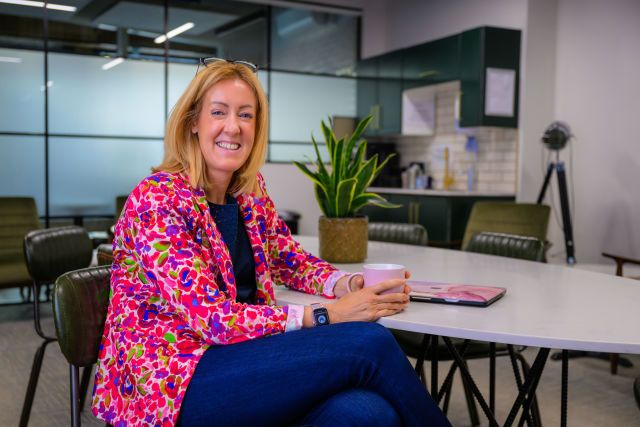
Parisa Wright: Accessibility Beats Purity
Parisa took a vacant unit opposite McDonald's and the public toilets in The Glades shopping centre in Bromley and built Greener and Cleaner into something that 1,300 people a month now walk through. Five days a week. Mending workshops. Energy clinics. A Library of Things with trade-quality tools at concession rates.
The location is the whole argument. She planted a hope hub where people already were, not where activists thought they should be. Accessibility beats purity. And she didn't wait for permission from above.
She persuaded Bromley Council's carbon management team to fund the Library of Things because it generated measurable carbon-reduction KPIs. She found the language that made the value legible to people who only see buildings and budgets.
For coworking operators, the move is simpler than it looks. You don't have to run the programme yourself. You just have to connect your space to what's already happening. Contingent Works in Bromley partners with Greener and Cleaner — offering desk space, meeting rooms, signposting — and gets visible proof that their workspace invests locally, without having to build anything new.
 Bernie J Mitchell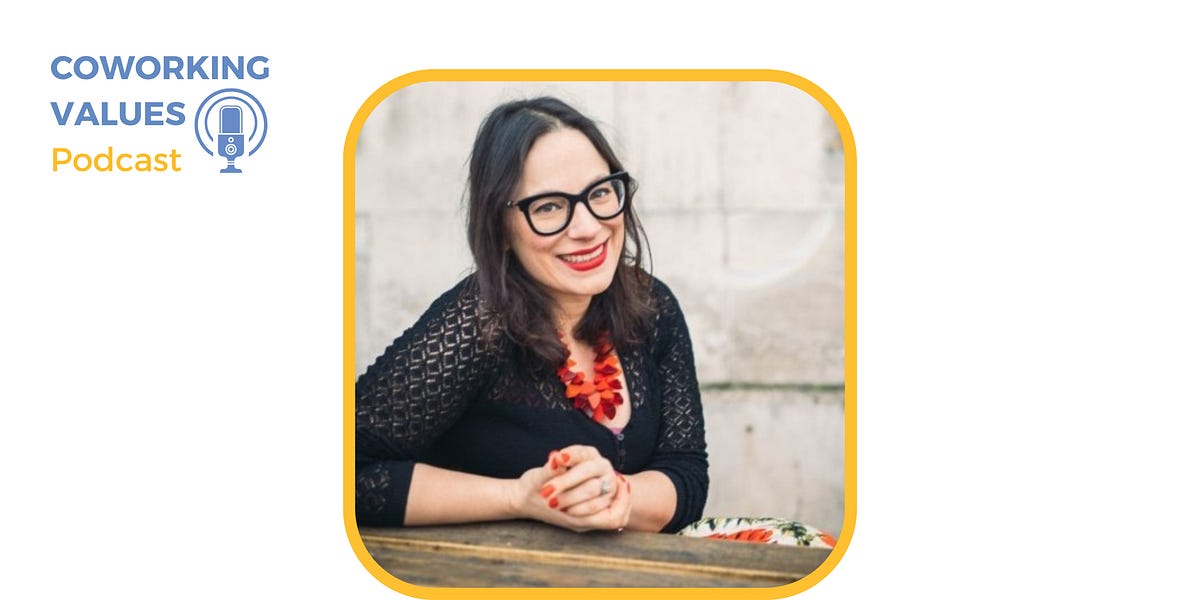
Caleb Parker: People Are Harder to Underwrite
Caleb published his manifesto on Brave Ideas this week, and it opens with a sentence that explains about 90% of the problem the rest of us have been circling.
"Most conversations about town centre regeneration start with the building."
That is understandable, he says. Property is visible. It can be photographed, valued, funded, refurbished, and put into a plan. Buildings give people something tangible to rally around.
"People are harder to underwrite. A person with an idea rarely looks like economic infrastructure at the beginning. They look like someone trying to work something out, often before anyone else can see the shape of it."
He knows this from inside the building, not outside it. At the launch of Bold Bauhaus in Manchester, he opened at 60% occupancy and hit 90% within 90 days. That's the commercial story most operators would lead with. But at the launch event, he corrected the framing in real time: "Bold is not a flex space. We're a community for entrepreneurs and innovators."
The building became more interesting as the people inside it became more interesting. The thing councils and developers keep treating as an afterthought — the people doing the work — was the product all along.
Caleb's manifesto doesn't just argue for coworking. It argues that the whole model of town centre regeneration is looking through the wrong end of the telescope. Build the thing, improve the public realm, attract the anchor occupier — then hope the local economy responds. Sometimes it does. Often it doesn't.
 Caleb Parker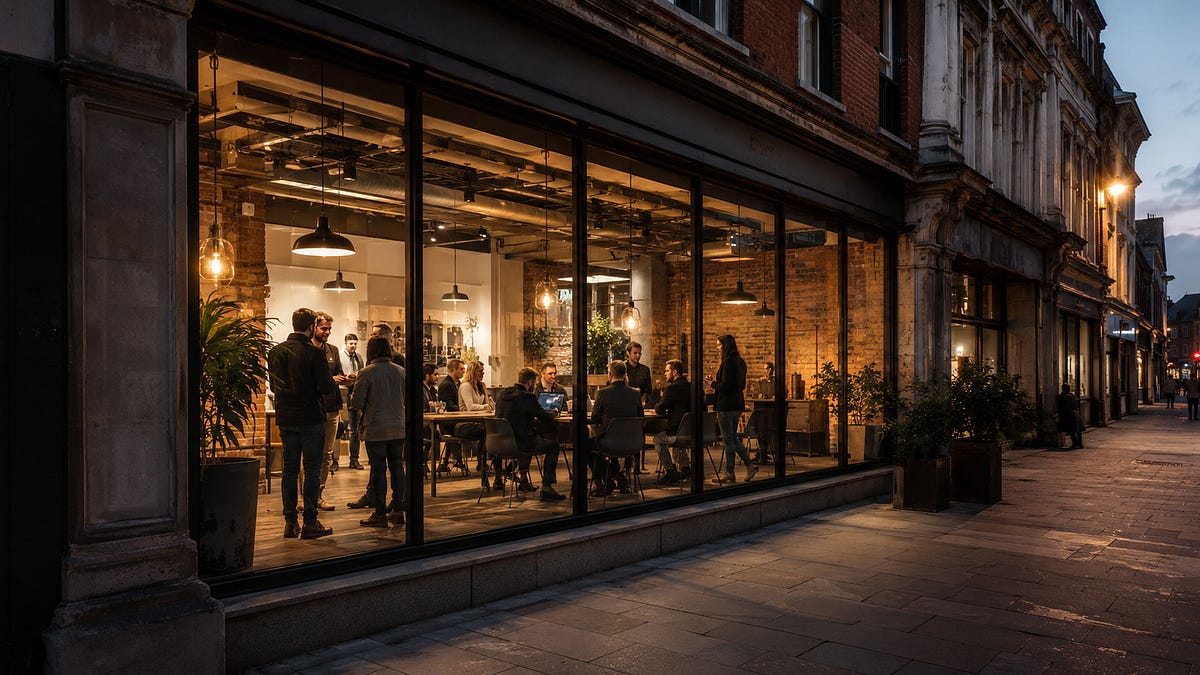
What All of It Adds Up To
- Suzanne says: the most useful thing a workspace provides is other people who understand the weight.
- Parisa says: open where people already are, and find the language that makes the value legible to the people holding the purse strings.
- Caleb says: growth starts when people act on ideas, not when the building opens, and people are harder to underwrite.
- And Ann-Marie and Anna just opened the doors of KindHaus in Hackney after three years of proving that childcare and workspace belong in the same building.
None of this is about desks. None of it fits neatly in a council spreadsheet. All of it is happening right now, and the single most effective thing you can do about it is get your MP through your door.
Roland did it with Lauren Edwards at Dragon Coworking in Rochester. He invited her in, walked her round, introduced her to the members doing the actual work. Six months after that visit, she stood up at Prime Minister's Questions and made Keir Starmer answer for what our spaces do. One invitation. One walk around. And it's in Parliament.
Summer recess is weeks away. Keir Starmer has resigned, and the Labour leadership contest will be done by the time Parliament returns in September. The political noise is about to go very quiet. That's the window.
Here's What You Can Do
- Email your MP before the summer recess — or lock in a date for September. Copy in a local councillor, and you'll get a higher response rate. The ask is simple: come and see what's happening in your constituency that no spreadsheet is capturing.
If you need help with the wording, reply to this email. - Ask three members the Suzanne question. "When you first joined, what were you actually looking for?" Not "what do you like about the space?" — what were you looking for? Write the answers down. That's the evidence your MP needs to hear.
- Get out of your space to do your thinking. Book a desk for the day at Urban MBA, right near Old Street tube station. You can use the main space to get your head down, book the meeting room to run a team day, or use the podcast studio if you're recording. Sometimes you need to sit in someone else's space to see what you're already doing right in your own.
- Find the Parisa in your town. Someone's already running a community project near you — a repair café, a community fridge, a job club, a knitting social. Offer them a meeting room once a week for three months, no charge, no contract. You don't have to build a new programme. You just have to connect your space to the thing that's already happening.
✅ Back the Work - 48 people
The London Coworking Assembly is 100% reader-funded. No ads. No sponsors. No pay-to-play.
I've been having conversations this week with people who want to back the work but aren't quite sure where it fits. Some of them need to talk to the marketing department. I understand that — most of the asks we get in business are consumer asks. Pay for the thing, get the logo, receive the report. That's the default operating system, and it works fine for what it's designed for.
This is a citizen ask. Different category entirely.
The Coworking Values Podcast is named after the coworking values for a reason. Collaboration. Openness. Community. Accessibility. Sustainability.
The conversations that come out of those values — about wealth inequality, about who gets left behind when public systems pull back, racism, homophobia, or about what happens when community spaces step into the gaps, running a coworking space in a war zone — aren't 'cup cake and flat white' commercially comfortable.
They're not designed to be. They're designed to be true.
The trade-off is straightforward. When your funding comes from the community you're writing for, you don't have to file the sharp edges off anything.
You don't have to avoid a topic because it might make a sponsor uncomfortable. You can follow the conversation wherever it needs to go — and trust that the people who value that independence will keep it going.
It costs about £400 a month to run the digital infrastructure — the platforms, the hosting, the stipends for the Urban MBA students who help run the engine behind the scenes.
When 48 people put in £100 a year, that's covered. Everything else we produce — the podcast, the research, the writing — runs on the same model.
🙏 Recent supporters include:
Karen Tait - Residence Coworking. Jason Smith Gather Round Bristol.
Peter Block - Author of 'Community - The Art Of Belonging',
Freddie Fforde - Patch. Yann Heurtaux - La Serre Lausanne
This isn't a marketing decision. It's peer-to-peer sustainability. If you're building an independent coworking space and you want independent media to exist alongside it, this is how it happens. 👊
✅ Become Coworking Community Builder
Written by
What's Next?
From Consumers to Citizens: Lessons in Community Ownership
This week two communities shared how they are figuring out how to take back control of their own regeneration before private developers price them out. A pivotal moment for community ownership? Join the movement from Brixton to Frome · Zoom · LumaAs wealth is sucked upwards faster than ever, away from people and communities and into the hands of the world’s first Trillionaire and his peers, a South…Zahra Davidson Buy Back Brixton is trying to raise £50 million to bring Brixton Village and Mark
You're not in the property business. Five of us said it this week — nobody planned it.
I spent this week reading what people in our community have been writing. Karen Tait had a terrible Tuesday at The Residence in Bishop's Stortford. Stacey Sheppard's space was on BBC Spotlight. Felicia Fai and Philip Tomlinson's report on the value of local growth hubs. James Panepinto wrote about weaponising community. Bernie (that me!) published LinkedIn Show Notes#55. They weren't in the same room. They weren't on the same call. They are all pointing at the same thing. Karen Tait had
Start With the Building, Miss the Person — It Happened Again This Week
I spent this week watching the same argument break out in different places, with different people, in completely different conversations. None of them planned it. * Caleb Parker published a manifesto for high street coworking. * Suzanne Murdock sent her monthly newsletter from The Hub Newry. * Parisa Wright kept resharing her Hope Hub episode. And * Ann-Marie Kinlock and Anna Chuicharoen finally opened KindHaus in Hackney after three years of hurdles, setbacks, and proving that a space wher
Start Cooking. The Recipe Will Follow.
We're moving everything up a gear. At the last Unreasonable Connection Live in Lewisham, you told us the groups were too random and the curation could be tighter. You were right. 75% of you left with more momentum than you arrived with. The room worked. The curation didn't. The people in the room, the conversations that happen, and how those conversations are curated—it all matters deeply. That's why on May 19th, Tilley Harris and the team from Akou are collaborating with us to facilitate