
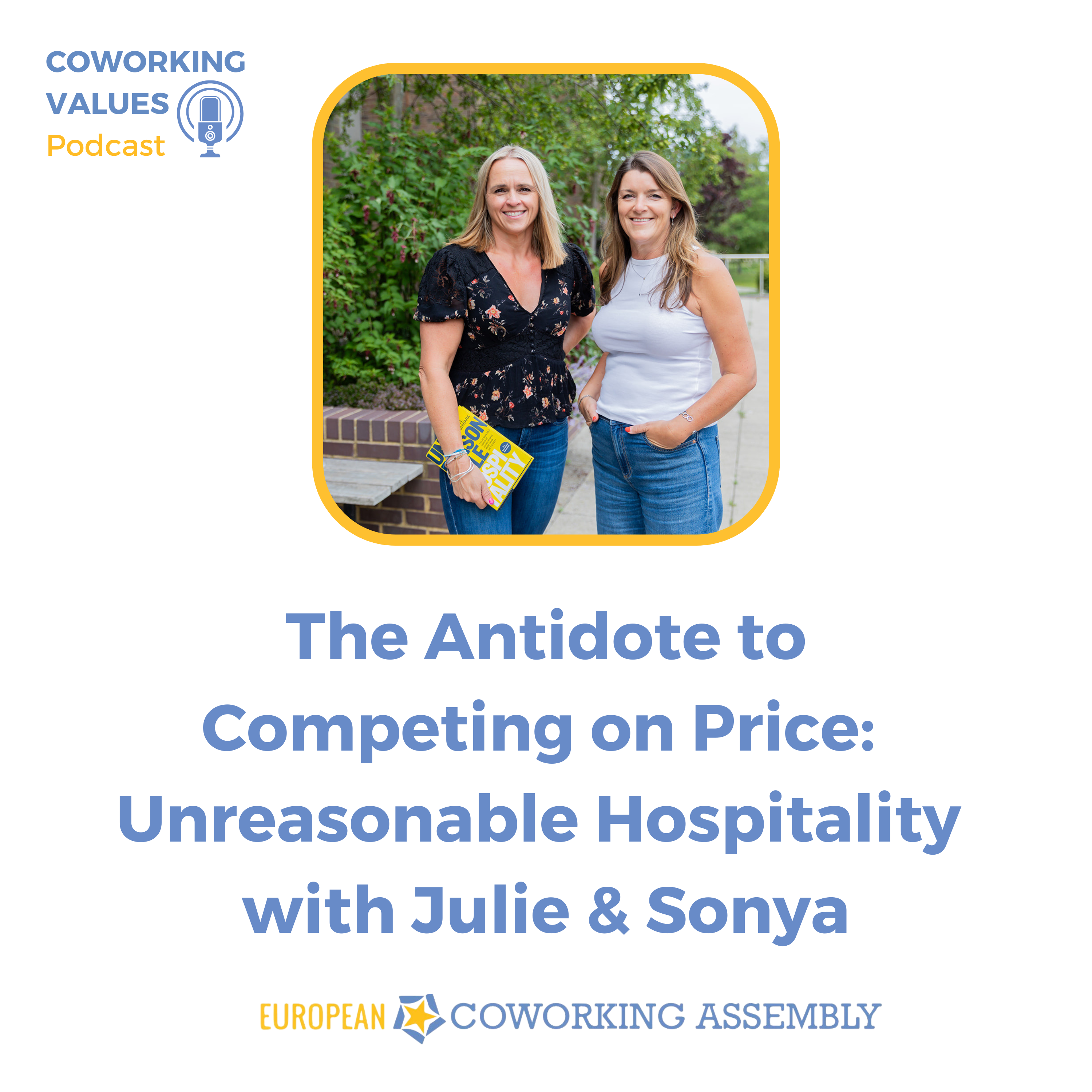
The Antidote to Competing on Price: Unreasonable Hospitality with Julie & Sonya
Why the left-handed cutlery switch beats Beyoncé every time
"There's always going to be someone who comes along who does something a little bit better, a bit faster, a bit cheaper than you. And then you're going to be chasing your tail. But if you can elevate this hospitality, this way to make people feel valued, then actually they're not chasing the quickest, fastest, next thing that's released."
The panic hits when you overhear a member saying they're "just looking around" at other spaces.
Your stomach drops when you see a competitor's Instagram story of their flash Christmas party, complete with what appears to be an unlimited budget.
The exhaustion creeps in as you find yourself constantly trying to match prices, add amenities, or create bigger wow moments just to keep up.
Julie Firth and Sonya Whittam are the founders of Story22, StoryBrand guides and Unreasonable Hospitality coaches who understand precisely how businesses get trapped in this race to the bottom.
What they've discovered about competing on connection rather than price should make every independent space owner breathe a sigh of relief.
The spaces that thrive aren't the ones with Beyoncé budgets or corporate backing.
They're the ones who notice when someone's left-handed and quietly switch their cutlery during the second course.
In this conversation, Bernie digs into the practical reality of competing on connection rather than price. Not the Instagram-worthy moments that make headlines, but the everyday touchpoints that create loyalty.
How a member's monthly bill can become a moment of value rather than a source of resentment.
Why your toilet facilities might be more critical than your event programme.
How remembering someone's coffee order creates the kind of story they'll tell for years.
Bernie brings his restaurant background to bear—those moments when turning tables four times in lunch service mattered more than customer experience, and how that taught him what genuine hospitality actually looks like.
This isn't about trying to match corporate chains or creating elaborate experiences you can't afford.
This is about understanding that every single interaction—from the moment someone walks through your door to how they receive their monthly invoice—is an opportunity to make them feel like they belong.
If you've ever felt overwhelmed by the idea of competing with bigger players, this episode is your permission to stop trying.
⏱ Timeline Highlights
[00:04] Bernie's energy from the start: "Omg, what an episode we got in stall for you today"
[01:23] Julie's human-focused philosophy: "We are very human-focused, so we are focused all on the customer"
[03:14] Bernie's restaurant-coworking connection: "When I'm in a coworking space and it's all happening, it feels like being in a restaurant that's where it's all happening, too"
[04:10] Sonya's home hospitality reframe: "Let's reframe hospitality as thinking about what it would be like if you welcome someone into your home"
[05:34] The competition trap revealed: "There's always going to be someone who comes along who does something a little bit better, a bit faster, a bit cheaper than you"
[07:29] The "home from home" insight: "People want a home from home. They want to feel like they belong somewhere. They're fed up with working on their own in a bedroom somewhere"
[08:31] Bernie's Story Brand breakthrough: "It was the first book I've read where I thought, Oh, I get that. I can go and apply that in my business right away"
[09:18] Julie's overwhelming warning: "This can very quickly be and feel overwhelming. When you think about the touch points that your members have inside a coworking space, there will be hundreds and hundreds of them"
[10:37] The toilet revelation: "It could be the most mundane touch points, like going to the toilet... But it could be an important one"
[12:31] The Beyoncé question every small operator asks: "How can I compete with that? When they look at big shiny brands... We were going to do a roundtable with some avocado on toast"
[13:10] The zero-cost loyalty builder: "We observe whether the customer is left-handed. Then if they're left-handed, we come and switch their knives and forks around... That doesn't cost anything"
[14:32] Monthly bills as relationship destroyers: "Every month that they get their bill through. That's a negative touch point. There's an opportunity for them to feel, What am I paying this money for?"
[15:40] The cognac strategy unpacked: "He delivered the bill... He overcame that negative experience by also delivering a bottle of cognac"
[17:09] Bernie's restaurant efficiency revelation: "If you could turn the restaurant four times in lunch service, that was amazing... You got four rounds of tips per a table instead of two"
[21:17] Bernie's authenticity question: "What's that line between gimmicks and genuine special moments?"
[23:54] Maya Angelou's truth: "People forget what you say, they forget what you did, but they never forget the way you make them feel"
[25:05] Sonya's hotel coffee story: "This server had taken it so valued my experience that he brought a cup of coffee up to my room"
[26:19] Bernie's recognition moment: "How the f@ck did you know that? And I went, oh, because... And he's like, Oh, my God"
The Home Test: What Hospitality Actually Means
Sonya cuts through decades of hospitality industry jargon with a straightforward question: What would it be like if you welcomed someone into your home?
Not the corporate training manual version of customer service. Not the scripted "how can I help you today?" interactions. The real thing—how you make people feel welcome, valued, taken care of when they're in your space.
As AI and automation remove more human touchpoints from business, this becomes your competitive advantage. Not because it's nice to have, but because it's the only thing that stops members chasing the next cheaper, faster option that appears in their inbox.
When someone feels genuinely welcomed, they stop shopping around.
Why Left-Handed Cutlery Beats Beyoncé Every Time
The example that stopped Bernie mid-conversation: observing that someone's left-handed and quietly switching their cutlery during the second course.
Zero cost. Massive impact.
This is what Julie and Sonya mean when they talk about competing on connection rather than budget. You don't need celebrity entertainment or elaborate experiences. You need to pay attention to the individual human being in front of you and respond accordingly.
Bernie gets this because he's lived it—remembering that a regular customer drinks Corona with a margarita (no salt), then seeing their face light up when you put their usual in front of them without being asked. The cost? Nothing. The story they tell their friends? Priceless.
The Overwhelm Trap and How to Escape It
Julie's warning resonates with every coworking operator who has read Unreasonable Hospitality and felt paralysed: hundreds of touchpoints, endless opportunities for improvement, and the temptation to tackle everything at once.
Her solution is liberating: pick six priority touchpoints where you're already having challenges. Understand why they matter. Pick them apart in minute detail. Get some quick wins. Then roll the process out.
This isn't about perfection. It's about progress.
Start with where members already feel friction—maybe it's the arrival process, maybe it's how they get help when something breaks, perhaps it's how they receive information about changes. Fix those first, then expand.
The Toilet Test: Finding Gold in Mundane Moments
The revelation that made Bernie sit up: one of Julie's clients discovered through member surveys that toilet facilities were genuinely essential to their community experience.
Not glamorous. Not Instagram-worthy. But real.
Is everything always stocked? Is there a way to report issues without awkwardness? Can you turn this basic necessity into a moment that reinforces someone's decision to be part of your community?
Your hospitality philosophy gets tested in the mundane moments more than the spectacular ones. Because that's where people's guards are down, where they experience your space as it is rather than as you present it.
The Billing Transformation: From Pain Point to Connection Point
Every month, you send members a bill. Every month, there's a moment where they might think: "What am I paying this money for? Am I getting value?"
Will Guidara's cognac strategy solves this perfectly. He had to deliver expensive bills without making diners feel rushed or unwelcome.
His solution: deliver the bill alongside a bottle of cognac, served to each person at the table, with the bottle left behind.
Message: We value you. Stay as long as you want. You're in control of what happens next.
In coworking terms: what do you pair with every "ask" to signal value and remove pressure? How do you transform necessary transactions into moments that deepen connection?
Individual Needs in Community Settings
One site manager told Julie that members want "a home from home"—they're fed up working alone in bedrooms and crave community.
Another serves tech-focused scale-ups who need professional surroundings for investor meetings.
Same industry. Completely different problems are being solved.
This is why hospitality can't be copied and pasted. You need to understand the specific problem your community solves for your members, then personalise the experience around that.
Even within one space, every member has individual needs that deserve attention.
Bernie learned this in restaurants: some customers wanted to eat and leave quickly, others wanted to linger. The skill was reading the room and responding accordingly.
Competing Without Corporate Budgets
The question that haunts every independent operator: "How can I compete with that?" when looking at corporate chains and their marketing budgets.
Sonya's answer is profound: you don't need Beyoncé. You need to notice small things and respond thoughtfully.
The server who brought coffee to her hotel room because he'd given her the wrong order at breakfast. No policy manual covers that.
No corporate chain can systematise that level of individual attention. It came from someone who felt empowered to solve problems and make people feel valued.
That's your competitive advantage. Not what you can afford to do, but what you choose to notice and how you respond.
From Gimmick to Genuine: The Maya Angelou Test
Bernie's question cuts to the heart of hospitality: what's the line between gimmicks and genuine special moments?
Sonya brings it back to Maya Angelou's truth: people forget what you say, they forget what you did, but they never forget how you made them feel.
Gimmicks are done for show or because they're policy.
Genuine hospitality occurs when someone feels empowered to make a positive impact on someone's day and cares enough to act on it.
The slide in the office might be gimmicky unless it genuinely improves the experience of people working there. The flat white delivered to the hotel room wasn't policy—it was someone taking personal responsibility for a customer's experience.
Creating Stories Worth Telling
Bernie's realisation brings it full circle: if you make those small gestures—the coffee delivery, the remembered drink order, the left-handed cutlery switch—you give people stories to tell.
When everything's just "what I expected," there's no story.
When someone goes slightly out of their way to make you feel seen, that becomes the story you tell your friends, your family, anyone who'll listen.
That's how genuine hospitality becomes a powerful marketing tool. Not because you're trying to create viral moments, but because you're creating experiences that matter to real people.
Links & Resources
Julie & Sonya's Work
Books Mentioned
Community Action
Coworking Community
One More Thing
Coworking brings communities together, helping people find and share their voices.
Each episode of the Coworking Values Podcast explores Accessibility, Community, Openness, Collaboration, and Sustainability—values that shape the spaces where we gather, work, and grow.
If this resonates with you, rate, follow, and share the podcast. Your support helps others discover how coworking enriches lives, builds careers, and strengthens communities.
Community is the key 🔑
Written by