The Future of Coworking is a Career, Not a Gig

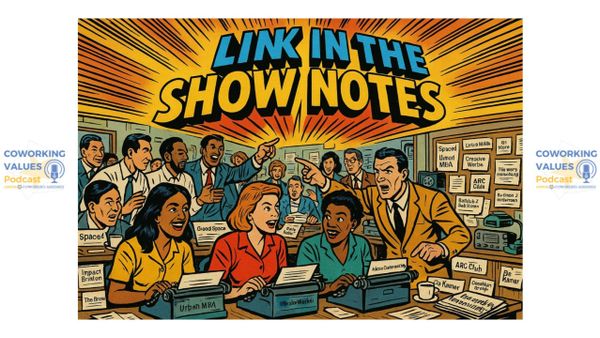
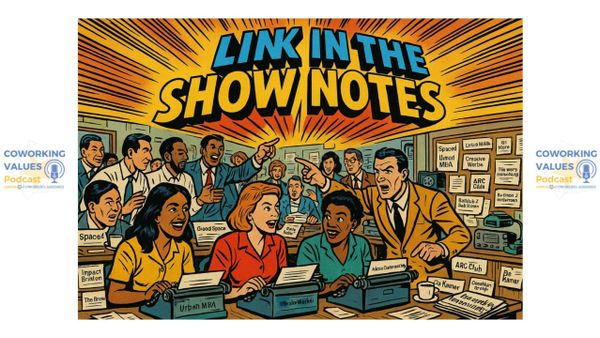
LinkedIn Show Notes #30 from the Coworking Values Podcast Bullpen.
While you were running your space, we've been talking to the future—three FLOC leaders, one message: it's time to choose careers over gigs.
I was once sitting at a table for lunch with a group of Coworking Space leaders, and a woman almost had to apologise as she presented her idea of creating an event where women who work in the Coworking industry in the UK could connect and support each other.
A man at that table told her that her idea was good because:
"After all, women manned all the reception desks in coworking spaces."
He thought he was giving a compliment, and he is a nice guy, so I am sure he was. But what he revealed was a profound and catastrophic failure of character.
I’ve been thinking about that moment a lot. It’s a perfect, unvarnished snapshot of the messy crucible in which this industry was forged.
For too long, the narrative has been dominated by the same white male faces on the same stages, all delivering talks that could have been LinkedIn posts or, at best, videos, often infomercials masquerading as content.
At the same time, the real, grinding, essential work of community building was being done by people who were systematically overlooked, and over the last few years, I have researched the shit out of it.
The person at the front desk, the one who knows everyone’s name, who practices unreasonable hospitality every single day—they are the true backbone of this industry.
That man’s comment wasn’t just a gaffe; it was a symptom of an industry that has long been brilliant at celebrating passion but terrible at building professions.
We have the opportunity not to repeat the mistakes of the past.
But, as my friend, the coworking legend,
Iris Kavanaghclarified for me, the coworking industry is the first to offer us the chance to build an already inclusive work environment from the ground up.
She and Laura, her co-founder at
Women Who Cowork, observed that while traditional industries might take 200 years for women to reach leadership parity, coworking, by its very nature, democratises work and flattens hierarchies.
It’s not a rigid corporate structure where everyone is locked into an org chart; it’s a fluid, networked environment.
This inherent flatness presents us with a unique opportunity to consciously choose inclusivity as we grow, ensuring that everyone is represented in leadership if we have the will to do so.
We have the opportunity not to repeat the mistakes of the past.
The Futures so Bright I Gotta Wear Shades
And that brings me to the
Future Leaders of CoworkingAKA (FLOC).
I get the sense that some are holding
Future Leaders of Coworkingat arm’s length, taking a ‘wait and see’ approach.
- Do we really need this?
- Won't people work it out?
- What if all those staff start talking to each other?
But on the kickoff call for their new UK chapter yesterday, led by
James Panepinto- coworkings' answer to Anthony Bourdain - I learned more about how it is happening.
And I get the feeling that FLOC events won't be male-dominated, half-baked golf days, drinking lots of warm, overpriced Stella Artois.
FLOC facilitates intentional, regular peer-to-peer calls between its members—a structured process for forging the very connections that are the lifeblood of a healthy profession.
To hold back now is to miss the most critical movement in our industry.
That's why we're deliberately using the
Coworking Values Podcastto introduce you to the people building FLOC.
Sam SheaDeShawn BrownCaroline Van den Eyndeare three of the leaders I've spoken with so far, and what they and their colleagues are building isn’t just a networking group.
They are building the professional infrastructure our industry needs to survive and mature. They are turning a gig into a career.
They are each building a different, essential pillar of this new reality.
James PanepintoSam SheaGCUC UKwhere they are hosting a FLOC Lunch.
Sam Shea: Building the Pillar of Social & Political Legitimacy
Sam’s entire career is the answer to a question she’s been asking since she was a kid, trying to find a third place in her small town: “Where do I belong?”
From starting a brunch club in Boston because she was lonely to co-founding
Future Leaders of Coworking, her work has always been about creating spaces for connection.
Now, she’s tackling the biggest belonging issue of all: professional recognition. The #AddCoworkingToLinkedIn campaign isn’t just about a dropdown menu. It’s a fight for legitimacy. It’s a demand to be seen.
✍️You can sign that #AddCoworkingToLinkedIn -
here.
As Sam puts it, coworking is about allowing you to “come as you are,” but it’s hard to do that when your profession doesn’t officially exist in the world’s largest professional network.
By leading this charge, Sam is building the political and social infrastructure that gives thousands of professionals a collective identity and a legitimate career path.
DeShawn Brown: Building the Pillar of Educational & Philosophical Infrastructure
DeShawn’s vision for the industry goes right to the root. He’s not just thinking about the present; he’s building the intellectual and philosophical foundation for the future.
DeShawn talks about “Generous Leadership”—the idea that the best leaders don’t manage, they motivate. They get people excited to be where they are.
This isn’t just a nice idea; it’s a strategic imperative for an industry struggling with burnout. He sees the systemic problem of community managers wearing “20 different hats”.
He argues that the solution isn’t just better tools, but a fundamental shift in how we educate and support our people.
His moonshot idea? A university major in coworking. He wants to see the industry legitimised at the academic level, creating a pipeline of talent that comes into the market with fresh ideas and a deep understanding of the profession.
He’s building the educational infrastructure that will turn coworking from a job you fall into into a career you can aspire to.
Caroline Van den Eynde: Building the Pillar of Narrative & Cultural Value
Caroline came into this industry and was immediately struck by the lack of connection to her peers.
She was meeting CEOs, but not the other marketers who were fighting the same daily battles. She calls herself the “poster child for FLOC” because she lives the problem it solves.
With a background in psychology, she understands that coworking’s value isn’t in the square footage; it’s in the feeling.
“It’s not going to be about square footage or amenities,” she says. “It’s about how people feel when they walk through the door.”
Her work is to professionalise that feeling. She is building the narrative infrastructure that allows spaces to articulate their true value.
She’s moving the industry’s story from a transactional one about desks and Wi-Fi to a transformational one about belonging and community.
This is what a mature industry looks like. It has a political voice, a sustainable operating model, and a clear story. It has character.
Moreover, it recognises its moral obligation to mentor its own. It doesn’t hold the next generation at arm’s length; it embraces them. Because it knows that the people coming up aren’t a threat—they are the whole bloody point.
Caroline Van den EyndeCoworking CanadaiQ Officesare hosting the FLOC drinks event.
🌐 Event: Unreasonable Connection - The world's smallest coworking event.
Small groups of coworking community builders who actually run spaces, discussing what truly matters, meet online once a month.
Just us, figuring out how to do this work better together.
No sponsors, no frameworks, no bollocks.
Wednesday, October 15, 2:00 PM - 3:00 PM GMT / 3:00 PM - 4:00 PM CET. - RSVP here at
Unreasonable Connection🏣 The Virtual Office Guide
Ten years ago, when I first heard the term 'Virtual Office,' I thought it referred to an office in the cloud - silly me.
Then I heard about AML regulations, KYC requirements, and local authority rules, and quickly rolled over and went back to sleep.
But Emily and I had such a blast researching and writing the
Virtual Office guideLondon Coworking Assemblyblog!
We have heard the same questions for years, and we're working with our London-based mates
Nexudusto 'dymistfy' the whole thing.
It's not legal advice, but our five-minute quiz will save you hours of Googling and going down rabbit holes.
Take the London Virtual Office Quiz →💬 Community on LinkedIn
The
LinkedIn Coworking Groupis a great place to connect with guests on these and other Coworking podcasts, as well as other listeners and Coworking community builders.
Thank you for your time and attention today!
Written by
What's Next?

At 30,000 Feet the Rules Work. At Ground Level They Don't.
LinkedIn Show Notes #36 from the Coworking Values Podcast Bullpen. 🎙️ Listen to these stories and hundreds of others on the Coworking Values Podcast At 30,000 feet, physics works. Checklists save lives. You follow the rules, you survive.At ground level, the checklists are rigged depending on who you are. This week from the Coworking Values Podcast Bullpen: We've been tracking how three people landed in broken human systems and built their own cockpits. Where marginalised people write the r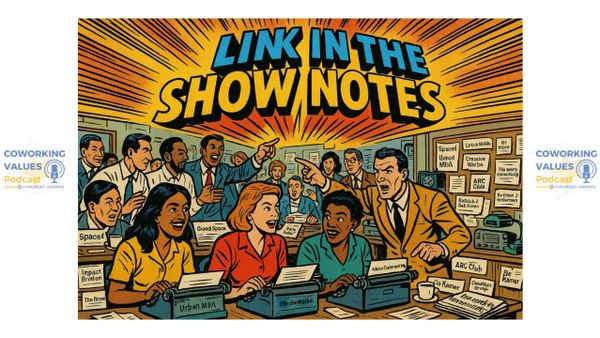
They Built Infrastructure for the Energy Money Can't Capture
LinkedIn Show Notes #35 from the Coworking Values Podcast Bullpen. 🎙️ Listen to these stories and hundreds of others on the Coworking Values Podcast. Three community builders. Three continents. One pattern: They stopped selling memberships and started building movements that run on relationships, not transactions. This week from the Coworking Values Podcast Bullpen: We've been tracking how coworking spaces can become laboratories for post-capitalist organising. Not in theory—in practice. W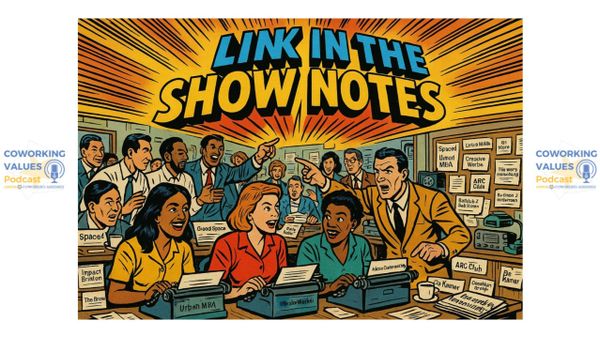
They Host Church, Stop Brain Drain, and Won't Put Their Film on Netflix—And They're Winning
LinkedIn Show Notes #34 from the Coworking Values Podcast Bullpen. 🎙️ Listen to these stories and hundreds of others on the Coworking Values Podcast. Three different community builders. Two continents. One pattern: They stopped optimising for scale and started building for depth. And the people who needed them showed up. This week from the Coworking Values Podcast Bullpen: We've been tracking why some spaces feel like communities and others feel like expensive libraries with good Wi-Fi. T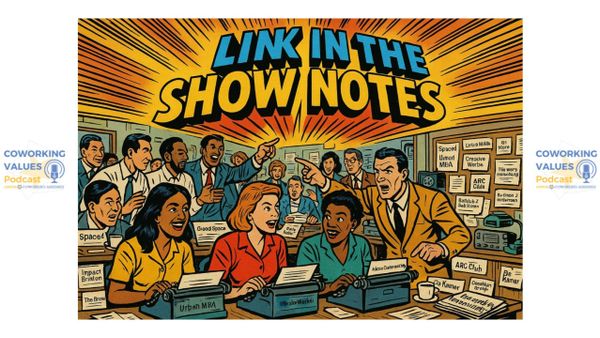
Social Capital Isn't a Byproduct. It's THE Product.
LinkedIn Show Notes #31 from the Coworking Values Podcast Bullpen. 🎙️ Listen to these stories and hundreds of others on the Coworking Values Podcast. What three crisis stories from Armenia, Gaza, and London reveal about the invisible currency that keeps independent coworking spaces alive when everything else collapses. Sara Anjargolian 's coworking space in Yerevan had glass walls. Deliberate. Radical. In post-Soviet Armenia, where secrecy was a matter of survival, transparency was an ac
Start With the Building, Miss the Person — It Happened Again This Week
I spent this week watching the same argument break out in different places, with different people, in completely different conversations. None of them planned it. * Caleb Parker published a manifesto for high street coworking. * Suzanne Murdock sent her monthly newsletter from The Hub Newry. * Parisa Wright kept resharing her Hope Hub episode. And * Ann-Marie Kinlock and Anna Chuicharoen finally opened KindHaus in Hackney after three years of hurdles, setbacks, and proving that a space wher
Start Cooking. The Recipe Will Follow.
We're moving everything up a gear. At the last Unreasonable Connection Live in Lewisham, you told us the groups were too random and the curation could be tighter. You were right. 75% of you left with more momentum than you arrived with. The room worked. The curation didn't. The people in the room, the conversations that happen, and how those conversations are curated—it all matters deeply. That's why on May 19th, Tilley Harris and the team from Akou are collaborating with us to facilitate