The Golden Thread: Why Unreasonable Hospitality Needs a Story First with Sonya & Julie

Why your coworking space needs a Story before it can practise hospitality
"Marketing makes these promises and service delivers that. So for us, StoryBrand and unreasonable hospitality, really work together hand in glove. And StoryBrand is really about thinking about how you communicate that you care to your customers. And the unreasonable hospitality side of things is how you prove it."
— Sonya Whittam
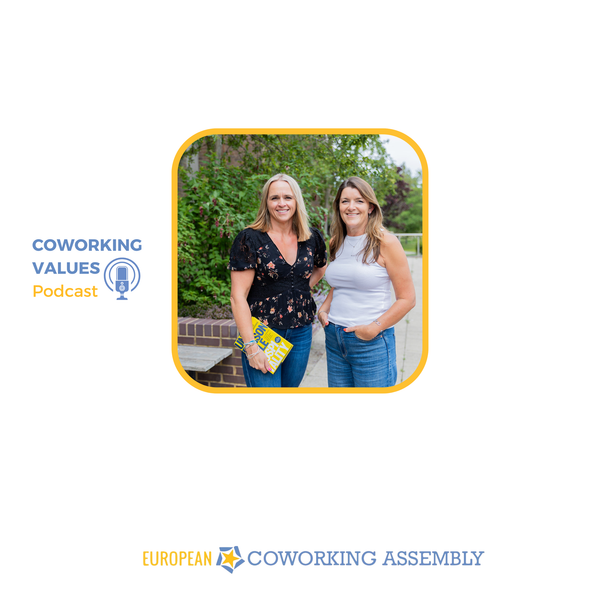
Sonya Whittam and Julie Firth run Story22, a customer-centric marketing agency based in the UK. They're also two of the handful of certified Unreasonable Hospitality facilitators in the country, trained directly by Will Guidara.
Bernie met them in Nashville in February 2020, just before COVID lockdown, when they were all training to become StoryBrand guides with Donald Miller and Dr. JJ Peterson.
Since then, Unreasonable Hospitality has become the book of choice for the UK coworking industry. Operators read it, love it, and then struggle to implement it.
The problem? Most people jump straight into implementation without first figuring out what their business actually stands for.
This conversation unpacks the disconnect between reading the book and actually implementing it. Sonya and Julie explain why you need a clear Story first before your team can deliver hospitality. Without that "golden thread," random wow moments don't reinforce anything.
They're blunt about the traps: generic positioning ("quality, service, and value"), rigid scripts that kill personalisation, and the hotelification obsession.
The conversation covers the Honest Greens experience in Barcelona, the George Hotel flat white story from Scotland, why finance and compliance teams should attend hospitality workshops, and the critical difference between gimmicks and genuine care.
For operators trying to figure out how to make their space feel hospitable without burning out or going broke, this episode is the operating manual.
Timeline Highlights
00:00 – Bernie intro: "Unreasonable Hospitality has become the book du jour of the coworking industry... I worked in hospitality for about 3,000 years and I really, really rate that book."
01:42 – Sonya introduces Story22: "Marketing makes these promises and service delivers that... StoryBrand is really about thinking about how you communicate that you care to your customers. And the unreasonable hospitality side of things is how you prove it."
02:43 – Julie on why the two frameworks work together: "StoryBrand helps you understand who you are. And then Unreasonable Hospitality helps you then deliver what you stand for."
03:40 – Bernie, Sonya, and Julie met in Nashville in February 2020 doing StoryBrand guide training together, just before COVID lockdown.
04:52 – Julie on the biggest implementation problem: "Unless you have this kind of golden thread running through everything that you do about what you stand for, who you are as a business, what you want to be known for... people are at risk of going into a million different directions."
06:33 – Bernie asks: "Working out who you are, is that like a little bit at a time over a year, or is that writing it on a napkin in a cafe?"
07:04 – Sonya: "Positioning, understanding what you stand for needs to come before you even start getting into your messaging and should come before you get into thinking about the service elements."
09:00 – Bernie calls out the "quality, service, and value" trap: "That's like Marks & Spencer's in 1994. What do you actually believe in?"
10:18 – Julie on customer-first values: "You could have one [space] that is trying to be a home from home and they want this to feel cosy... That could have a very different personality to one that was very tech-focused where people needed efficiency."
11:56 – Sonya on team culture and non-negotiables: "Your culture internally, your team have to want to deliver those things for your customers. The non-negotiable that you agree with your team, they have to be brought onto that."
12:03 – Honest Greens example in Barcelona: "We had 4 or 5 different touchpoints... every single touchpoint was exceptional... they were brought into, we value our customers here."
14:31 – Julie on hiring for culture: "It's not about hiring someone that can be well organised and manage the bookings. It's how do they fit into that culture."
18:32 – Sonya on team empowerment: "If your team aren't free to act, they can't deliver the promises that you make."
19:34 – Will Guidara's "one size fits one" philosophy: "You're creating an experience that is for individuals... you want to empower your team to be able to solve those problems individually for customers."
21:36 – Julie on gimmicks vs genuine hospitality: "The Storys that we've shared are probably of things that have happened to us that have either cost nothing at all, or, you know, a couple of quid... someone has kind of gone out of their way to help you or to greet you or to remember something."
24:16 – Sonya introduces the June workshop: "We're running a 2-day event in central London, just outside of Holborn on the 10th and 11th of June... Dr JJ Peterson coming over to run the 2-day workshop with us."
26:43 – Julie on who should attend: "Anyone that has customer touch is the answer... I think the more of a mix of different perspectives you have in there, the more valuable it is."
Lesson 1: Marketing Makes Promises, Service Delivers Them
The UK coworking industry loves Unreasonable Hospitality.
Operators read the book, get inspired by the New York hot dog story and the bottle of cognac at 11 Madison Park, and then try to replicate those moments in their own spaces.
The results are often gimmicky. Cupcakes at the front desk. Branded tote bags. Free coffee upgrades.
The problem isn't the gestures themselves. The problem is they're disconnected from any coherent Story about what the business stands for.
Sonya and Julie's insight cuts through this: "Marketing makes these promises and service delivers that. So for us, StoryBrand and unreasonable hospitality really work together kind of hand in glove."
Here's what that means in practice:
StoryBrand is the framework for figuring out what you communicate to your customers. It clarifies your message, your positioning, and what you're promising to solve for people.
Unreasonable Hospitality is how you prove those promises through the actual experience people have in your space.
One without the other creates a disconnect.
If you promise "home from home" but your team are rigid and scripted, people feel the gap between the marketing and the reality.
If you create amazing hospitality moments but your website says "quality, service, and value" (the Marks & Spencer 1994 trap), no one knows what those moments are supposed to mean.
Julie put it this way: "StoryBrand helps you understand who you are. And then Unreasonable Hospitality helps you then deliver what you stand for and how you want to project that onto your clients so that your customers, your members, have the best possible experience."
The hand-in-glove relationship works because you need clarity before you can deliver consistency.
For coworking operators, the lesson is this: before you buy fancy coffee beans or install a slide in your office, sit down and answer the question: what do we stand for, and who are we saying that for?
If you can't answer that, the cupcakes won't save you.
Lesson 2: The Golden Thread (Know Your Story First)
Julie calls it the "golden thread."
It's the coherent Story that runs through everything you do—your messaging, your service, your hiring, your non-negotiables.
Without it, your team scatters in a million directions.
Here's the trap: you read Unreasonable Hospitality, get excited about empowering your team to create wow moments, and suddenly everyone's doing different things for different reasons. None of it connects. It's just noise.
"Unless you have this kind of golden thread running through everything that you do about what you stand for, who you are as a business, what you want to be known for, without really drilling down into that first, people are at risk of going into a million different directions," Julie said.
The golden thread is your positioning. Your non-negotiables. The thing you're willing to be unpopular for.
Bernie pushed on this: "People will say something like, oh yeah, we're a coworking space. We stand for quality, service, and value. That's like Marks & Spencer's in 1994. What do you actually believe in?"
Sonya's answer: "That positioning of understanding what you stand for needs to come before you even start getting into your messaging and should come before you get into thinking about the service elements."
Here's how you figure it out:
Start with your customers, not yourself.
Julie: "You don't have to sell because you naturally become the right solution for what they're looking for."
If your ideal members are small businesses that need to appear professional when pitching to investors, your values will be different from a space targeting freelancers who want "home from home" vibes.
You can't be both. You have to choose.
Get external help.
Sonya: "I do think it's difficult to do it for yourselves... you're so close to it, you can't see the wood for the trees."
The curse of knowledge means you know everything about your business. Your customers don't. You need someone to hold up a mirror and ask: why is that relevant? Why does that matter?
Make it specific, not generic.
Julie gave the example of a coworking space whose members needed to appear "larger than they actually were, but definitely impressive" when pitching to their own clients.
That's specific. That's a positioning you can build service around.
"Home from home" for that same space would be a mismatch.
The golden thread only works if it's deliberate. Once you've defined it, every decision—from hiring to hospitality gestures—gets filtered through it.
Does this action reinforce what we stand for? Or does it scatter us?
If you can't answer that, you don't have a golden thread yet.
Lesson 3: Team Culture Is the Foundation
Sonya and Julie were in Barcelona recently. They ate at a place called Honest Greens.
Fast-casual healthy food. You stand at the till to order. Not fancy. Not expensive.
But every single touchpoint—the greeting when they walked in, the menu explanation, the food delivery, the follow-up cheque-in—was exceptional.
Why? "The team culture, the non-negotiables were that customers had to feel valued in there."
Compare that to every bad restaurant or coworking space you've ever been to. The service is poor at every touchpoint because the team culture internally doesn't align with delivering great service.
Sonya: "Your culture internally, your team have to want to deliver those things for your customers. The non-negotiable that you agree with your team, they have to be brought onto that."
This is where most operators get stuck.
They read Unreasonable Hospitality, get inspired by Will Guidara's team at 11 Madison Park creating personalised experiences, and then try to roll it out without first aligning their team on the non-negotiables.
The result? Rigid scripts. Overcontrol. Teams that can't make on-the-spot decisions because they don't know what the business stands for.
Sonya made the economic point explicit: "If your team aren't free to act, they can't deliver the promises that you make."
If your team doesn't know what your space stands for, they can't make judgment calls. They'll either do nothing (because they're scared of getting it wrong) or they'll do random acts of hospitality that don't connect to anything.
Julie's point about hiring lands here: "It's not about hiring someone that can be well organised and manage the bookings. It's how do they fit into that culture."
You're not hiring a receptionist. You're hiring someone who embodies your non-negotiables.
At the Mayfair Intercontinental in the 90s, Bernie worked with people who'd been there for years. "They were just committed to the whole thing and each other. All these little things happened every day that were wow moments... It wasn't gimmicky."
Compare that to transactional service: "I'm giving you this little thing and you have to smile because it's in the social contract that when I give you a mint, when you leave the happy eater, you got to be happy."
The difference is internal culture. Honest Greens had it. The happy eater didn't.
For coworking operators, the lesson is this: you can't script hospitality. You can only create the conditions where your team feels empowered to deliver it.
And that starts with bringing them into the non-negotiables.
Lesson 4: Gimmicks vs Genuine Hospitality
Bernie asked the question every operator's thinking: "Where's the line between gimmicks and genuine special moments?"
Julie's answer: "The Storys that we've shared are probably of things that have happened to us that have either cost nothing at all, or, you know, a couple of quid... someone has kind of gone out of their way to help you or to greet you or to remember something, to note your situation that you are in."
Here's the George Hotel story from Scotland:
Sonya ordered a coffee at breakfast. The server brought the wrong one. She said it was fine, drank it anyway, and went upstairs to her meeting.
The server took it so personally that he brought a flat white up to her room.
"I tell everyone about that experience because it made me feel really valued. It made me feel that he took personally that the coffee I ordered wasn't the coffee I got."
That moment cost maybe £3. But it created a Story Sonya's been telling for years.
Compare that to the slide-in-the-office gimmick. Sonya referenced it: "That could have been gimmicky unless it was really linked to the experience of the people working there."
The difference between a gimmick and genuine hospitality is intent.
Julie: "It's almost never about the stuff that we sit on... If you don't have the experience of, you don't have that hospitality that matches that, then it's just gonna be a shell. It's just gonna be things that people sit on."
You can have Herman Miller chairs and a fancy espresso machine. But if your team aren't empowered to notice when someone's drenched from the rain and bring them a hot chocolate, the fancy stuff is just set dressing.
Will Guidara's book is full of examples that cost nothing: switching place settings for left-handed guests, noticing someone's birthday, remembering a regular's drink order.
The coworking industry's obsession with Unreasonable Hospitality makes sense. Operators are competing on experience, not amenities.
But there's a dangerous version of this playing out: the hotelification of coworking.
Bernie's seen it. Operators trying to mimic luxury hotels—concierge service, bespoke room service, catering to every whim.
Here's the economic reality: hotels spend 30-35% of their revenue on staffing. Independent coworking spaces operate on 9-11%.
If a local operator tries to run a 5-star hotel service model on a micro-business budget, they'll go bankrupt.
As Ian Minor pointed out in an earlier podcast, hospitality in coworking is about the art of being hospitable, not about being a servant.
The true product isn't the physical workspace. It's the experience and the human connection.
Hospitality in a coworking space means:
- Remembering someone's name
- Noticing when they're struggling and offering help
- Creating moments where members feel seen
- Empowering your team to respond in the moment without scripts
It doesn't mean hiring a concierge, installing a cocktail bar, or trying to compete with the Soho House.
You can't afford that. And your members don't need it.
They need to feel like they belong. That costs nothing.
Lesson 5: One Size Fits One (Personalisation Over Scripts)
Will Guidara's philosophy at 11 Madison Park was "one size fits one."
Some guests love it when you hang out at the table and chat. Others want you to take their order and disappear.
Your job is to read the guest and serve them how they want to be served.
The same applies to coworking.
Sonya: "You're creating an experience that is for individuals. So you're not trying to create an experience that you can replicate... you want to empower your team to be able to solve those problems individually for customers."
This is where rigid scripts and overcontrol kill hospitality.
If your team has a checklist of "hospitality gestures" they're supposed to perform, they're not reading the room. They're ticking boxes.
Julie made the point about team freedom: "If your team aren't free to act, they can't deliver the promises that you make."
Bernie's restaurant story lands here. He worked at a place in the City of London where the goal was to turn tables as fast as possible. "Most people came down from their offices, they ate, they shot, and they left. But other people didn't want to be rushed, but we were more intent on getting them in and out as quickly as possible."
That's service without hospitality. Efficient. Transactional. Black and white.
Compare that to Bernie's other story: remembering a couple's drink order (Corona and a margarita with no salt) from a different restaurant, then putting their drinks in front of them without asking when they showed up somewhere new.
"The guy went like, How the fuck did you know that?"
That's hospitality. It's colour.
And it only works if you're paying attention to individuals, not executing a script.
Sonya and Julie run Unreasonable Hospitality workshops where they map customer journeys and identify touchpoints. One client's survey feedback highlighted that the toilet area mattered to their members.
Not sexy. Not Instagram-worthy. But it was a touchpoint that needed attention.
"Some of the work that we do is about overlooked touch points. They're about things that we do in the everyday, and they don't have to cost a lot of money."
For coworking operators, the lesson is this: don't chase the audacious Beyoncé-at-your-Christmas-party moments.
Focus on the basics first. The arrival experience. The greeting. The way your team responds when someone's stressed.
Then empower your team to personalise those moments based on what they notice about individual members.
Scripts kill personalisation. Freedom creates it.
But freedom only works if your team knows the golden thread well enough to improvise within it.
Links & Resources
Sonya & Julie's Work
Story22 – Customer-centric marketing agency specialising in StoryBrand and Unreasonable Hospitality
StoryBrand & Unreasonable Hospitality Workshop, June 10-11, 2026 – Two-day intensive at De Vere Grand Connaught Rooms, Holborn, London
Use the code: coworkingvalues (all one word) for the 'mates rate' 👍
Sonya Whittam on LinkedIn
Julie Firth on LinkedIn
Books & Frameworks Mentioned
Unreasonable Hospitality – Will Guidara
Building a StoryBrand – Donald Miller
Marketing Made Simple – Donald Miller & Dr. JJ Peterson
Examples Referenced
Honest Greens – Barcelona (fast-casual restaurant with exceptional team culture)
The George Hotel – Scotland (flat white story)
11 Madison Park – New York (Will Guidara's restaurant)
Related Events & Communities
European Coworking Day – 6th May 2026
Flexa Conference – 12th May 2026, London
Unreasonable Connection LIVE! – 19th May 2026, Space4, Finsbury Park
LinkedIn Coworking Group
Bernie's Projects
Connect with Bernie on LinkedIn
One More Thing
I've read Unreasonable Hospitality probably 15 times now.
I love that book. I worked in catering for years—5-star hotels, casual dining, everything in between. The George Hotel flat white story Sonya told resonates because I've been that server. The one who took it personally when something wasn't right.
But I've also watched coworking operators read that book and then try to turn their space into a luxury hotel.
They can't afford it. The staffing ratios don't work. The economics break.
Ian Minor said it best: "Hospitality in coworking is about the art of being hospitable. Not about being a servant."
The coworking industry's obsession with hotelification misses the point. Hospitality goes deeper than amenities.
It's noticing when someone's having a rough day and asking if they're okay. It's remembering their name. It's creating the conditions where your team can respond to individuals without needing permission.
Most operators will read the book, try a few things, get overwhelmed, and give up.
The ones who figure out their Story first—the golden thread that holds everything together—will build spaces where hospitality feels natural instead of performed.
Community is the key 🔑
Written by
What's Next?
Why The People Who Build Communities Never Show Up For Themselves
May 19th Unreasonable Connection Live! You spend your whole week lowering the barrier for everyone else. Nobody does it for you. When I ran @Workhubs by Euston Station with Phil, there were days I was so exhausted it felt like the liquid had drained out of my eyes. When you run an independent space, or when you're the community manager, it is a profoundly lonely place. You are the person holding your own shit, and everyone else's shit too. You're having that quiet conversation in the kitche
Start Cooking. The Recipe Will Follow.
We're moving everything up a gear. At the last Unreasonable Connection Live in Lewisham, you told us the groups were too random and the curation could be tighter. You were right. 75% of you left with more momentum than you arrived with. The room worked. The curation didn't. The people in the room, the conversations that happen, and how those conversations are curated—it all matters deeply. That's why on May 19th, Tilley Harris and the team from Akou are collaborating with us to facilitate
They Come for the Promise. They Stay for the Hospitality. with Dr. JJ Peterson
"They come for the promise. They stay for the hospitality." — Dr. JJ Peterson Episode Summary JJ Peterson has spent eleven years inside the StoryBrand universe. He co-authored Marketing Made Simple with Donald Miller. He helped Will Guidara write the certification for Unreasonable Hospitality. He hosts the Badass Softie podcast — for leaders who are unapologetically driven but want to lead with their hearts. He is flying to London in June to teach at the first workshop in the world to b
Why AI Can't Feel the Room: Practical Operations with Carlos Almansa
"The AI cannot feel the space. It can't feel the dynamics or the vibe. But it can free up time for you to talk to your members, to have a coffee with them, to understand and to read people." — Carlos Almansa Ballesteros Episode Summary Most conversations about AI in coworking are either evangelical or dismissive. Carlos Almansa Ballesteros, co-founder of Nexudus and author of the Coworkings AI newsletter, isn't interested in either. He's been building software for this industry for 13
You're Never Broke If You Got Ideas: How Koder Brings Music to the Neighbourhood
"Ideas are currency, you know. And you're never broke if you got ideas... Everything we are looking at around us came from an idea. So for me, they are, it is a currency within itself." — Koder Koder runs Undeniable Studios, a music production conglomerate built from youth clubs, pirate radio, and 10,000 hours of free studio time in Brockley. He's now the first Creative in Residence at Blue Garage in Lewisham, where he's installing a commercial music studio, planning his Circle the Ends

Start With the Building, Miss the Person — It Happened Again This Week
I spent this week watching the same argument break out in different places, with different people, in completely different conversations. None of them planned it. * Caleb Parker published a manifesto for high street coworking. * Suzanne Murdock sent her monthly newsletter from The Hub Newry. * Parisa Wright kept resharing her Hope Hub episode. And * Ann-Marie Kinlock and Anna Chuicharoen finally opened KindHaus in Hackney after three years of hurdles, setbacks, and proving that a space wher
Start Cooking. The Recipe Will Follow.
We're moving everything up a gear. At the last Unreasonable Connection Live in Lewisham, you told us the groups were too random and the curation could be tighter. You were right. 75% of you left with more momentum than you arrived with. The room worked. The curation didn't. The people in the room, the conversations that happen, and how those conversations are curated—it all matters deeply. That's why on May 19th, Tilley Harris and the team from Akou are collaborating with us to facilitate