The Pay Gap: AI Isn't Just Tech. It's Our Best Damn Chance.

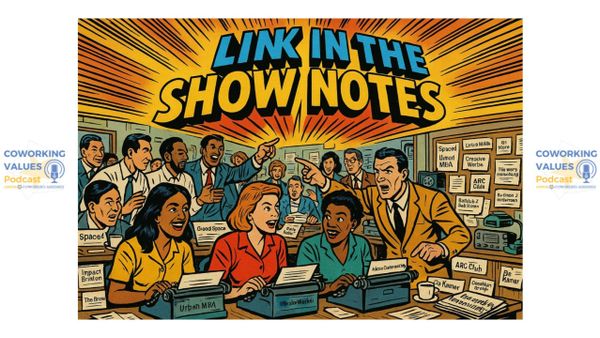
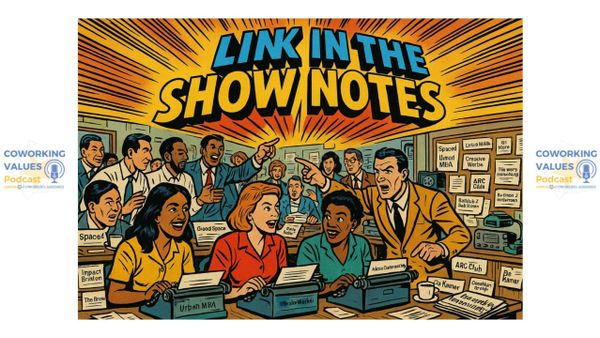
🎙️ Link in the Shownotes #18 - Ai Is Already Here, Shaping Our Work.
Ever feel like you’re shouting into the void?
We talk about community, about loneliness, about making spaces affordable.
We dissect purpose-driven work versus just clocking in.
All vital. All real.
But there’s this one thing, this massive, unseen force, that often goes unsaid, even when it’s staring us down.
It’s artificial intelligence. And it's not a Ray Bradbury sci-fi fantasy.
It’s here. Now.
Quietly, and sometimes not so quietly, it’s ripping up the rulebook on how we work, how we connect, and what ‘skills’ even mean in this new, brutal landscape.
Today, I’m pulling back the curtain on four hard truths about AI and coworking. Truths we need to chew on if we’re serious about building a future that doesn’t leave people behind.
Let’s go ;-)
1. Ai Is Already Here, Shaping Our Work.
It’s not some distant future.
It’s now.
Right now.
Think about it.
Your mate, the freelance copywriter?
They’re probably using ChatGPT to crank out first drafts faster than you can brew a cuppa.
That small business down the road?
Automating customer service queries that used to need a human touch, a real voice.
This isn’t just about a bit more efficiency, a few quid saved here and there.
This is about the very definition of ‘skills’ shifting under our feet, like sand.
And it’s changing the game for everyone, whether they realise it or not.
Especially in coworking, the supposed hub of modern work, the place where ideas spark.
We’re seeing the ripple effects, even if we don’t always name them.
From how teams collaborate across different time zones, blurred lines.
To how individuals upskill and learn new trades, scrambling to keep up.
And crucially, how we connect – or disconnect – from each other, the human cost.
This shift is happening, a silent undercurrent in our daily grind, a rising tide.
It’s influencing who gets the gig, who gets the promotion, who gets left out in the cold.
It’s influencing how we build and sustain our communities, online and off, the very fabric of our lives.
And it’s influencing who gets left behind in this rapid acceleration, this relentless pace.
Or who manages to grab ahold and get ahead, leaving others in the dust.
Ignoring it isn’t an option; understanding it is survival. It’s the first punch.
2. Ai Could Widen The Wealth Gap, Not Narrow It.
This is the uncomfortable truth, the one that keeps me up at night, staring at the ceiling.
Without conscious, intentional action, AI is on track to concentrate wealth.
And opportunity.
Leaving the already underserved, the newcomers, the outsiders.
Even further on the margins, looking in, pressing their faces against the glass.
Lucy McInally, everyones favourite inclusive coworker, said this in last weeks
Coworking Values Podcast:
“We’re talking about making spaces more inclusive, but perhaps not affordable.”
She saw the painful irony, the chasm between our words and our actions.
Many so-called ‘inclusive’ coworking spaces still price out the very freelancers.
And the community members they claim to serve are the ones who need it most.
AI could make this chasm even wider, even deeper, a gaping maw.
If access to the latest AI tools, the essential AI training.
Or the emerging AI-driven jobs.
Becomes yet another barrier to entry, another locked door.
Another hidden cost, another layer of exclusion.
Another thing only the already privileged can afford, a luxury for the few.
This is a real risk.
A recent Harvard Business Review study, highlighted in
Stacey SheppardAthena Magazine, found that women are 20% less likely than men to directly engage with generative AI.
If this trend continues, and if AI systems are trained on predominantly male data, the gender gap could widen, not shrink.
Athena Magazine articlewarn that if the global gender gap is left to persist, it could lead to a self-reinforcing cycle of underrepresentation, further limiting economic opportunity for women.
Jaskiran Mangat's insight into ‘money trauma’ is so critical here, it cuts deep.
She spoke about the deep emotional scars, the anxieties, the constant hum of stress.
People often carry the weight of past financial hardship on their shoulders.
If AI ushers in an era of even greater financial stress for many.
More job insecurity, more uncertainty about the future.
That trauma doesn’t just linger; it deepens, it calcifies, turning to stone.
Kofi Oppong’s story is a stark, powerful reminder of this reality, a gut punch.
Of how traditional expectations, particularly in underrepresented communities.
Often push education as the only safe path, the only respectable route.
Entrepreneurial ventures, freelance careers, the kind of work often found in coworking spaces.
These often aren’t even on the table, not even considered a possibility, a pipe dream.
But Kofi also sees a profound opportunity here.
He’s told me directly that AI is the best chance women have had to close the gender pay gap.
Kofi believes that with intentional action and accessible pathways, AI can be a powerful tool for empowerment, enabling women to leapfrog traditional barriers and access new economic opportunities.
If AI reshapes the job market, it will automate some roles and create others.
Without us actively building clear, accessible pathways for everyone.
We risk leaving even more people behind, stranded on the wrong side of the digital divide.
This isn’t just a challenge; it’s a moral responsibility, a call to arms.
For the entire coworking community, for anyone who claims to care about ‘community’.
How do we genuinely bridge this gap, not just talk about it, but actually do it?
How do we truly open our doors, our networks, our resources?
To everyone, regardless of their starting point, their postcode, their background?
AI needs to be a central part of that answer, a tool for inclusion.
Not another brick in the wall of exclusion. This is the second punch.
3. Ai Can, And Must, Fuel Human Connection.
This is the optimistic take, the path forward if we’ve got the guts to choose it.
AI has the potential to free us from the drudgery, the repetitive tasks, the soul-crushing admin.
Giving us humans more time, more mental space, more breath.
To create, to innovate, to collaborate on a deeper level, to truly connect.
To solve the complex, messy, higher-order problems that machines can’t touch, the human stuff.
Ideally, this means fueling more genuine entrepreneurship.
More meaningful innovation, more resilient communities.
Within and beyond our coworking spaces, the places where life happens.
Lucy McInally, again, articulated the core human need so well, it’s etched in stone:
“If we come together, it overcomes that loneliness that you feel at home when you’re just working by yourself. You gain confidence.”
This is the fundamental value proposition of coworking, its very heart, its beating pulse.
And AI, used thoughtfully, can augment this human core.
Not replace it, not diminish it, but enhance it, make it sing.
Imagine AI tools that subtly, respectfully help identify.
Which individuals in a large, bustling environment may be grappling with isolation?
And gently suggest ways for them to connect, to find their tribe, their people.
Or intelligent algorithms that don’t just match skills for a project.
But suggest potential collaborators based on shared values or complementary working styles, a true fit.
Denise Brouder’s ‘The Science of Flexibility Report’ is a case in point, a moment of clarity.
I said it then, and I’ll say it again: “It’s very rarely you’ll hear me say, ‘Oh my God, you’ve got to go read that report,’ but you have got to go read that report.”
That report isn’t just academic fluff; it dives into the messy reality of the future of work.
And coworking’s crucial role as a ‘third place’ – not home, not the traditional office, but a vital third space.
AI can enhance this ‘third place’ concept significantly.
By streamlining the mundane operational burdens of running a space, freeing up staff.
By helping to personalise member experiences in meaningful ways, making it feel bespoke.
By making our spaces more accessible, more welcoming, and ultimately more valuable to more people.
Caleb ParkerCoworking Values Podcastlast year that impact is vital here, a guiding star.
"My impact isn’t just about what I do. It’s about all the other entrepreneurs I help become successful…”
AI can amplify this kind of ecosystem impact exponentially.
By providing us with improved tools for sharing knowledge and mentoring effectively.
To help more people find their footing, to connect them to the right resources at the right time.
To build stronger, more resilient professional networks that actually support people, a safety net.
Kofi Oppong’s incredible journey, from an East London upbringing to founding Urban MBA.
As many of you reading this know, his work combines neuroscience with business education for young people.
It powerfully demonstrates the impact of purpose-driven work and a resilient mindset, a testament to the human spirit.
AI supports this kind of transformative work.
By providing access to personalised learning pathways, tailored to individual needs.
By automating the administrative tasks that bog down community builders and educators.
By freeing up precious time and energy for the irreplaceable human element.
For genuine mentorship, for authentic connection, for work that truly matters. This is the third punch, the one that offers hope.
4. Tech Should Serve Humans, Not The Other Way Around.
Manuel Conti, a man who’s been in the tech trenches for two decades, doesn’t mince words.
He says, “We want to make sure that we provide the tech for people to spend more time with each other.”
Think about that.
Not more time staring at screens.
Not more time lost in algorithms.
More time with actual humans.
Face to face.
Coworking Values Podcast: “Tech is not about what we do more, but what we remove. It’s the friction we remove.”
This cuts through the hype.
Tech isn’t about adding layers of complexity.
It’s about stripping away the crap.
Making things simpler.
Making human connections easier.
He challenges the obsession with AI, platforms, and dashboards.
We’re drowning in data.
But what about the conversation?
What about the welcome?
What about the subtle act of noticing when someone’s having a rough day?
That’s the real gold.
Conti, the tech veteran, says it plainly: AI should augment community, not replace it.
It should be a tool in our hands, not a master over us.
It should help us be more human, not less.
This is the final punch, the one that demands we choose.
Our Human Advantage Is Clear, If We Choose To See It.
Human connection.
Genuine inclusivity.
A shared sense of purpose.
These aren’t soft, fluffy, nice-to-haves, not anymore.
These are our core competitive advantages in an increasingly AI-driven era.
These are the things a machine, no matter how sophisticated, simply cannot replicate.
It’s time, past time, to proactively and thoughtfully mix AI.
Into our ongoing conversation about coworking values, about community building.
This isn’t about ignoring AI, sticking our heads in the sand and hoping it goes away.
It’s about embracing its potential, critically and ethically.
With our deeply held human values leading the way, always.
Community.
Accessibility.
Purpose.
Belonging.
These are our anchors in a fast-changing, often bewildering world.
Our job now, as space operators, as community members, as concerned citizens.
Is to build on these insights, to translate them into concrete action.
Let’s commit to using technology, including AI, with empathy and foresight.
Let’s combine data-driven insights with genuine human dialogue.
To consciously shape a future of work that is not only more efficient.
But more equitable, more empowering, and profoundly full of real human connection.
💬 Two things for you—because the real community needs both care and clarity
💡 Unreasonable Connection
A private monthly gathering for independent coworking operators and community builders who give a shit - next one is the 18 June!
No fluff. No man-els. Just people showing up for each other.
RSVP here🤖 AI for Coworking Scorecard
Too many tools, not enough time? This free quiz helps you see where your space stands—and what to automate first to reclaim 7–11 hours a week.
Start hereThank you for your time and attention today
Written by
What's Next?
Beyond the Postbox: Building a Virtual Office Service That's Actually Valuable (and Compliant)
Right, so you’ve sidestepped the £30k illusion. Navigated (most of) the regulatory minefield. And faced the cold, hard truth about what this virtual office malarkey really costs. You get it now. Offering Virtual Office (VO) services in London isn’t the walk in the park, easy-money gig it’s often cracked up to be. So, what’s next? Pack it all in? Not so fast. The previous articles painted a pretty grim picture of the pitfalls, sure. But there is a way to offer a Virtual Office service th
Democracy Won't Be Born in Westminster. It's Being Built in Back Streets and Coworking Spaces.
LinkedIn Show Notes #39 from the Coworking Values Podcast Bullpen. 🎙️Listen to these stories and hundreds of others on the Coworking Values Podcast. Three people. Two continents. One pattern: They stopped waiting for the state to fix what's broken and started building the infrastructure themselves. This week from the Coworking Values Podcast Bullpen: We've been tracking a question that keeps showing up in different forms. What happens when the systems we rely on—democracy, childcare, the
At 30,000 Feet the Rules Work. At Ground Level They Don't.
LinkedIn Show Notes #36 from the Coworking Values Podcast Bullpen. 🎙️ Listen to these stories and hundreds of others on the Coworking Values Podcast At 30,000 feet, physics works. Checklists save lives. You follow the rules, you survive.At ground level, the checklists are rigged depending on who you are. This week from the Coworking Values Podcast Bullpen: We've been tracking how three people landed in broken human systems and built their own cockpits. Where marginalised people write the r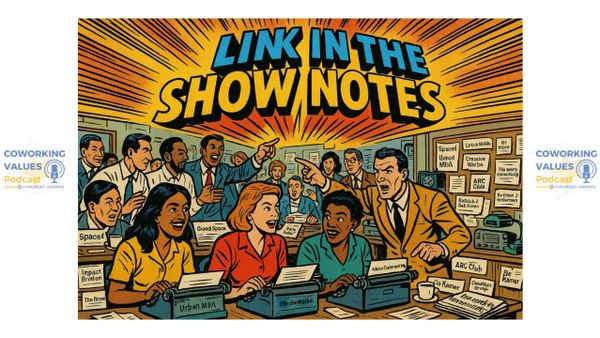
They Built Infrastructure for the Energy Money Can't Capture
LinkedIn Show Notes #35 from the Coworking Values Podcast Bullpen. 🎙️ Listen to these stories and hundreds of others on the Coworking Values Podcast. Three community builders. Three continents. One pattern: They stopped selling memberships and started building movements that run on relationships, not transactions. This week from the Coworking Values Podcast Bullpen: We've been tracking how coworking spaces can become laboratories for post-capitalist organising. Not in theory—in practice. W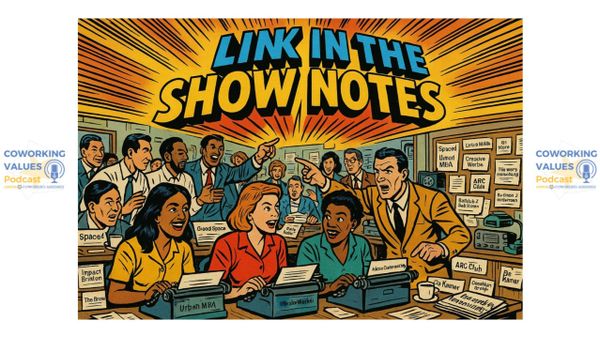
They Host Church, Stop Brain Drain, and Won't Put Their Film on Netflix—And They're Winning
LinkedIn Show Notes #34 from the Coworking Values Podcast Bullpen. 🎙️ Listen to these stories and hundreds of others on the Coworking Values Podcast. Three different community builders. Two continents. One pattern: They stopped optimising for scale and started building for depth. And the people who needed them showed up. This week from the Coworking Values Podcast Bullpen: We've been tracking why some spaces feel like communities and others feel like expensive libraries with good Wi-Fi. T
Start With the Building, Miss the Person — It Happened Again This Week
I spent this week watching the same argument break out in different places, with different people, in completely different conversations. None of them planned it. * Caleb Parker published a manifesto for high street coworking. * Suzanne Murdock sent her monthly newsletter from The Hub Newry. * Parisa Wright kept resharing her Hope Hub episode. And * Ann-Marie Kinlock and Anna Chuicharoen finally opened KindHaus in Hackney after three years of hurdles, setbacks, and proving that a space wher
Start Cooking. The Recipe Will Follow.
We're moving everything up a gear. At the last Unreasonable Connection Live in Lewisham, you told us the groups were too random and the curation could be tighter. You were right. 75% of you left with more momentum than you arrived with. The room worked. The curation didn't. The people in the room, the conversations that happen, and how those conversations are curated—it all matters deeply. That's why on May 19th, Tilley Harris and the team from Akou are collaborating with us to facilitate