What Hospitality Actually Costs with Ian Minor
SOPs, staffing ratios, and the touch points small operators can afford
“Hospitality is the art of being hospitable.”
Ian Minor
Tired of running yourself into the ground?
Then stop running alone.
On February 24th, the London Coworking Assembly presents Unreasonable Connection Goes Live!—a one-day working session for the people running London’s most vital neighbourhood spaces and the public sector allies working to help them thrive.
It’s a day to share the load, find real solutions, and build a new playbook, together.
Hospitality has become one of those words shouted from every coworking LinkedIn post, usually next to a photo of a nice coffee machine.
But Ian Minor has spent 30 years in actual hospitality—nightclubs, bars, restaurants, and health clubs across three continents. The kind with burns, late nights, and a ruthless feedback loop where if the vibe dies, the room empties.
He created Working From_ for The Hoxton. He’s a partner at Brave Corporation with Caleb Parker. He’s rethought everything from what you call your front desk staff to how many times a day you should nod at a member in the corridor.
This conversation strips away the Instagram aesthetic and answers the hard question: what does hospitality actually cost when you’ve got two staff and a hundred members?
This episode is for operators who know “hospitality” matters but aren’t sure what they’re supposed to do about it with limited resources.
Timeline Highlights
[02:53] Ian’s definition: “Hospitality is the art of being hospitable.”
[03:37] “You’re going for an experience within hospitality, and that’s the thing that you’re really delivering. The food and the drink, for me, are part of the product, but they’re not the main thing.”
[06:03] What an experience actually is: “Trying to make something that’s personal to that customer.”
[07:28] The reputation multiplier: “That starts to build a reputation that has come from the experience or the service that they’ve been given... which was more than what they were expecting”
[10:20] Going above and beyond: “If you always go above and beyond what is expected, you’re always going to deliver a lot more than what they even wanted, but they’ll always remember it.”
[15:19] The critical question for operators: “What level of hospitality can they comfortably give with the current operation they have, and what do they aspire to give?”
[16:54] The language shift: “I changed from reception to host. I’ve always called that department the Host Team.”
[21:52] The test: “The human connection that you’re driving or you’re trying to get to is what can define whether or not your hospitality or not.”
[22:47] Restaurant staff costs: “Anything between, let’s say, 23 to 28% of revenue goes on staff salaries.”
[24:06] Flexible workspace reality: “You could probably be down, and what I’ve seen from what I’ve done, between 9% to 11% staff cost against revenue.”
[26:38] Where to start: “Understanding if they’ve got operational manuals written, if they’ve got standard operating procedures written, which are the SOPs.”
[27:55] Why consistency matters: “This break in consistency is the worst thing that you can have in an operation because as a customer, you just don’t know what you’re actually getting from them.”
[29:03] Mapping the member day: “What does their day look like and how many touch points... can I get a nod... or a quick one-minute chat along their day.”
[31:07] The foundation: “The first point of hospitality is just making sure that the service is consistent at the very basic level.”
[32:34] The final instruction: “Just think about what you can deliver and then just try and deliver that consistently at a high level and then a higher level as much as you possibly can.”
The Kitchen Confidential of the Workspace
Ian Minor doesn’t come from the world of serviced offices or real estate.
He comes from nightclubs. Bars. Restaurants. Health clubs. Late-night operations across three continents.
In that world, the feedback loop is immediate and brutal. If the vibe is wrong, the room empties. If the ice runs out, if the security is too aggressive, if the lighting is too harsh—revenue collapses that night.
There are no five-year leases to hide behind.
Bernie captures it perfectly: “If you’ve ever worked in hospitality, there’s like grind, hard work, blood, sweat, and tears and a lot of burns and cuts from doing it.”
When coworking spaces started shouting “hospitality!” around 2020, Ian saw a gap. The sophisticated consumer—used to the high-touch service of a Soho House or a boutique hotel—was being forced into sterile, fluorescent-lit serviced offices with receptionists who barely looked up.
He realised the skills of the nightclub operator—lighting, sound, service speed, emotional connection—were exactly what the office market lacked.
So he brought them over.
What Hospitality Actually Means
Bernie asks directly: “If someone bumped into you in Liverpool Street Station and said, What’s hospitality? What would you say?”
Ian’s answer is deceptively simple: “Hospitality is the art of being hospitable.”
But he immediately adds layers.
It’s not about the product. It’s about the experience.
“You’re going for an experience within hospitality, and that’s the thing that you’re really delivering. The food and the drink, for me, are part of the product, but they’re not the main thing.”
Bernie illustrates this with his own example—a taco place in Vigo. It looks like a greasy spoon. It’s chaotic. The guy behind the counter is shouting. But the food is brilliant, and they walk 20 minutes in the rain on Sunday nights to go there.
That’s hospitality.
Not designed. Not Instagram-ready. But felt.
Ian explains what makes it work: “It’s understanding or taking cues from the individual that’s gone in there or the couple that has gone in there... trying to learn a little bit about them... then seeing what little added things that you can do during the course of that sitting to make it extra special.”
The test: when they leave, are they still talking about it weeks later?
If yes, you’ve created an experience. If no, you’ve just completed a transaction.
The Motivation Question
Bernie presses on with motivation.
Is it about making someone’s day, or is it about making them come back?
Ian cuts straight to it: both are true, but the driver should be love.
He talks about a moment from his own career—serving a couple who used to come into a bar at Lakeside Shopping Centre. They ordered a margarita with no salt and a Corona. Three years later, they walked into the Covent Garden branch where Bernie was working. He just put their drinks in front of them without saying a word.
They were stunned. “How did you know?”
Bernie got a real kick out of that moment—not because it guaranteed loyalty, but because it was a random act of care.
Ian: “You can do this in any walk of life. You can engage with life or not engage with life. If you engage with it, you’re always going to get better and reach your experiences from that.”
If you always go above and beyond what is expected, you’re always going to deliver a lot more than what they even wanted, but they’ll always remember it.
Yes, this might lead to a good tip or repeat business. But the deeper reward is personal.
“You’re going home from your shift or your night’s work or your day’s work, knowing that for those 8 hours or 10 hours, you did the best that you could do in that period of time, and you can go home happy.”
Positivity compounds. Good service makes the server feel good, which makes the guest feel good, which makes the server feel good.
Ian calls it living in a “Zen way of life.”
Why We’re “Suddenly” in the Hospitality Business
Bernie asks the question every coworking operator has wondered: How did we end up in the hospitality business? Three years ago, weren’t we just renting desks?
Ian’s answer is sharp.
“I think it needs to sit somewhere in some industry.”
Flexible workspace didn’t have a natural home. It wasn’t real estate. It wasn’t office management. It wasn’t pure hospitality either.
But “hospitality” became the positioning because it helps people understand they need to give more than they have been used to giving in the past.
It’s a signal. A cue.
“When you say hospitality... I think it’s purely from a positional point of view so that it helps people understand that they need to perhaps give more than what they have been used to giving in the past.”
The danger is when people hear “hospitality” and think it means buying expensive furniture and hiring a barista.
Ian’s version is different.
It’s about the depth of service. Touch points. Consistency. Emotional intelligence.
Not Instagram. Operations.
The Language You Use Shapes the Service You Give
One of Ian’s most practical moves: changing job titles.
He doesn’t call the front desk team “Reception.” He calls them the “Host Team.”
Why does this matter?
“Reception” describes a location. It implies the person won’t move beyond that point. They answer phones. They greet people at the door. That’s it.
“Host” describes a role. It implies they move through the building. They engage with members throughout their day. They go deeper.
Ian explains: “By creating the terminology change, you can then put in a deeper layer of service to define that role and that position, that operational department better.”
The question becomes: how many touchpoints occur during a member’s day?
In a restaurant, there are dozens. The concierge. The server. The sommelier. The person who clears the plates. The person who delivers the bill.
Each is a chance to add care.
In a coworking space with a single reception desk, how many touch points exist?
Not many—unless you engineer them.
Ian’s insight: The human connection you’re driving is what defines whether it’s hospitality or not.
The Economics of Hospitality
Bernie moves to the hard question: cost.
If you’re a small operator with two or three staff and a hundred members, what does hospitality actually cost?
Ian doesn’t dodge it. He brings data.
Restaurants: 23% to 28% of revenue goes on staff salaries.
Nightclubs: 13% to 16% (fewer services—just bar staff and security).
Hotels: 30% to 35%.
Flexible workspaces: Ian’s observation from his own operations—9% to 11%.
That gap is structural.
You cannot deliver restaurant-level hospitality on nightclub-level staffing.
So the question for small operators becomes: what level of hospitality do you deliver right now, and what do you aspire to deliver eventually?
Ian’s advice: start by mapping what you already offer.
How many touch points do you currently have with members?
Is it just a greeting at the door? A smile when they walk past? A monthly newsletter?
Then ask: how many more touch points could you add without blowing your budget?
Someone on your team checking in with regulars once a week? Remembering a member’s coffee order? Sending a quick message on their 100th day pass?
These don’t cost money. They cost attention.
If those work—if retention improves, if members stay longer, if they bring friends—then you consider adding staff.
The SOP Problem
Ian’s next insight will annoy some people, but it’s true.
Inconsistency kills trust faster than bad service.
He uses the coffee shop example. You order a flat white. Three times out of five, it’s perfect. Two times, it’s terrible.
Now you don’t trust them.
You don’t know what you’re getting.
That uncertainty is worse than predictably average coffee.
This is where Standard Operating Procedures (SOPs) come in.
An SOP is a written document that explains how to do something consistently.
- Telephone etiquette.
- Postal deliveries.
- Onboarding a new member.
- Greeting someone at the door.
- Making a flat white.
Ian’s first step for any operator: sit down with your team. Do you have operational manuals? Do you have SOPs?
If not, start there.
“Those SOPs and those operational manuals teach and tell each member of staff how they need to operate within the space. You’re hoping it will make them more efficient. They’re all going to do something exactly the same way.”
Bernie mentions that nowadays, with AI, you record a conversation, transcribe it, and turn it into an SOP in minutes. The speed to high standards has never been easier.
Ian agrees—but adds a caveat.
Involve your team in creating the SOPs. Let them own it. They already know the quickest, best way to do something because they’re doing it every day.
The goal isn’t control. It’s consistency.
“This break in consistency is the worst thing that you can have in an operation because, as a customer, you just don’t know what you’re actually getting from them.”
The Member Day
Ian’s framework for thinking about hospitality: the member’s day.
What happens from the moment they walk in at 9 AM to the moment they leave at 5 PM?
That’s their day.
“What does their day look like, and how many touch points along that 9 AM to 5 PM graph can I get a nod to them in the corridor or a smile or a quick one-minute chat along their day just to make it a little bit better for them?”
This is hospitality.
Not a fancy lobby. Not free beer Fridays.
A nod. A smile. A one-minute chat.
These are the moments that make someone feel seen without being forced.
Bernie shares a story about emailing everyone in a room about an event, then being annoyed that no one talked to him about it.
A few weeks later, he tried walking around and personally inviting people: “Ian, we’ve got the barbecue on Tuesday. Would you like to come?”
Everyone started talking about it.
The email was convenient. The conversation was human.
Ian’s point: The human connection you’re driving is what defines whether it’s hospitality or not.
What Small Operators Should Do Right Now
Bernie asks the critical question: What should a small operator with two or three staff actually do?
Ian’s answer is refreshingly practical.
Step 1: Audit your current touch points.
What are you already offering? Greet at the door? Occasional check-ins? Monthly events?
Write them down.
Step 2: Add one or two more touch points that don’t cost money.
Learn members’ names? Remember their coffee order? Send a quick message on their 50th visit?
Step 3: Measure retention.
Are members staying longer? Are they happier? Are they bringing friends?
If yes, the hospitality is working.
Step 4: If retention improves, consider adding staff.
Only then do you expand the team.
Ian’s mantra: “Just think about what you can deliver and then just try and deliver that consistently at a high level and then a higher level as much as you possibly can.”
Don’t try to be a five-star hotel on a two-person team.
Be a two-person team that delivers consistent care.
The Flat White Test
Bernie brings up a recurring experience: walking into a coffee bar, seeing who’s serving, and if it’s not “his person,” walking to the next place.
The risk of a mediocre espresso is too high.
Ian turns this into a business lesson.
“Think about it from a business perspective, what they’ve just lost because of that, that one thought that you have, that’s the member journey.”
One customer was lost for the day.
Multiply that by everyone else who feels the same way. Seven days a week. 365 days a year.
That’s not just lost revenue. It’s lost trust.
Ian learned this in nightlife and hospitality: “A Coke customer today could be a steak customer tomorrow. You never know who you’re serving.”
Consistency isn’t boring. Consistency is the foundation of trust.
The Final Word: Don’t Sweat It Too Much
Ian’s closing advice is the most useful.
“I appreciate how hard it is for people to think about the lines of hospitality within what they’re doing. The main thing I would say here is don’t sweat it too much.”
You don’t need to solve this overnight.
Figure out what you deliver. Deliver it consistently at a high level. Then, when you’re ready, level up.
“That is getting you into this art of being hospitable, which is the fundamentals of hospitality.”
Bernie wraps it with a reminder: Ian’s written extensively on LinkedIn about this stuff. His articles are “quite good” and “very unfluffy.”
That’s about as close to a compliment as Bernie gets.
Links & Resources
Ian Minor’s Work
Organisations Mentioned
Projects & Community 2026
- Unreasonable Connection Live! London Coworking Assembly Forum Feb 24th
- Workspace Design Show London 25th / 26th Feb
- RGCS Symposium Berlin 5th and 6th March
- European Coworking Day: 6th May
- Coworking Alliance Summit 3rd June
- London Coworking Assembly
- European Coworking Assembly
- LinkedIn Coworking Group
Bernie’s Projects
One More Thing
Coworking brings communities together, helping people find and share their voices.
Each episode of the Coworking Values Podcast explores Accessibility, Community, Openness, Collaboration, and Sustainability—values that shape the spaces where we gather, work, and grow.
If this resonates with you, rate, follow, and share the podcast. Your support helps others discover how coworking enriches lives, builds careers, and strengthens communities.
Community is the key 🔑
Written by
What's Next?

They Come for the Promise. They Stay for the Hospitality. with Dr. JJ Peterson
"They come for the promise. They stay for the hospitality." — Dr. JJ Peterson Episode Summary JJ Peterson has spent eleven years inside the StoryBrand universe. He co-authored Marketing Made Simple with Donald Miller. He helped Will Guidara write the certification for Unreasonable Hospitality. He hosts the Badass Softie podcast — for leaders who are unapologetically driven but want to lead with their hearts. He is flying to London in June to teach at the first workshop in the world to b
Why AI Can't Feel the Room: Practical Operations with Carlos Almansa
"The AI cannot feel the space. It can't feel the dynamics or the vibe. But it can free up time for you to talk to your members, to have a coffee with them, to understand and to read people." — Carlos Almansa Ballesteros Episode Summary Most conversations about AI in coworking are either evangelical or dismissive. Carlos Almansa Ballesteros, co-founder of Nexudus and author of the Coworkings AI newsletter, isn't interested in either. He's been building software for this industry for 13
The Golden Thread: Why Unreasonable Hospitality Needs a Story First with Sonya & Julie
Why your coworking space needs a Story before it can practise hospitality "Marketing makes these promises and service delivers that. So for us, StoryBrand and unreasonable hospitality, really work together hand in glove. And StoryBrand is really about thinking about how you communicate that you care to your customers. And the unreasonable hospitality side of things is how you prove it." — Sonya Whittam Sonya Whittam and Julie Firth run Story22, a customer-centric marketing agency base
You're Never Broke If You Got Ideas: How Koder Brings Music to the Neighbourhood
"Ideas are currency, you know. And you're never broke if you got ideas... Everything we are looking at around us came from an idea. So for me, they are, it is a currency within itself." — Koder Koder runs Undeniable Studios, a music production conglomerate built from youth clubs, pirate radio, and 10,000 hours of free studio time in Brockley. He's now the first Creative in Residence at Blue Garage in Lewisham, where he's installing a commercial music studio, planning his Circle the Ends

Start With the Building, Miss the Person — It Happened Again This Week
I spent this week watching the same argument break out in different places, with different people, in completely different conversations. None of them planned it. * Caleb Parker published a manifesto for high street coworking. * Suzanne Murdock sent her monthly newsletter from The Hub Newry. * Parisa Wright kept resharing her Hope Hub episode. And * Ann-Marie Kinlock and Anna Chuicharoen finally opened KindHaus in Hackney after three years of hurdles, setbacks, and proving that a space wher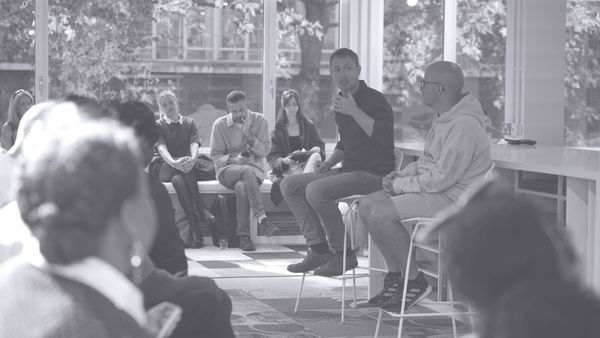
Start Cooking. The Recipe Will Follow.
We're moving everything up a gear. At the last Unreasonable Connection Live in Lewisham, you told us the groups were too random and the curation could be tighter. You were right. 75% of you left with more momentum than you arrived with. The room worked. The curation didn't. The people in the room, the conversations that happen, and how those conversations are curated—it all matters deeply. That's why on May 19th, Tilley Harris and the team from Akou are collaborating with us to facilitate