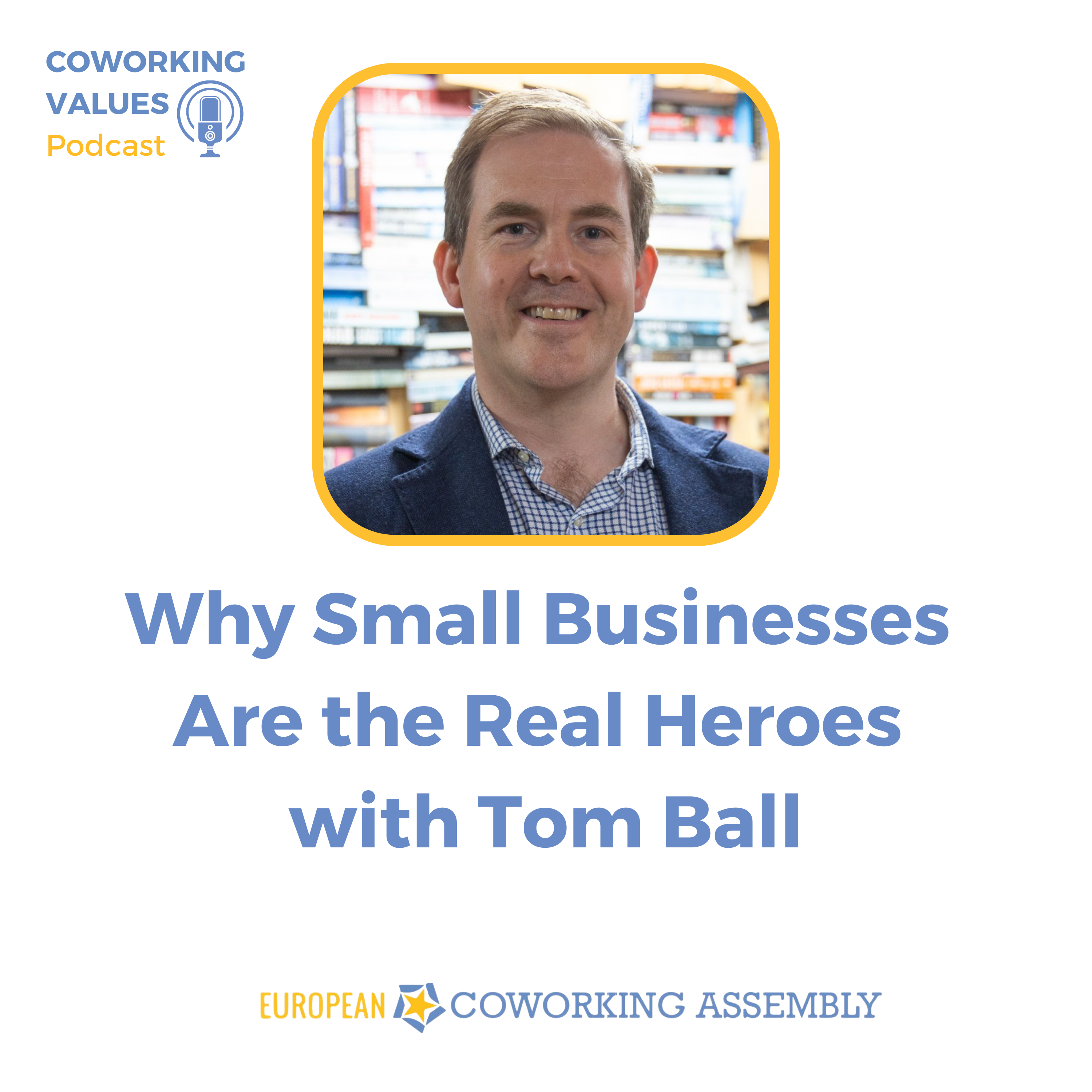
Why Small Businesses Are the Real Heroes with Tom Ball
How to build a viable coworking space without selling your soul to corporates
“The unsung heroes are the smaller companies who are… They’re not trying to raise a billion pounds... Being a home where they feel happy, safe, productive is a good thing.”
Tom Ball
Tired of running yourself into the ground?
Then stop running alone.
On February 24th, the London Coworking Assembly presents Unreasonable Connection Goes Live!—a one-day working session for the people running London’s most vital neighbourhood spaces and the public sector allies working to help them thrive.
It’s a day to share the load, find real solutions, and build a new playbook, together.
Tom Ball has been banging the drum for micro and small businesses longer than most people have been paying attention.
While everyone else obsesses over billion-pound unicorns and corporate flex contracts, Tom’s been quietly building DeskLodge in Bristol—a coworking space that actually makes money whilst refusing to become a soulless corporate service provider.
The tension he lives with daily is the same one every independent coworking operator faces: you can’t be a purist because you can’t pay the bills that way. But you also can’t rip out everything that makes your space special just to chase higher margins.
Tom chose a third path. He runs a financially viable business with a diverse tenant mix—freelancers, small firms, and corporate teams—whilst maintaining what he calls an “indie-friendly culture” and refusing to compromise on the values that matter.
The conversation covers what the last brutal year has done to small coworking spaces, why government and big corporates consistently fail small businesses despite calling them “the backbone of the economy,” and the practical frameworks Tom’s developed over a decade to stay solvent without losing his soul.
He shares DeskLodge’s award-winning flexible pricing model, including the “Flex One Plus” membership that changed how they think about belonging. The environmental design philosophy that treats productivity as a design problem, not a community-building one. The “Pay It Forward” scheme that gives free hot desking to well-connected people between jobs—not out of charity, but as strategic network investment.
This episode is for operators who are exhausted from pretending the last year wasn’t brutal. Who want to support freelancers and micro-businesses but can’t figure out how to make the maths work. Who know their space needs corporate revenue but refuse to become WeWork.
Tom doesn’t pretend to have all the answers. What he has is a decade of making it work whilst staying honest about what it actually takes.
Timeline Highlights
[01:24] Tom on what he’d like to be known for: “They’re actually really productive and we love small companies”
[02:26] The unsung heroes: “I think the unsung heroes are the small companies... Where you spend your money matters. We should be doing more to support these people”
[04:11] The brutal year: “Small coworking spaces... huge verbal hug to everybody out there running a space because the last year has been brutal... The build-up to the last budget was basically creating paralysis and nobody was making decisions”
[05:48] How to support small businesses: “Use small businesses, pay them well... Pay them on time... And give a good fair shout out. Don’t ask for makes rates. Just treat them well”
[07:02] The purist trap: “I don’t think you can be a purist because I don’t think you can pay the bills... We would make more money if we ripped out a load of the hot desking... but we choose not to”
[09:50] Being home for small companies: “The unsung heroes... are the smaller companies who are… They’re not trying to raise a billion pounds... Being a home where they feel happy, safe, productive is a good thing”
[13:24] Environmental design matters: “We’ve got a silent zone... places that are designed for doing video calls... open plan areas... We deliberately designed these different spaces for doing different things”
[16:58] The Flex One Plus insight: “You pay a monthly membership and it gives you one day a month, and then you get a discount rate for other days... having that one a month means you feel that you belong and you’re leaning forward slightly”
[17:31] The pricing breakdown: “It’s 30 quid for a day pass, 25 quid a month with one day included, and then it’s 25 for the extra days”
[21:50] Community acquisition strategy: “The best thing that we do is let other people host their events in our space... free hot desk for free as a group... as a way of pulling in new people”
[23:55] Pay It Forward: “If somebody well connected leaves their job, then I give them a few months free hot desking... It’s a lovely thing to do... what goes around comes around”
[25:29] The Gap defined: “The Gap is from when you realise you’re doing the wrong thing to when you start doing the right thing... We’ve got the wrong energy around it... it’s a time when people want, deserve, need help”
Nobody Actually Believes in Small Teams
Tom doesn’t waste time being diplomatic about this.
Labour is big government. Tories are big corporate. Nobody in power actually believes in smaller teams, despite the rhetoric about small businesses being “the backbone of Britain.”
If you look at government, it’s small teams that make stuff happen. Massive hierarchies spend more time in meetings. Yet policy consistently favours large organisations because that’s where the power sits.
The same pattern shows up in coworking. Everyone talks about community and supporting freelancers. Then they optimise for corporate contracts because that’s where the reliable revenue lives.
Tom’s watched this play out across his members. The two-person consultancy doing brilliant work. The small coffee shop. The slow-growing companies that have been with DeskLodge for a decade, slightly bigger now but not chasing unicorn status.
These are the actual lifeblood of local economies. And they’re systemically unsupported.
Where you spend your money matters. Not as a moral statement—as an economic one. When you choose the indie coffee shop over Starbucks, you’re keeping wealth circulating locally rather than extracting it to shareholders.
The challenge for coworking operators is you can’t run on ideology. You need revenue. The question becomes: how do you build a business model that supports small companies without going broke yourself?
The Brutal Year Everyone’s Pretending Didn’t Happen
Tom offers what he calls “a huge verbal hug to everybody out there running a space because the last year has been brutal.”
Not just tough. Brutal.
And it wasn’t Indies getting picked on whilst chains thrived. The whole market struggled. The build-up to the last budget created paralysis—nobody was making decisions. That meant nobody was moving into spaces. Clients’ pipelines delayed. Projects stalled.
Small coworking operators felt it hardest because they don’t have the cash reserves to weather extended slow periods. One bad quarter threatens survival.
Tom’s point isn’t to wallow. It’s to stop pretending.
Knowing everyone’s finding it tough helps. It’s not you. It’s not your pricing. It’s not your marketing. The external conditions have been genuinely difficult.
You’re in the right place doing the right thing. It won’t be like this forever.
That acknowledgment matters. Too many operators are quietly drowning whilst scrolling past other people’s Instagram posts of “sold out” events and “record months.” The isolation compounds the financial stress.
The indie coworking community needs more honesty about when things are hard. Not as resignation, but as solidarity.
Use Them, Pay Them Well, Pay Them On Time
Tom’s call to action for corporates is blunt.
If you’re a big company working with small vendors, do three things:
- Use small businesses. Choose them over the big agency or corporate supplier.
- Pay them well. They’re already cheaper than the alternatives. Don’t beat them up on price. Don’t ask for “mates rates.”
- Pay them on time. Or early. Not 60 days. Not 90 days. Not “were you short of cash?” when they chase payment. On time. They’re paying their bills on time. How are you doing?
It used to drive Tom “nuts” when big companies insisted on ridiculous payment terms, then had the audacity to act surprised when vendors needed paying.
This isn’t charity. It’s basic decency. And it’s economic sense.
When small businesses thrive, they hire locally. They spend locally. They create resilient local economies. When they’re squeezed by poor payment practices and exploitative pricing pressure, they fold.
Then everyone wonders why high streets are dying and local economies are hollowing out.
The same principle applies inside coworking spaces. If you want to maintain an indie-friendly culture whilst taking corporate revenue, you need to be intentional about how corporate members interact with smaller members.
Are your corporate members hiring your freelancers? Paying them fairly? Treating the space as a genuine community rather than just cheap desks?
The tenant mix isn’t just about revenue diversification. It’s about economic ecosystem design.
You Can’t Be a Purist, But You Can Choose Not To
Here’s Tom’s central tension: “I don’t think you can be a purist because I don’t think you can pay the bills.”
DeskLodge would make more money if they ripped out the hot desking and filled the space with high-paying dedicated desks and private offices. Tom knows this. He’s run the numbers.
But they choose not to.
Because the hot desking is where the magic happens. That’s where freelancers sit next to small company founders. That’s where someone awkwardly working through a WordPress problem at lunchtime realises they’re not alone.
Tom calls these people “the unsung heroes.” Not trying to raise a billion pounds. Just building something sustainable. They need a home where they feel happy, safe, and productive.
That matters more to Tom than maximum profit.
But—and this is critical—he’s not pretending you can run on values alone. DeskLodge has a diverse tenant mix. Corporate teams. Bigger companies that have grown with them over ten years. That revenue subsidises the ability to keep hot desking available at prices freelancers can afford.
It’s not purity. It’s intentional compromise.
You can’t be everything to everyone. But you can decide what you’re willing to sacrifice and what’s non-negotiable. For Tom, the hot desking stays. The indie culture stays. The corporate revenue makes that possible.
The operators struggling most are the ones who haven’t decided. They’re drifting toward whoever pays, then wondering why their space feels soulless. Or they’re holding rigidly to an ideal that’s bankrupting them.
Tom’s found a third path. It requires constant tension. But it works.
Environmental Design as Productivity Infrastructure
Most coworking spaces think about design as aesthetics or brand. Tom thinks about it as productivity infrastructure.
DeskLodge has distinct zones designed for different tasks:
- Silent zone for deep focus work
- Call booths specifically for video calls
- Open plan areas for collaborative work
- Kitchen with music for breaks and informal connection
This isn’t about pretty Instagram content. It’s about acknowledging that people need different environments for different kinds of work.
You can’t do deep focus work in an open plan space where someone’s on a video call three metres away. You can’t have an energetic client call in a silent zone. Trying to force one environment to serve all purposes creates constant friction.
Tom’s observation is sharp: “You make more money by giving a worse product because people don’t know to look for it.”
Most coworking spaces optimise for maximum desk density. They don’t create call booths or silent zones because that’s “wasted” space. Members don’t know to demand these things because they’ve never experienced them.
But once you’ve worked in a properly designed space, you can’t unsee it. The spaces that get this right create measurably better conditions for productivity. Members stay longer. They’re happier. They refer others.
It’s not about community programming. It’s about respecting that knowledge workers need environmental diversity to do their best work.
The Flex One Plus: Building Belonging Through Tiny Commitment
This pricing model deserves its own section because it’s brilliant.
Day pass: £30
Flex One Plus: £25/month includes one day, then £25 per extra day
The maths makes no sense for anyone using it once. You’d just buy the day pass.
But that’s not the point.
Tom explains: “Having that one a month means you feel that you belong and you’re leaning forward slightly.”
It’s a tiny financial commitment that creates psychological ownership. You’re not a visitor buying day passes. You’re a member. You have a recurring relationship with the space.
That small monthly anchor shifts behaviour. People come back more often because they’ve already “paid” for their day. Then they book extra days at the member rate. The friction of deciding “should I go to the coworking space today?” drops away.
Compare this to day passes. No commitment means no habit formation. Members stay transactional. They evaluate every single visit. They never fully integrate into the community because they’re perpetually guests.
Flex One Plus creates the smallest possible commitment that triggers belonging.
It won’t work for everyone. Some people genuinely just need occasional day passes. But for people who want to feel part of something whilst maintaining flexibility, it’s perfect.
This model won an award. Not because it’s financially revolutionary, but because it solves the psychological problem of how you create belonging in a flexible work world.
The Gap: When You Know But Haven’t Started Yet
Tom named something that doesn’t get talked about enough.
“The Gap is from when you realise you’re doing the wrong thing to when you start doing the right thing.”
That liminal space between jobs. Between identities. Between “I can’t keep doing this” and “I’ve figured out what’s next.”
We’ve got the wrong energy around it, Tom argues. We treat it like failure or waste. It’s actually a time when people most need support.
DeskLodge runs a “Pay It Forward” scheme. When someone well-connected leaves their job and enters The Gap, Tom gives them a few months of free hot desking.
Not out of charity. Out of strategic abundance.
These are people with deep networks. They’re between things, so they have time. They’re grateful for the support. They show up. They connect people. When they land their next thing, they remember who supported them in The Gap.
“What goes around comes around,” Tom says simply.
This only works if you choose people carefully. Well-connected doesn’t mean famous. It means genuinely embedded in communities you want to be connected to. People who reciprocate. People who value the space and will treat it well.
But done right, it’s one of the highest-ROI things a coworking space can do. You’re not buying advertising. You’re investing in relationships with people during the moment they’re most available and most grateful.
The Gap is real. People in it need somewhere to land. Coworking spaces are perfectly positioned to be that place—not as charity, but as ecosystem strategy.
Let Other People Build Your Community
Tom’s clearest marketing insight is about what DeskLodge doesn’t do.
They don’t run elaborate community programming. They don’t have a community manager organising yoga and lunch-and-learns.
What they do: “The best thing that we do is let other people host their events in our space.”
Third-party events bring new people in. Those people see the space. Some convert to members. The event organiser does the marketing. DeskLodge provides the venue.
They also run one big annual event to reconnect current and former members. And they offer 2-3 free trial days for acquisition.
That’s it.
The community builds itself through the people who choose to be there and the work they’re doing. The space’s job is to create the conditions—good environmental design, diverse tenant mix, operational reliability—not to manufacture connection through programming.
This is deeply countercultural in coworking. Most spaces assume community requires constant programming. Operators burn out trying to be camp counsellors whilst also running a business.
Tom’s approach: build a productive place that people want to work in. Attract interesting people. Let them find each other. Support third-party events that bring in new networks.
The community that emerges from that is organic, self-sustaining, and doesn’t depend on one person’s energy to exist.
If your community collapses when you stop programming events, you don’t have a community. You have an events business.
The Coworking Operator’s Dilemma
Tom embodies the central challenge independent coworking operators face.
You can’t make money only serving freelancers. Their budgets are too constrained. But if you only serve corporates, you lose the culture that makes coworking meaningful.
The solution isn’t picking one. It’s intentionally designing for both whilst being clear about what you won’t compromise.
For Tom, that’s keeping hot desking. Maintaining environmental diversity. Supporting small businesses even when it’s not financially optimal. Using the “Pay It Forward” scheme to invest in relationships.
The corporate revenue makes this possible. But it doesn’t dictate everything.
This requires constant negotiation. It’s not a set-and-forget business model. It’s an active practice of choosing what matters most and building the financial engine that lets you keep choosing it.
The operators who thrive aren’t the purists or the pure profit-maximisers. They’re the ones who can hold the tension between values and viability without collapsing into either extreme.
Tom’s been doing this for over a decade. Companies have grown with DeskLodge—started as freelancers, became small teams, are now slightly bigger. That slow growth is the dream.
Not unicorns. Not billion-pound exits. Just sustainable businesses that employ people, serve clients well, and contribute to local economies.
If coworking is going to survive as something more than corporate flex space, it needs more operators like Tom. People willing to do the harder work of building something viable that doesn’t sell its soul.
Links & Resources
Tom Ball & DeskLodge
Projects & Community 2026
- Coworking Operators Weekend Feb 6th
- Unreasonable Connection Live! London Coworking Assembly Forum Feb 24th
- Workspace Design Show London 25th / 26th Feb
- Coworking Alliance Summit 4th March
- RGCS Symposium Berlin 5th and 6th March
- European Coworking Day: 6th May
- London Coworking Assembly
- European Coworking Assembly
- LinkedIn Coworking Group
Bernie’s Projects
One More Thing
Coworking brings communities together, helping people find and share their voices.
Each episode of the Coworking Values Podcast explores Accessibility, Community, Openness, Collaboration, and Sustainability—values that shape the spaces where we gather, work, and grow.
If this resonates with you, rate, follow, and share the podcast. Your support helps others discover how coworking enriches lives, builds careers, and strengthens communities.
Written by
What's Next?
They Come for the Promise. They Stay for the Hospitality. with Dr. JJ Peterson
"They come for the promise. They stay for the hospitality." — Dr. JJ Peterson Episode Summary JJ Peterson has spent eleven years inside the StoryBrand universe. He co-authored Marketing Made Simple with Donald Miller. He helped Will Guidara write the certification for Unreasonable Hospitality. He hosts the Badass Softie podcast — for leaders who are unapologetically driven but want to lead with their hearts. He is flying to London in June to teach at the first workshop in the world to b
Why AI Can't Feel the Room: Practical Operations with Carlos Almansa
"The AI cannot feel the space. It can't feel the dynamics or the vibe. But it can free up time for you to talk to your members, to have a coffee with them, to understand and to read people." — Carlos Almansa Ballesteros Episode Summary Most conversations about AI in coworking are either evangelical or dismissive. Carlos Almansa Ballesteros, co-founder of Nexudus and author of the Coworkings AI newsletter, isn't interested in either. He's been building software for this industry for 13
The Golden Thread: Why Unreasonable Hospitality Needs a Story First with Sonya & Julie
Why your coworking space needs a Story before it can practise hospitality "Marketing makes these promises and service delivers that. So for us, StoryBrand and unreasonable hospitality, really work together hand in glove. And StoryBrand is really about thinking about how you communicate that you care to your customers. And the unreasonable hospitality side of things is how you prove it." — Sonya Whittam Sonya Whittam and Julie Firth run Story22, a customer-centric marketing agency base
You're Never Broke If You Got Ideas: How Koder Brings Music to the Neighbourhood
"Ideas are currency, you know. And you're never broke if you got ideas... Everything we are looking at around us came from an idea. So for me, they are, it is a currency within itself." — Koder Koder runs Undeniable Studios, a music production conglomerate built from youth clubs, pirate radio, and 10,000 hours of free studio time in Brockley. He's now the first Creative in Residence at Blue Garage in Lewisham, where he's installing a commercial music studio, planning his Circle the Ends

Start With the Building, Miss the Person — It Happened Again This Week
I spent this week watching the same argument break out in different places, with different people, in completely different conversations. None of them planned it. * Caleb Parker published a manifesto for high street coworking. * Suzanne Murdock sent her monthly newsletter from The Hub Newry. * Parisa Wright kept resharing her Hope Hub episode. And * Ann-Marie Kinlock and Anna Chuicharoen finally opened KindHaus in Hackney after three years of hurdles, setbacks, and proving that a space wher
Start Cooking. The Recipe Will Follow.
We're moving everything up a gear. At the last Unreasonable Connection Live in Lewisham, you told us the groups were too random and the curation could be tighter. You were right. 75% of you left with more momentum than you arrived with. The room worked. The curation didn't. The people in the room, the conversations that happen, and how those conversations are curated—it all matters deeply. That's why on May 19th, Tilley Harris and the team from Akou are collaborating with us to facilitate