From Consumers to Citizens: Lessons in Community Ownership
This week two communities shared how they are figuring out how to take back control of their own regeneration before private developers price them out.

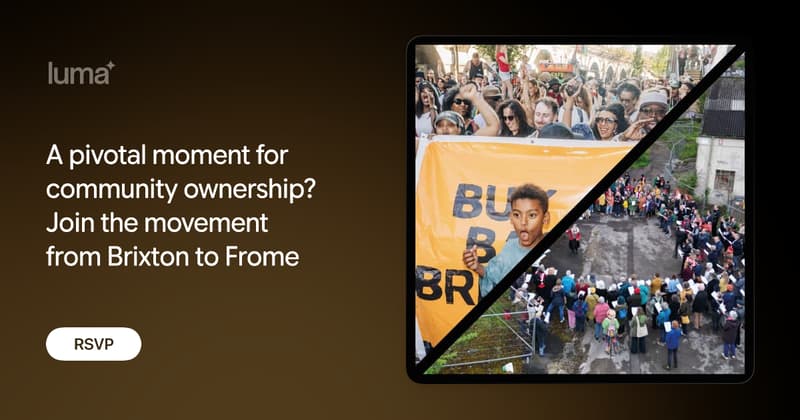
Buy Back Brixton is trying to raise £50 million to bring Brixton Village and Market Row into community ownership. Mayday Saxonvale in Frome is aiming to be the UK's largest community-led development — a 12-acre brownfield site brought into local control so value flows back into the town instead of to distant shareholders.
Jon Alexander was on the call. So were Saba Shafi from the Advocacy Academy, Holly Lawton and Paul Oster from Mayday Saxonvale. The conversation wasn't about coworking, but if you run an independent coworking space that sees itself as both a business and a connection point for citizens, this is how to build community at another level — and something your space can easily be part of.
Active Hope as Strategy
Saba used a phrase: "the Delulu."
The Advocacy Academy campaign team called it that internally — the mindset of living in the future, acting as if they'd already won the £50 million bid. They mapped out media strategy and funder meetings on the absolute assumption of victory.
Holly Lawton backed her up. She's been hearing "hope isn't a strategy" for five years. But without hope, there's no drive to sustain a fight this long. "If you don't have hope, there's no point. What's the point that's driving you?"
This isn't passive optimism. It's belief that works backwards from the future you're building.
For coworking operators: Design the space for the engaged community you want, acting as if it's already there. Most operators wait for community to show up before they believe in it. The belief has to come first.
 Melissa Richards
The Community Is the Developer
When private developers buy central town spaces, their lens is maximizing returns for private capital — usually through private housing. Paul Oster's community-led alternative in Frome seeks to maximize community outcomes instead: affordable housing, employment, shared spaces.
The Mayday Saxonvale outline proposal received over 1,000 supportive comments because the community was treated as the expert. The previous private developer on the same site received 500 objections.
Paul: "We can act with the same kind of commercial nous and entrepreneurial spirit as any private company. But the outcomes we deliver are not private. They're shared."
For coworking operators: Your members know what your space needs better than a distant landlord or a corporate blueprint. Instead of guessing, invite them to co-design the infrastructure. The people using it are the most qualified to design it.
Skin in the Game
Holly's phone blows up with WhatsApp messages from locals asking, "What can I do?"
People invest financially through the community share offer, and they step up. In Brixton, fifty young people set up stalls and grabbed microphones outside the train station to preach the spirit of Brixton.
For coworking operators: Give your members a way to actively invest in the space. It doesn't have to be financial — let them lead a workshop, manage a community garden, run an event. Shared responsibility creates fierce loyalty. The member who makes a fresh pot of coffee when the last one runs out is a citizen.
Creating the Space for Politics to Move Into
Jon Alexander opened with this: "What we are doing is creating the space for the politics to move into."
The changes that need to happen are too transformative to come from incremental policy tweaks. They happen when citizens build alternatives that create the space for politics to move into.
Summer 2024. The Southport riots. A list of 100 places the far right were going to attack leaked on social media. In every one, at least 100 people turned out to protect them. The Daily Mail ran: "Night anti-hate marchers face down the thugs."
 Jon Alexander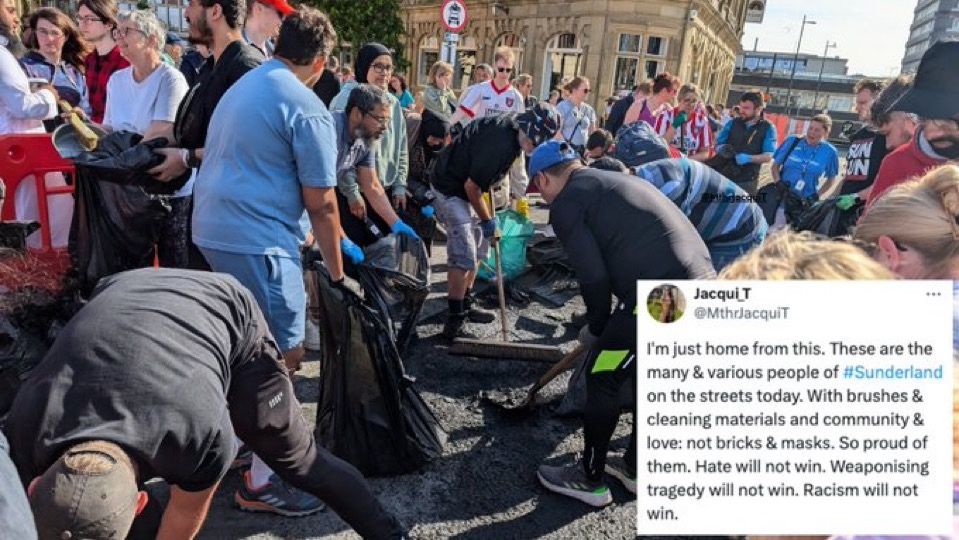
The whole story was shifting. Then Keir Starmer came out and said, "Police and a strong hand has fixed this. I have saved the country." He shut down the community energy that was building.
Jon's point: imagine if the speech he'd made had been, "This is who we are. This is the country we are capable of being. And we are going to turn that energy to face all of our challenges."
That moment was possible. It wasn't taken. But those moments will come again, and they'll be more powerful if we have stories to tell: a whole neighbourhood transformed by its citizens.
For coworking operators: A great coworking space isn't just a desk rental facility. It's a working prototype of the new economy. By building a functional, collaborative, locally-owned ecosystem, you're proving the "Citizen Story" is entirely possible.
When your MP walks through your door and sees 140 independent businesses working side by side — not a flex space, but a community — that's the story they take back to Parliament.
The Brixton Connection
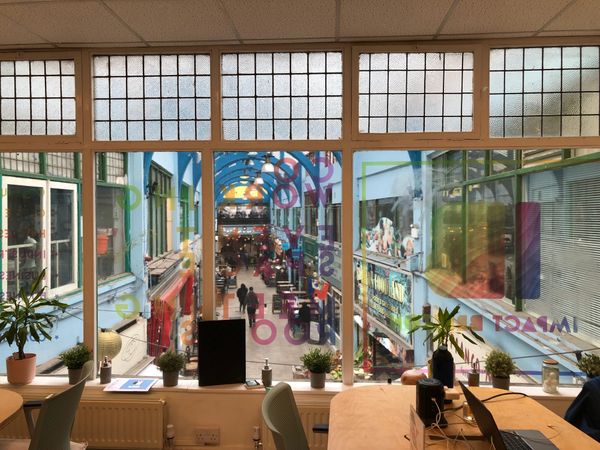
Many of you know Brixton well. We've run London Coworking Assembly events at Impact Brixton and The Department Store. 3Space at International House is another space in the area doing this work.
If Saba succeeds in bringing Brixton Market into community ownership, it gives us a story that carries something bigger. Jon said it: "Brixton Market is a cultural icon of our country. If that goes into community ownership, that gives us a story to tell."
The same is true for Frome. When Mayday Saxonvale becomes the UK's largest community-led development, it proves whole neighbourhoods can be designed and delivered by citizen organizations. It proves communities can handle scale and power.
What You Can Do This Week
Invite your MP to visit your space. Roland did it with Lauren Edwards at Dragon Coworking in Rochester. Six months later she said "coworking" at Prime Minister's Questions. The people making decisions about your high street don't know what you do. Let them see it.
Support Buy Back Brixton and Mayday Saxonvale. Buy Back Brixton GoFundMe. Mayday Saxonvale community share offer. Minimum investment for Mayday is £250. You and five mates can go in together.
Host an ACTionism screening. Bring people from inside your space and the neighbourhood together. Let them watch, then let them talk. The conversation afterward is the work.
Connect your space to what's already happening. Parisa Wright runs Greener and Cleaner, a community sustainability hub in Bromley that 1,300 people walk through every month. She didn't wait for a perfect space or permission — she opened where people already were.
Find someone like that in your town: someone already running a community project. Offer them a meeting room once a week for three months, no charge. You don't have to run the programme. You just have to connect your space to what the neighbourhood is already trying to become.
Ten years of coworking journalism. One pint a month.
This week Igor from Spacebring, Samuel from TechnologyWithin, and Anne-Marie from Baseworx joined our ever-growing Fund the Work community.
- The London Coworking Assembly is 100% reader-funded.
- The podcast, the research, the writing — all of it runs on £400 (ish) a month.
- When 48 people put in £100 a year, that's covered.
- That's about the price of a pint in central London once a month.
If you're building an independent coworking space and you want independent media to exist alongside it, this is one way to make that happen.
Written by
What's Next?
Start With the Building, Miss the Person — It Happened Again This Week
I spent this week watching the same argument break out in different places, with different people, in completely different conversations. None of them planned it. * Caleb Parker published a manifesto for high street coworking. * Suzanne Murdock sent her monthly newsletter from The Hub Newry. * Parisa Wright kept resharing her Hope Hub episode. And * Ann-Marie Kinlock and Anna Chuicharoen finally opened KindHaus in Hackney after three years of hurdles, setbacks, and proving that a space wher
Start With the Building, Miss the Person — It Happened Again This Week
I spent this week watching the same argument break out in different places, with different people, in completely different conversations. None of them planned it. * Caleb Parker published a manifesto for high street coworking. * Suzanne Murdock sent her monthly newsletter from The Hub Newry. * Parisa Wright kept resharing her Hope Hub episode. And * Ann-Marie Kinlock and Anna Chuicharoen finally opened KindHaus in Hackney after three years of hurdles, setbacks, and proving that a space wher
Start Cooking. The Recipe Will Follow.
We're moving everything up a gear. At the last Unreasonable Connection Live in Lewisham, you told us the groups were too random and the curation could be tighter. You were right. 75% of you left with more momentum than you arrived with. The room worked. The curation didn't. The people in the room, the conversations that happen, and how those conversations are curated—it all matters deeply. That's why on May 19th, Tilley Harris and the team from Akou are collaborating with us to facilitate