How to buy a community
How do you make clear the value of your coworking space?

How do you make clear the value of your coworking space to your local community, to your members, and to your local authority?
That's the question this newsletter keeps circling back to, and this week a lot of conversations landed in the same place.
At the Coworking Alliance Summit, Peter Block said coworking spaces are designed for liberation, not productivity. He was naming the difference between a space that extracts value and a space that generates it. A space people pass through and a space people belong to.
Through every example in this issue, that's the thread. People measuring what their space produces, taking ownership of where they work, and connecting to each other in ways that don't fit in a spreadsheet.
Measuring what your space actually does
Graham and Anne-Marie from Baseworx hosted a conversation at GCUC UK in Manchester with Stacey Sheppard and Felicia Fai.
It came off the back of a workshop on inclusivity, and they moved into the question that sits underneath so much of an operator's work: how do you measure the more human impact results, the impact that never shows up cleanly on a spreadsheet?
 Baseworx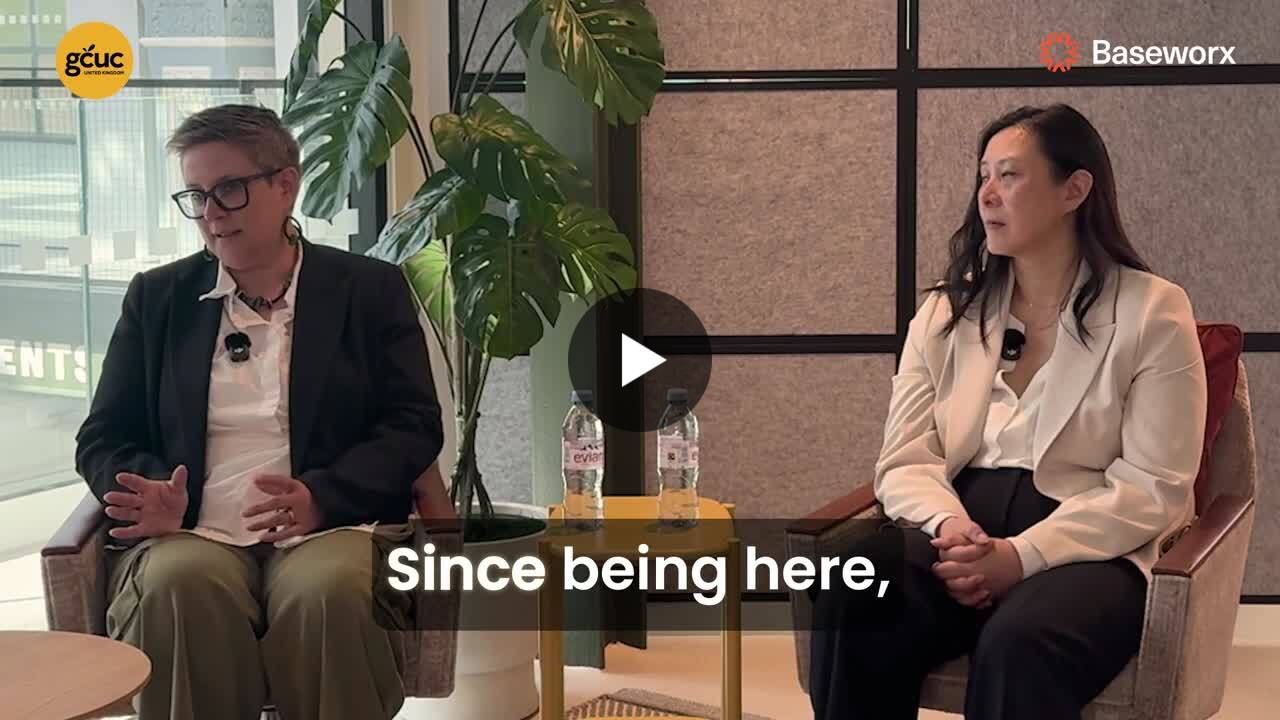
Felicia is an Associate Professor at the University of Bath School of Management. She and her colleague Philip Tomlinson never set out to research coworking. They set out to research what drives local economic development: regional innovation, entrepreneurship, people starting businesses. Coworking spaces kept showing up in the data. Not as a footnote. As the connection point.
She drew a line between three things:
- What your space costs to run (input)
- What it earns (output)
- What it leads to for the people who use it (impact)
That last one is where the value lives. The business that grew. The person who found their feet after moving to a rural area. The freelancer who became an employer. It doesn't show up cleanly in a spreadsheet, but it's the only number that tells the real story.
The thing with Felicia is she gives me language for stuff I already know but can't say properly. She uses a framework called the Six Capitals, which names what independent spaces produce across six areas:
- Economic capital: lowering the barriers to entrepreneurship
- Human capital: the informal learning that happens when people sit next to each other every day
- Social capital: the trust and reciprocity that builds between isolated people
- Cultural capital: the identity and talent an area attracts when a space puts down roots
- Institutional capital: the bridge between local entrepreneurs, growth hubs, and universities
- Physical capital: breathing life into underused buildings and keeping money circulating in the local economy
If local authorities sat down with their version of the Six Capitals, they'd see the invisible social capital and how it contributes to everything from firm formation to public health. But they see buildings.
Don't think of it like an office. A coworking space is a point of convergence. ACTionism screening, local groups meeting, the person who walked in for a desk and stayed because they found people who were working on their own things, together.
The evidence has been there for years
Town Square published a report in 2020 called What If Everyone Could Walk To Work. They opened it like this:
"What if everyone could walk to work? On the surface it sounds like an innocent enough question, but on closer inspection it has potentially profound consequences for our health, our economy, our environment, our relationships and our understanding of what really matters in life. Now more than ever, these are things we need to be thinking about."
That was nearly exactly six years ago. The cost comparison entralled me: supporting a hundred people for a full year in an equipped and staffed space costs the same as building twenty metres of motorway.
A member at Wrexham Enterprise Hub put it like this: "It's motivating to be around people who are working on their own things, but together. It helps you take a step up."
Six years later, Stacey Sheppard's space, The Tribe in Totnes, was on BBC Spotlight during Loneliness Awareness Week. The BBC called it the only coworking space in Europe in a rural location for women.
Her members described the same thing the Town Square report captured in 2020, playing out in Totnes in 2026: "Working in connection with other people who are working is really powerful for your wellbeing, for my wellbeing, really powerful for my business as well."
Kofi from Urban MBA is always telling me that we are not building because we are optimistic. We're building because the alternative is to let other people build it without us, and we've seen too many times what that looks like. Entrepreneurship by necessity, not glamour. The structural changes coming mean that whether you can or not, you're going to have to.
The Six Capitals framework, the Town Square evidence, Kofi's argument, and Stacey's BBC Spotlight all converge on the same thing: place-based investment. Standard policy trains people and hopes they stay. But if there are no local places for them to work, those skilled people migrate to major city hubs. Investing in the place makes the area sticky.
The open letter to the next Prime Minister
This week, Dom Hallas and the Startup Coalition, with Founders Forum Group, published an open letter to Andy Burnham called Rebuild Britain. It has now been signed by 263 founders, investors, and builders. Andy Burnham became leader of the Labour Party today and will be sworn in as Prime Minister next week, so the timing matters.
The letter sets out five points:
- Incentivise world-beating firms to build anywhere in the country, not only in London
- Unlock pension-fund capital so British people share in the success of British tech
- Bulldoze the regulatory mindset that blocks innovation
- Back British tech with decent procurement spend
- Prepare for the AI future by retaining talent in government and institutions
Over 50,000 new tech companies were incorporated last year, with the fastest growth outside London.
Britain's tech sector has been the bright spot in two decades of economic stagnation. Felicia and Phil have been researching this from an academic perspective, and Dom is pitching it as policy to the next Prime Minister. The letter is serious, coordinated, and it's getting attention.
But it talks about inputs and outputs at a national scale. It doesn't mention impact. The firms it wants to incentivise are already forming. In a carpet shop in Bromley AKA known as Contingent Works, Blue Garage in Lewisham, Space4 in Finsbury Park, Weave Coworking in Wigan and in Stacey's women-only space in Totnes - the letter does not name places like this, but these are where wealth in the regions is growing
A stake in where you work and live
This week Natasha Guerra announced that Runway East is now employee-owned. Twelve years in, seventy people, now held in an Employee Ownership Trust.
"Anyone can copy a nice office. Nobody can copy a team that genuinely gives a shit."
 Tim Burke
Peter Block said coworking spaces are designed for liberation, not productivity, and I love being productive, but I'm more productive when I'm in a state of liberation and connection. Natasha put that idea into a legal structure with Runway East's employee ownership, while Buy Back Brixton and Mayday Saxonvale are doing the same thing at neighbourhood scale.
There's a wave here. People are taking ownership of where they work and where they live, physically and economically, but above all, through connection. Jon Alexander came and did two Q&A sessions with the London Coworking Assembly over the last couple of years, and the main takeaway was "find the others." That's what started us on the path we're on now, and it keeps building.
 Matt Golding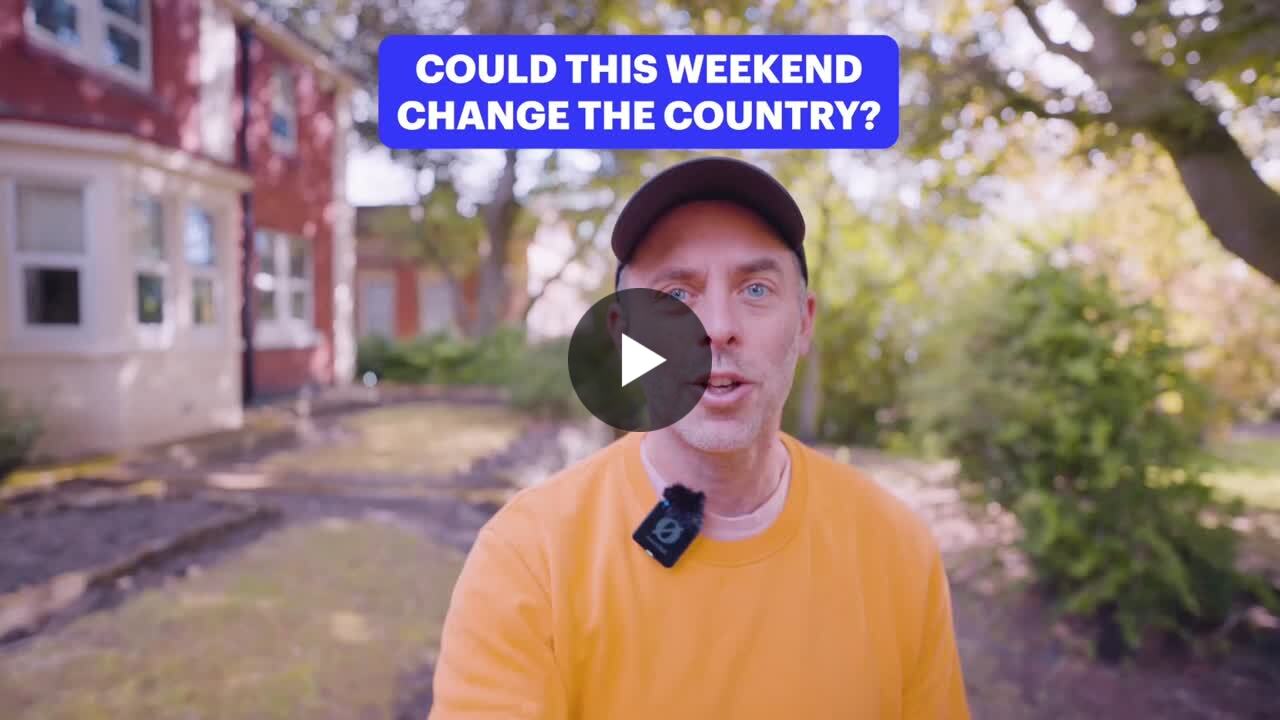
Matt Golding posted about Durham Miner's Gala this week. The Gala is a gathering bigger than Glastonbury, celebrating the Durham Miner's motto:
"The past we inherit, the future we build."
That phrase connects straight to what's happening in local communities right now. People getting together to talk to each other in coworking spaces, at actionism screenings, with their MP, taking agency in their local area. Matt and Maryam Pasha have been telling these stories in a whole series of video podcasts on good news from around the UK.
People are always saying "AI will change everything" and since November 2022, Kofi has been saying, "AI has already changed everything."
And it's the same with a citizen story, we are well into the Citizen Story, it already had serious traction when Jon published Citizens in March 2023. Jon had been working in this area since 2013, and that book wrote itself - (with the help of Ariane Conrad) because the momentum had already been building.
And now, more and more people I have found the others, When it comes to the citizen story the light is on and burning brightly for the masses
Two things you can do this week
There are two actions this week, and they work best together.
One. Sign the open letter to Andy Burnham.
I've looked through this email list and there are at least 170 of you who qualify as founders. Some of you have already signed. If that's you, spread the word around your coworking spaces. And if you are a coworking space vendor, a software supplier, or a tech company, I know a lot of you are signing this and spreading the word too. Put it in your WhatsApp or Slack channel and bring it to the attention of every founder in your building.
The more founders who sign from coworking spaces, the more coworking gets on the agenda of Andy Burnham's government. It's already there. Lauren Edwards has been talking it up in Parliament, and that happened because spaces like yours invited their MPs in.
Two. Get your MP to visit your space.
Parliament goes into summer recess soon, so now is the moment. Felicia's data points give you something to show: user postcodes, longitudinal growth, the Ireland Connected Hubs model. Invite them in and stick it under their nose. The pro tip is to email your MP and copy in the local ward councillor at the same time. It increases the chance of a reply. And don't forget to follow up.
Tilly Harris, Akou and a group of people you'll know are going around measuring the impact of coworking spaces and other civic groups right now, helping people understand how to participate in their local communities and take autonomy over where they live and work. Whether it's a company the size of Runway East or a one-woman place like Stacey's in Totnes, they all have important roles to play in connecting people locally.
The more we talk about this, the more we invite MPs in, the more of us that sign the letter, the more we realise how many other people are doing it. It's the whole find the others message. And over the last year, more and more of you have found each other. Connecting at events, meeting in groups, holding actionism screenings in your coworking spaces.
This has become the main drive of the Coworking Values Podcast and the London Coworking Assembly: helping people communicate the value of their coworking space to their local community, to their members, and to their local government.
If you're not sure what to do next, hit reply and we'll help you work it out.
You can't purchase a community. You have to build it. The people in this newsletter are the evidence that it's working.
Citizen-funded journalism for the people building civic infrastructure, one coworking space at a time.
In May we decided to take London Coworking Assembly
and Coworking Values Podcast media 100% reader-funded.
It keeps the podcast ad free, funds the research, bankrolls the Unreasonable Connection live events, pays Urban MBA students to work on our projects, and sends 10% to European Coworking Assembly projects.
Read: - Ten years of coworking journalism. One pint a month.
Thanks to the most recent people to commit to supporting:
- Anne-Marie Murphy - Baseworx
- Samuel Warren - technologywithin
- Igor Dzhebyan-Benjamin - Spacebring
- Carlos Almansa Ballesteros - Nexudus
- Ewan Buck - Contingent Works Bromley
The London Coworking Assembly and the Coworking Values Podcast are projects of the European Coworking Assembly.
We send 10% of the funds to the ECA to support their work with projects like ResMove, which helps refugees land safely through coworking, and rural coworking initiatives that keep brain drain from emptying villages.
✅ Become a Coworking Community Builder
Support Independent coworking journalism.
Written by
What's Next?
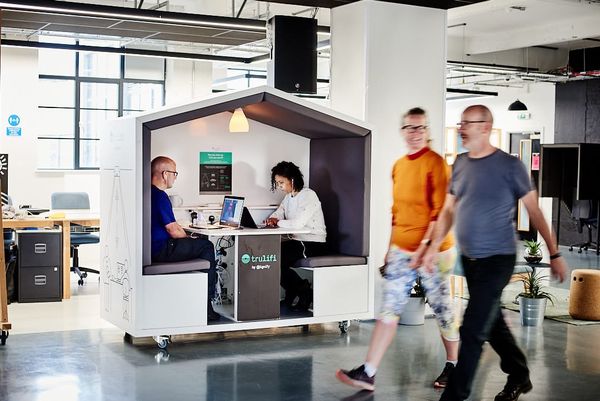
Three Labour MPs Told Their Own Government to Stop Taxing Coworking Spaces
This week three Labour MPs wrote in LabourList that the government should stop taxing the spaces where small businesses are building Britain's future. Josh Dean, Lauren Edwards and Perran Moon published the piece in their own party's publication. They name sole traders, freelancers and small business owners working hard to grow with little margin for error, and they describe flexible workspaces as the places where those people can build something of their own, close to home and rooted in their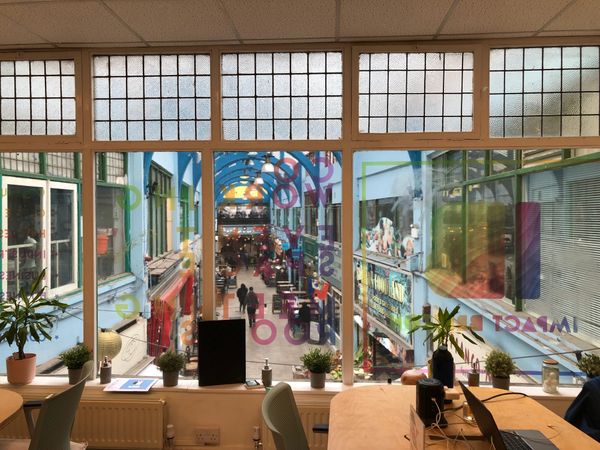
From Consumers to Citizens: Lessons in Community Ownership
This week two communities shared how they are figuring out how to take back control of their own regeneration before private developers price them out. A pivotal moment for community ownership? Join the movement from Brixton to Frome · Zoom · LumaAs wealth is sucked upwards faster than ever, away from people and communities and into the hands of the world’s first Trillionaire and his peers, a South…Zahra Davidson Buy Back Brixton is trying to raise £50 million to bring Brixton Village and Mark
Start With the Building, Miss the Person — It Happened Again This Week
I spent this week watching the same argument break out in different places, with different people, in completely different conversations. None of them planned it. * Caleb Parker published a manifesto for high street coworking. * Suzanne Murdock sent her monthly newsletter from The Hub Newry. * Parisa Wright kept resharing her Hope Hub episode. And * Ann-Marie Kinlock and Anna Chuicharoen finally opened KindHaus in Hackney after three years of hurdles, setbacks, and proving that a space wher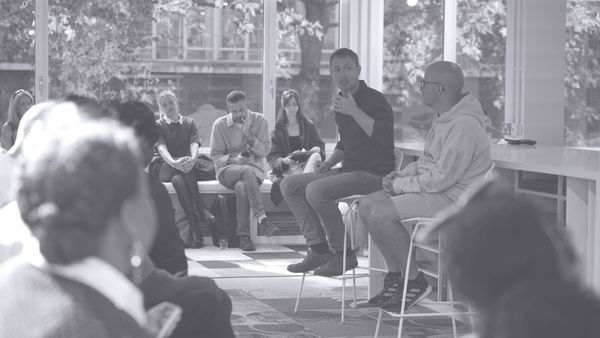
Start Cooking. The Recipe Will Follow.
We're moving everything up a gear. At the last Unreasonable Connection Live in Lewisham, you told us the groups were too random and the curation could be tighter. You were right. 75% of you left with more momentum than you arrived with. The room worked. The curation didn't. The people in the room, the conversations that happen, and how those conversations are curated—it all matters deeply. That's why on May 19th, Tilley Harris and the team from Akou are collaborating with us to facilitate