
Start Cooking. The Recipe Will Follow.

We're moving everything up a gear.
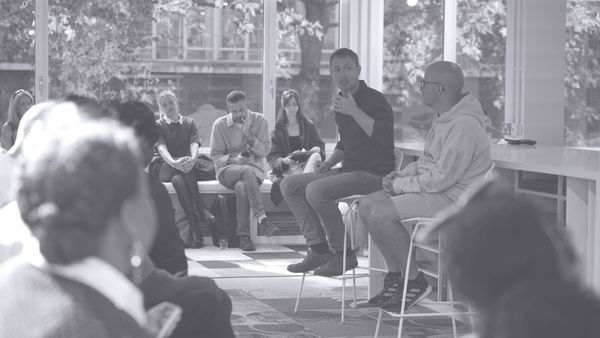
At the last Unreasonable Connection Live in Lewisham, you told us the groups were too random and the curation could be tighter.
You were right.
75% of you left with more momentum than you arrived with.
The room worked. The curation didn't.
The people in the room, the conversations that happen, and how those conversations are curated—it all matters deeply.
That's why on May 19th, Tilley Harris and the team from Akou are collaborating with us to facilitate the sessions at Space4.
Since 2015, we've hosted over a hundred events—online and offline, workshops and panels.
At the end of 2024, we started running a monthly online event called Unreasonable Connection, a deliberate play on the book Unreasonable Hospitality.
After about a year, people asked if we could do something in person.
That's when we came up with the idea to run it quarterly, rotating through different coworking spaces outside central London.
Because building a real village in this industry requires an unreasonable commitment to human connection.
If you've been to one of our recent events, you know that when we get past the surface-level networking, the conversations get incredibly real, incredibly fast.
We start unpicking the actual grit of operating at street level:
- How to make money
- Remain sustainable
- Have a genuine impact
- Serve our local postcodes
A lot of that brilliant, hard-won insight wasn't being captured properly.
Akou's entire model is built on capturing and measuring the exact "invisible" civic value that independent operators create every day.
Tilley's skill goes far beyond just capturing ideas. She creates a setting where you will realise your potential and connections by the way the conversations are curated on the day.
We're going to be working out how to get people connected before, during, and after the event.
The "invisible work" becomes visible on May 19th
You're not just coming to talk about the work.
You're coming to learn how to measure it, prove it, and make it sustainable.
As a quick aside, the London Coworking Assembly isn't the only major organisation in London they've done this for—they also do projects with the Mayor of London and TfL.
We'll be running Co-Design sessions to soundboard your Social Impact Strategy.
You will leave with a goodie bag full of tangible tips, tricks, and materials to amplify the difference you are making—building an evidence case that councils and investors cannot ignore.
And just like our very first in-person Unreasonable Connection event, the brilliant team from Urban MBA will be joining us again on the day.
There are only 26 seats left.
(Need to book a group? Hit reply to this email, and Jeannine will organise an invoice for you.)
There are no keynotes, no panels, and no pitches.
Enabled by Welcome Gate, Coworks, Nexudus, and Cobot.
The corporate myth
We hear a lot of noise right now that the coworking industry needs to "grow up" and chase "Enterprise" clients to succeed.
You'll hear commercial landlords and massive flex-space operators throwing around real estate Frankenspeak like the "Flight to Quality."
They talk about "curated environments," integrated fitness, and top-tier F&B, as if the only way to save a soulless Class B office building is to bribe employees back downtown with a barista bar and a Peloton room.
It's a real estate defence mechanism dressed up as a community strategy.
Let's look at the reality of the UK economy.
They are terrified and selling luxury to consumers.
We are building infrastructure for citizens.
95.3% of all private sector businesses in the UK are microbusinesses (0 to 9 employees) or sole traders.
That is 5.4 million businesses.
The people pushing the corporate narrative are focusing on a tiny, heavily invested fraction of the market.
Many of you know I spent years deep in the early "sharing economy."
Back then, VCs celebrated the gig economy, but as Naomi Klein warned, it was actually just corporations aggressively offloading their economic risk onto the individual.
Today, that crisis has accelerated.
As Kofi Oppong recently warned on the Coworking Values Podcast, "there won't be jobs in employability as we know it," forcing millions into independent work just to survive.
But trying to survive this by buying into isolated "hustle culture" is a trap.
As economist Gary Stevenson points out, the link between hard work and financial security has been completely severed by asset inequality—you cannot out-hustle a rigged system alone.
His conclusion is exactly why we do what we do:
"It is only through building communities that we can win."
The future of work isn't sitting in a sterile Enterprise headquarters, and it isn't an isolated freelancer grinding in their bedroom.
It is people building collective parachutes.
We don't need to play their game.
Power is shifting away from the centre and moving into the neighbourhoods.
Start cooking, the recipe will follow
You can see this local power building right now in the LinkedIn Coworking Group.
We asked a simple question:
Does your space 'extract' or 'help build' the local area?
You can add your own answer or comment here in the LinkedIn Coworking Group thread and help share what's working so others can join in, you pick up ideas too.
The answers from our own community are the exact definition of civic infrastructure in action:
Hannah Philp (ARC Club)
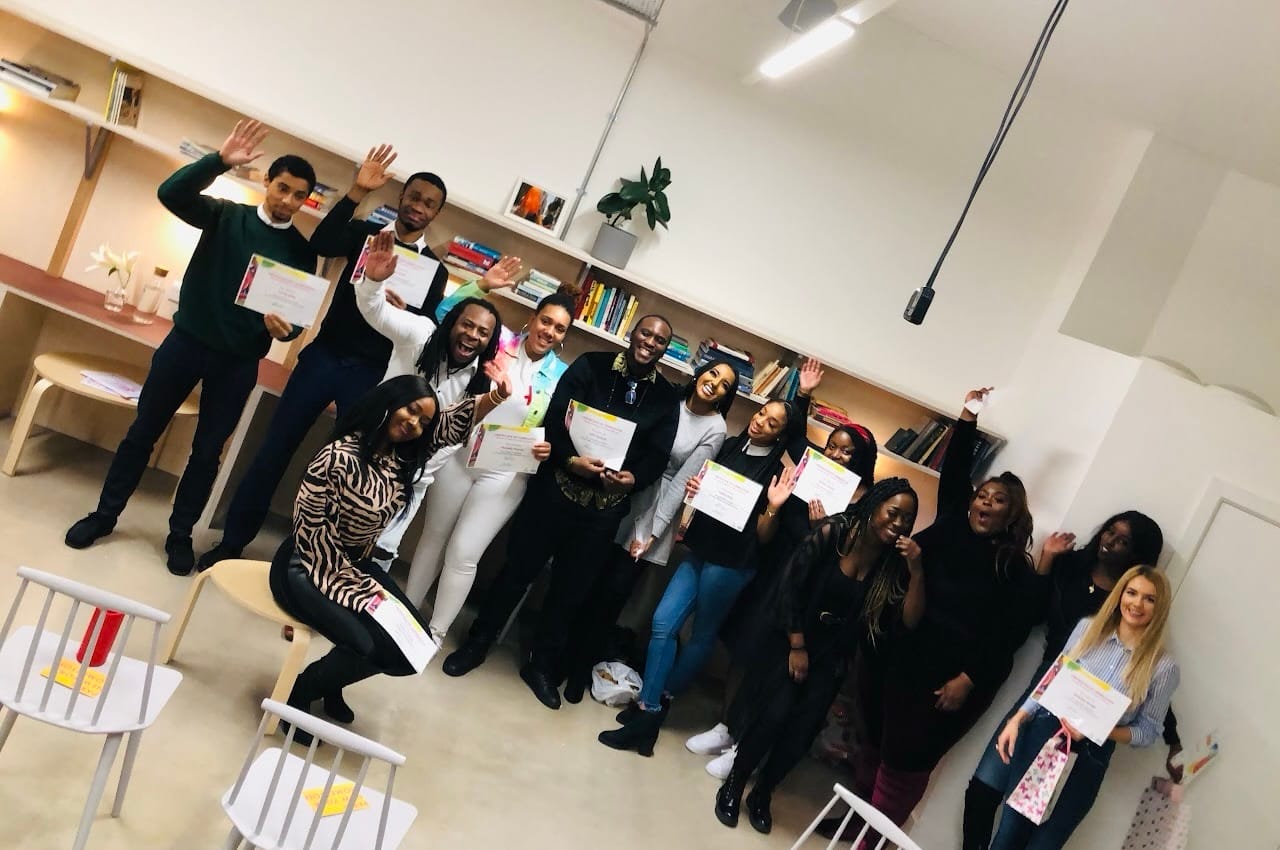
Deliberately opening in neighbourhoods, not city centres. Back in November 2020, Hannah gave space to Urban MBA to run their 12-week programme at the very first ARC Club in Hackney, even providing memberships to the graduates. That is long-term civic infrastructure.
Michael Korn (Blue Garage)
Balancing the hardware of an innovation hub with the software of community. Blue Garage hosted our very first in-person Unreasonable Connection event in February 2026, where we hired the Urban MBA team to run the day and organise the food.
Karen Tait (The Residence Coworking)
Proving that community isn't a marketing line by exclusively using local businesses for cleaning products and supplies, while offering discounted space to local charities.
Mathias Vanluchene (Locus Workspace)
Doing room exchanges with the local theatre—they use his meeting room for acting classes at night; he uses their theatre for yoga during the day.
Rose Radtke
Building open-armed spaces in Deptford curated specifically for parents, carers, and the next generation.
(Side note: Every single person mentioned here has shared their experience on the Coworking Values podcast.)
This is the work.
👉 Click here to read the full thread and add your voice to the conversation
Reclaiming hospitality for the 95%
A lot of you have been to one of the events in person that Jon Alexander, author of Citizens, did with us.
We talked about his core philosophy: "find the others."
Finding the others isn't just about networking.
It's about bringing world-class hospitality back to the microbusinesses where it belongs, rather than letting the corporate real estate world hijack it.
I first met Julie Firth and Sonya Whittam from Story22 back in February 2020, right before the world locked down.
We were in Nashville, training together to become StoryBrand guides with Donald Miller and J.J. Peterson.
We've been connected and in the trenches together ever since.
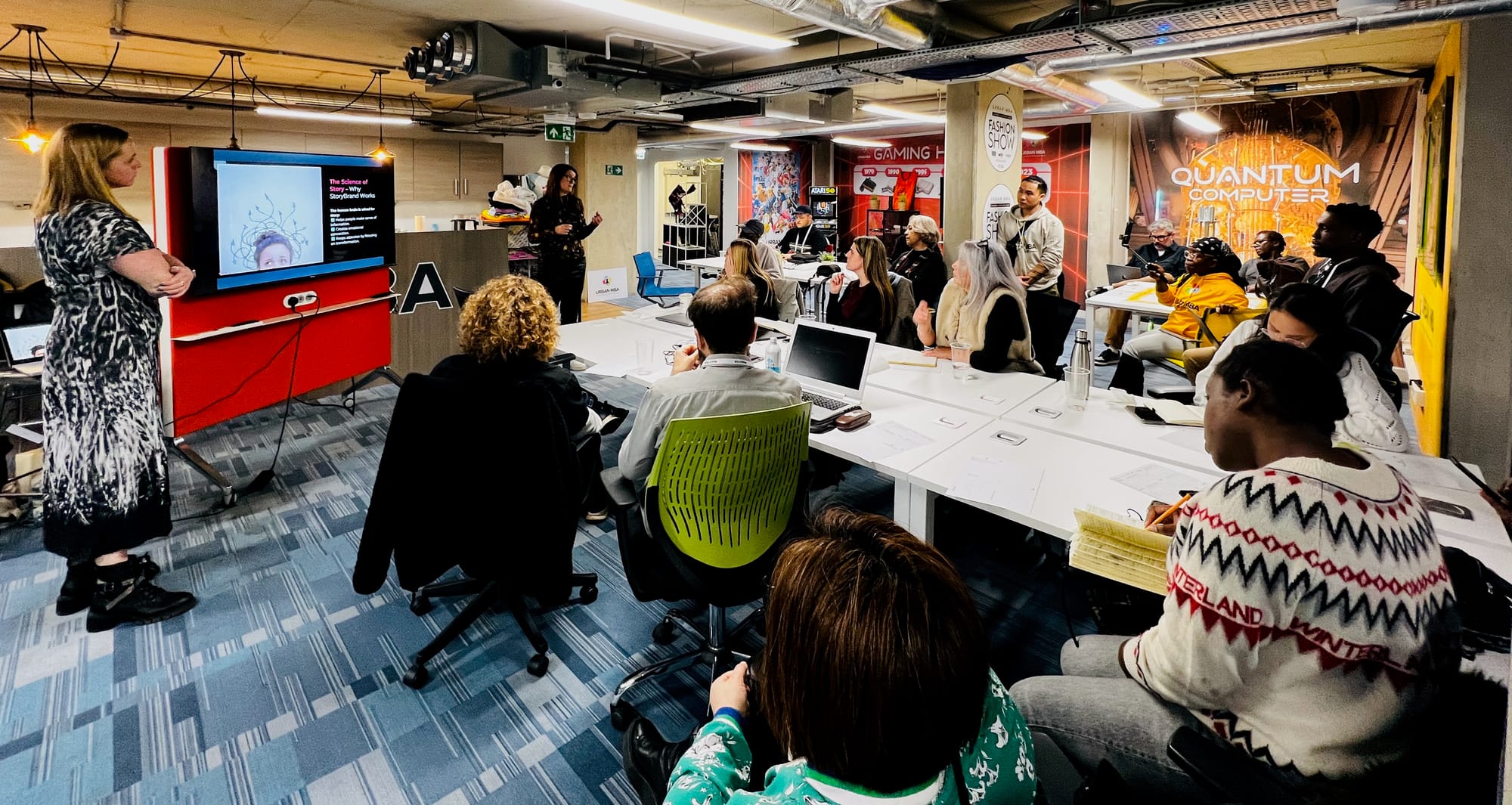
In February 2025, right after Julie and Sonya trained directly with Will Guidara, author of Unreasonable Hospitality, they came to Urban MBA to run a taster workshop specifically for the London Coworking Assembly.
Now, they are bringing the full experience to London.
This June, Julie and Sonya are hosting a live StoryBrand and Unreasonable Hospitality workshop in Holborn.
The credibility here is unmatched: J.J. Peterson—who literally wrote the training guide with Will Guidara—is flying over to teach it with Sonya and Julie.
We need to learn this level of hospitality not to act like a fancy hotel, but because making a local freelancer feel fiercely seen and valued is our biggest advantage over a lifeless corporate flex-space.
I want our coworking community in that room.
I will be there taking part in the workshop, and by the time you read this, he'll will have got the code, so hit reply to get it and book your place.
Final actions - find the others!
We are building a permanent infrastructure for neighbourhood conversations.
If you want to take immediate action this week:
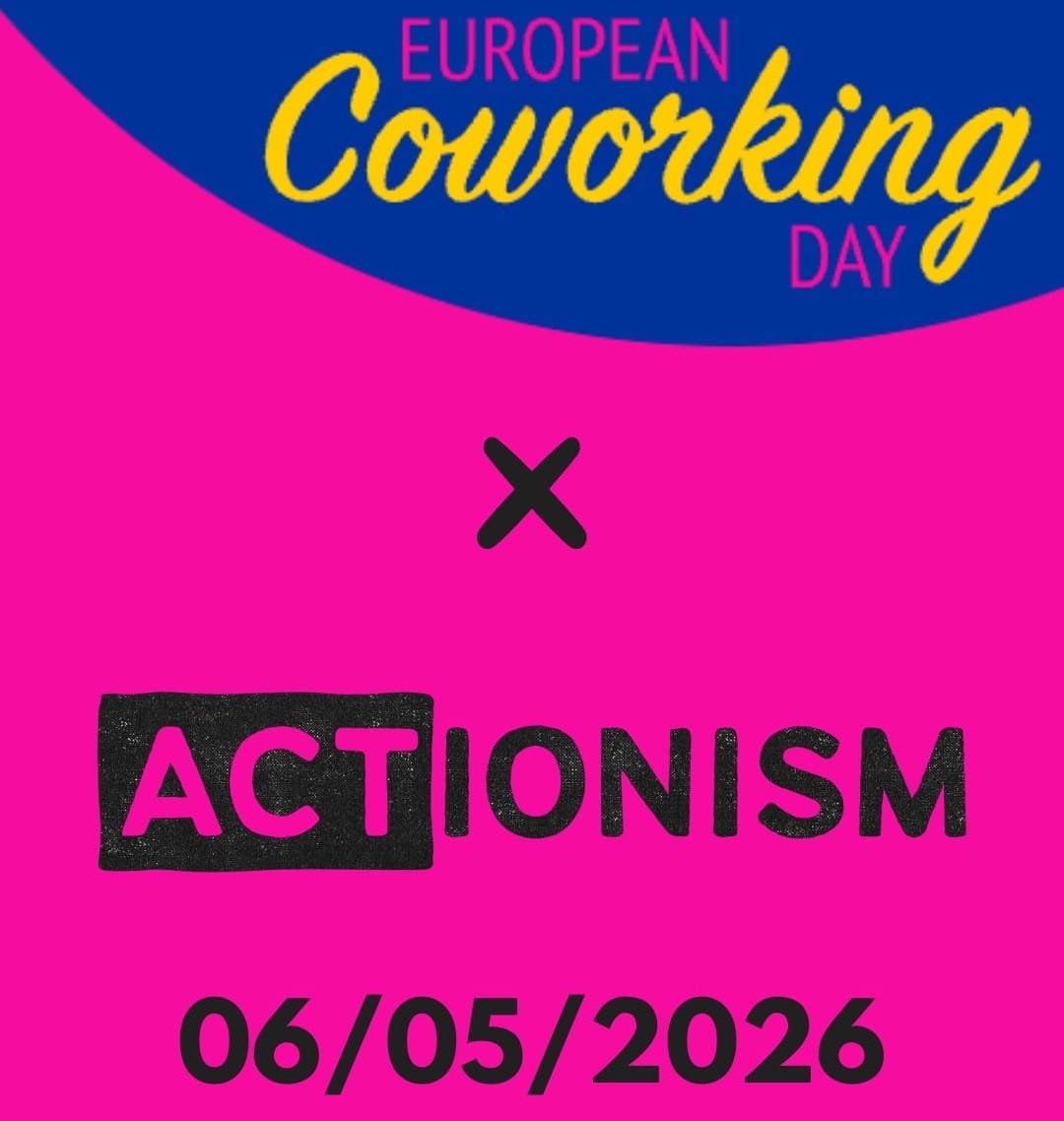
1. Host an ACTionism Screening (May 6th)
Independent spaces like ARC Club, Yonder, Space4, Oru, and Patch are hosting screenings for European Coworking Day.
It's a brilliant, low-barrier way to get people in the same room and anchor your space in the community.
You can host a screening for:
- 5 people
- 15 people
- 50 people
- 500 people.
It's the conversation that you have as a result of doing that that matters.
👉 Everything you need to host a screening is in this article
If you need help getting it set up, just hit reply.
2. The Coworking Alliance Summit
The consumer model means companies will quickly sponsor commercial events but are less inclined to support grassroots projects.
Because these are community-led projects, they don't get funded at the level bigger conferences get.
That is exactly why it's harder, but so much more important, that we get involved.
Getting together at a neighbourhood level is essential, but the people organising groups like the London Coworking Assembly getting together globally is essential too.
It's a cycle that fuels us all.
👉 Find out more about the Summit here
3. Pro-Tip: Change Your Scenery
If you need to get out of your own building this week to do some deep work, go book a desk at Urban MBA right here:
👉 Book a desk at the Urban MBA Tech Hub
👉 Book the meeting room or podcast studio here
The corporate operators can fight over the 1%.
We have a neighbourhood to build.
join us at Space4 in Finsbury Park on May the 19th
PS — The "start cooking, the recipe will follow" line is from Brian Eno. He said it in a conversation with Yanis Varoufakis about acting as if the future you want is already happening. That's the energy we're bringing to May 19th.
Written by
What's Next?
The Golden Thread: Why Unreasonable Hospitality Needs a Story First with Sonya & Julie
Why your coworking space needs a Story before it can practise hospitality "Marketing makes these promises and service delivers that. So for us, StoryBrand and unreasonable hospitality, really work together hand in glove. And StoryBrand is really about thinking about how you communicate that you care to your customers. And the unreasonable hospitality side of things is how you prove it." — Sonya Whittam Sonya Whittam and Julie Firth run Story22, a customer-centric marketing agency base
The neighbourhood is a site of freedom (why community won't save us)
When I was a kid, I loved Christmas time. We would visit my grandparents in Bristol and end up wandering around the massive department stores, surrounded by the hum of cheesy festive music. Walk into the old abandoned Debenhams in Bristol today and listen to the noise. It is the harsh, percussive clatter of urethane skateboard wheels slamming into concrete. It is the heavy bass line of a live band tuning up for a Friday night gig. It is the chaotic, overlapping hum of a Sunday market, where a
Start With the Building, Miss the Person — It Happened Again This Week
I spent this week watching the same argument break out in different places, with different people, in completely different conversations. None of them planned it. * Caleb Parker published a manifesto for high street coworking. * Suzanne Murdock sent her monthly newsletter from The Hub Newry. * Parisa Wright kept resharing her Hope Hub episode. And * Ann-Marie Kinlock and Anna Chuicharoen finally opened KindHaus in Hackney after three years of hurdles, setbacks, and proving that a space wher
Start Cooking. The Recipe Will Follow.
We're moving everything up a gear. At the last Unreasonable Connection Live in Lewisham, you told us the groups were too random and the curation could be tighter. You were right. 75% of you left with more momentum than you arrived with. The room worked. The curation didn't. The people in the room, the conversations that happen, and how those conversations are curated—it all matters deeply. That's why on May 19th, Tilley Harris and the team from Akou are collaborating with us to facilitate