You're not in the property business. Five of us said it this week — nobody planned it.
I spent this week reading what people in our community have been writing.
Karen Tait had a terrible Tuesday at The Residence in Bishop's Stortford.
Stacey Sheppard's space was on BBC Spotlight.
Felicia Fai and Philip Tomlinson's report on the value of local growth hubs.
James Panepinto wrote about weaponising community.
Bernie (that me!) published LinkedIn Show Notes#55.
They weren't in the same room. They weren't on the same call. They are all pointing at the same thing.
Karen Tait had a terrible Tuesday.
Breakfast didn't show. The fridge tripped the electrics. Women in Business meeting about to start, and her new carpet tiles were somewhere in Belgium. She wrote about it anyway:
"What nobody tells you when you open a premium coworking space is that you're not really in the property business. You're in the people business."
Twenty-five comments came back — not sympathy, solidarity.
Stacey Sheppard wrote: "The new booking system, the new internet provider and the printer are causing me no end of issues."
Ben Newton wrote: "'The gap between brand promise and a terrible Tuesday' — that's the most honest description of this job I've read in a while."
Carrie Gilbertson wrote: "Nobody remembers the problem. They remember how you dealt with it."
Karen had the worst Tuesday and her community showed up in the comments. That is the people business. That is the product.
 Karen Tait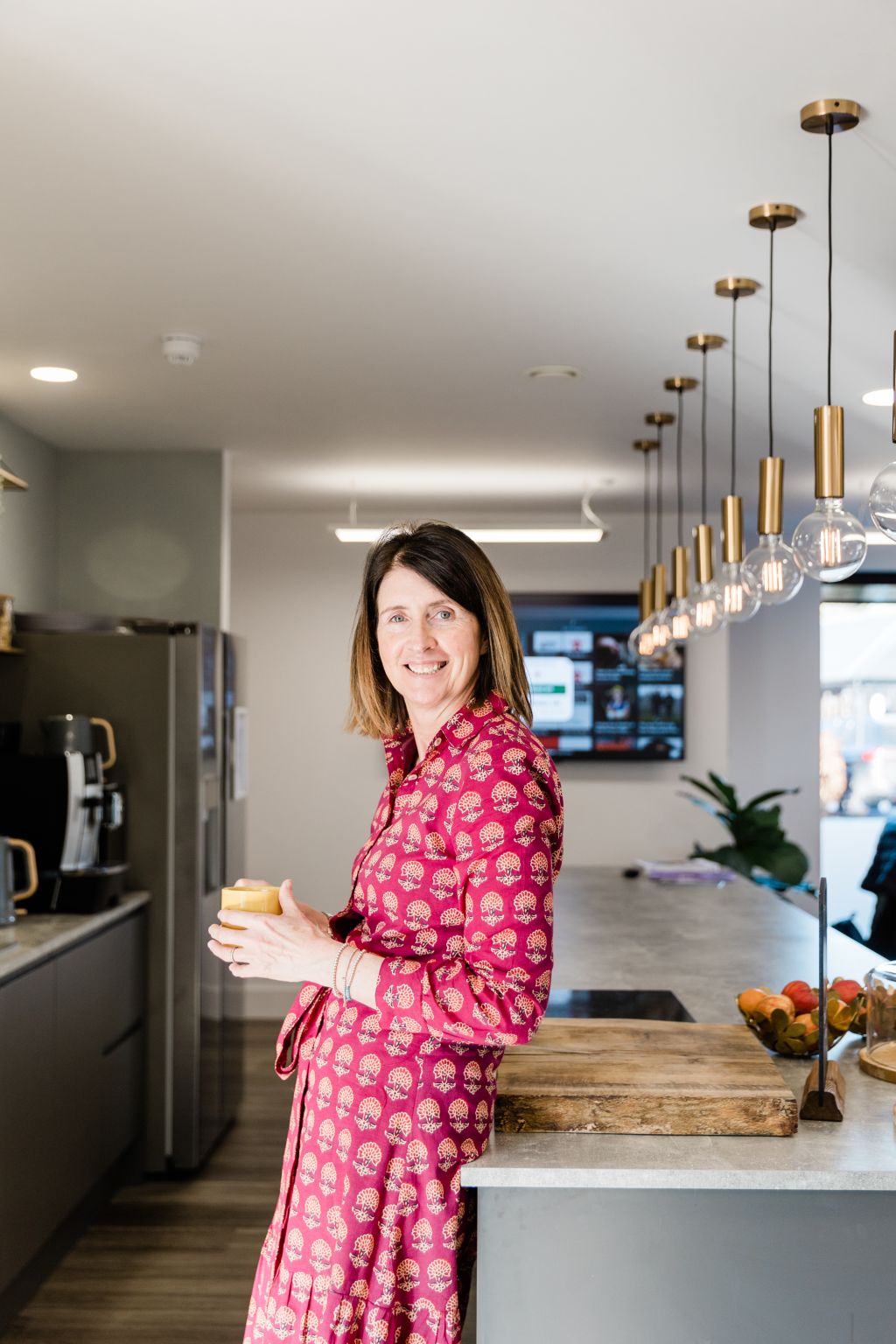
Stacey Sheppard's space The Tribe was on BBC Spotlight during Loneliness Awareness Week.
A women-only coworking space in Berry Pomeroy. The only coworking space in Europe in a rural location for women, as the BBC put it. She didn't talk about desks on camera. Her members talked about what actually happens:
"Working in connection with other people who are working is really powerful for your well-being, for my well-being, really powerful for my business as well."
The segment closed by noting that many work hubs are supported by Devon County Council with the aim of improving the rural economies. Devon has 24 work hubs across the county and a council that funds them — that is not the norm in most places.
The Tribe was on BBC Spotlight
If you want to see what commitment to coworking as civic infrastructure looks like at national scale, look at Connected Hubs Ireland.
414 workspaces across the island, all on one app. You can find a place to work up a hill in Donegal or in the middle of Dublin.
No messing around. That is what happens when a government treats coworking as infrastructure instead of commercial property.
Stacey wrote on LinkedIn what should be on a billboard outside every council office: "Connection is not a nice-to-have for entrepreneurs. It is infrastructure."
A 2025 YouGov survey found 44% of UK small business owners have felt lonely or isolated running their business. That's the data. The Tribe is the answer.
 Pete Maclure
Felicia Fai and Philip Tomlinson at the University of Bath published the evidence.
Their Innovation & Research Caucus (IRC) report, published at the end of May 2026 studied independent coworking spaces and found exactly what Karen and Stacey are proving in real time.
Coworking spaces function as informal business support for people who would never walk into a formal scheme.
They bridge the gap between entrepreneurs and Local Growth Hubs.
They work as social infrastructure — particularly in peripheral areas where businesses are geographically dispersed.
The spaces are doing the work. The report has the peer-reviewed proof. The question is who's reading it.
 Innovation & Research Caucus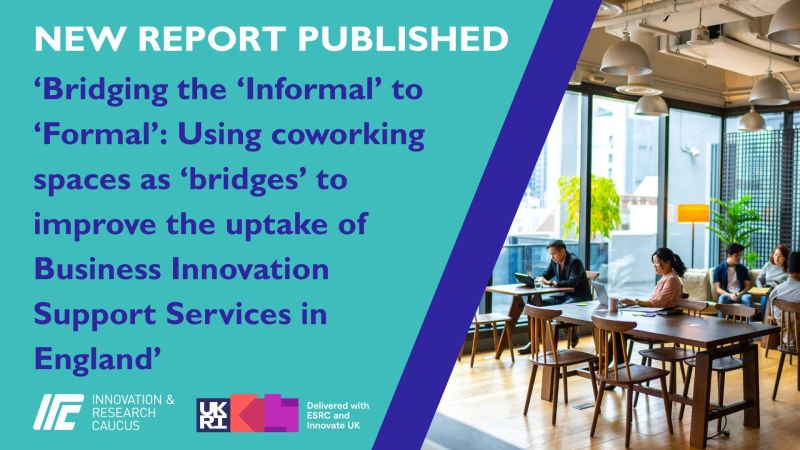
James Panepinto on 'weaponising community'
James Panepinto recently wrote a piece about "weaponising community" — treating the connections in our spaces as a hard commercial asset and a defensible moat against competitors.
It takes actual effort to write your thoughts down and put them on the internet. James does the work, and he is a passionate advocate for our industry.
I want you to read it and pay attention to your gut reaction.
- Does his framing finally give us the sharp business case we need to keep the doors open?
- Or does treating community as a retention metric completely miss the point of what we are actually building?
 James Panepinto
James asked a panel about weaponising community.
Loneliness Awareness Week. Four perspectives the main coworking conversation skips past.
And this week I published LinkedIn Show Notes #55 — four people I know: Thor, Sangeeta, Amy, Lisa. Four completely different angles on the same thing. Loneliness is a structural deficit. The spaces we build either address it or deepen it.
 Bernie J Mitchell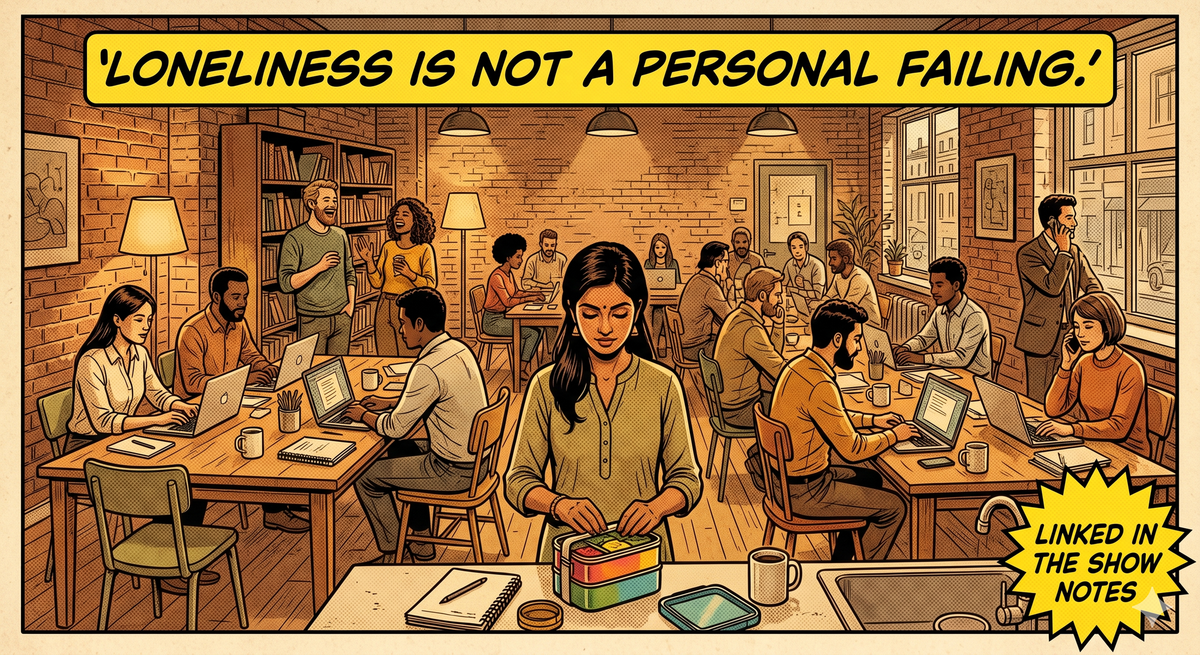
What we're thinking about next:
Coworking is infrastructure — social, economic, mental health, civic.
- The people running these spaces know it. The academics have the evidence.
- Devon County Council funds it.
- Ireland built it at national scale.
- And most of the UK still sees "a business selling desks and and internet connection."
The question underneath all of this is the one I want to dig into next week: if community is the product, how do you prove it to someone who only sees a building?
What You Can Do This Week
- Read Karen's post and the comments. Not the likes. The comments. That's what the people business looks like in practice. Then ask yourself: on your worst Tuesday, who held the space together? Name them. Thank them.
- Read Stacey's post, watch the BBC segment, and look at Connected Hubs Ireland. Bookmark the 44% stat. Use it the next time you talk to your council. Devon County Council is already funding work hubs. Ireland built a national network. Your council can do this too.
- Download Felicia and Phil's IRC report. Find one finding that describes your space. Put it in your next grant application, your next MP letter, your next impact report. The academic evidence is published and peer-reviewed. Use it.
From the People to the Policy
Last week #54 showed what happens when one operator — Roland Stanley at Dragon Coworking in Rochester — invited his MP in, walked her round the space, and six months later she stood up at Prime Minister's Questions and made Keir Starmer answer a question about coworking.
There are 650 Members of Parliament. Most of them think a coworking space is just a room with desks.
They don't know about Karen's terrible Tuesday, and the 25 people who showed up in the comments.
They don't know about Stacey's space in a village in Devon, on the BBC, funded by the county council.
They don't know the academic evidence exists.
If you run a coworking space and haven't invited your MP to visit yet, this week is a good time to send the email. FlexSA has a template.
- Jane Sartin shared the FlexSA MP Engagement Toolkit here.
But a local story beats a copied letter every time. Tell them about the member who told you your space was the first place they spoke to another human that day.
One operator. One invitation. One MP. Roland proved it works.
Coworking Community Builder — back the work
In May we decided to take London Coworking Assembly
and Coworking Values Podcast media 100% reader-funded.
It keeps the podcast ad free, funds the research, bankrolls the Unreasonable Connection live events, pays Urban MBA students to work on our projects, and sends 10% to European Coworking Assembly projects.
So far, everyone backing the work is an owner or operator. People inside the industry, putting money behind the story being told properly.
✅ Coworking Community Builder. £100/year.
- 100% reader-funded.
- No adverts disguised as content.
- No sponsors, no gimmicks.
✅ If you're in a position to support, please do.
🙏 Recent supporters include:
Karen Tait - Residence Coworking. Jason Smith Gather Round Bristol.
Peter Block - Author of 'Community - The Art Of Belonging',
Freddie Fforde - Patch. Yann Heurtaux - La Serre Lausanne
Written by
What's Next?
Start With the Building, Miss the Person — It Happened Again This Week
I spent this week watching the same argument break out in different places, with different people, in completely different conversations. None of them planned it. * Caleb Parker published a manifesto for high street coworking. * Suzanne Murdock sent her monthly newsletter from The Hub Newry. * Parisa Wright kept resharing her Hope Hub episode. And * Ann-Marie Kinlock and Anna Chuicharoen finally opened KindHaus in Hackney after three years of hurdles, setbacks, and proving that a space wher
Loneliness Awareness Week. Four perspectives the main coworking conversation skips past.
Thor. Sangeeta. Amy. Lisa. Four people I know. All of them walked into rooms that weren't built for them. ✅ Become a Founding Coworking Community Builder Back the work Before I started freelancing, I'd always worked in hospitality. Kitchens, bars, clubs. From five-star hotels in Mayfair to Pizza Hut in Lakeside Shopping Centre — I did it all. There was formal training, of course, but where you actually learned was side by side with other people. You'd overhear how someone
Start With the Building, Miss the Person — It Happened Again This Week
I spent this week watching the same argument break out in different places, with different people, in completely different conversations. None of them planned it. * Caleb Parker published a manifesto for high street coworking. * Suzanne Murdock sent her monthly newsletter from The Hub Newry. * Parisa Wright kept resharing her Hope Hub episode. And * Ann-Marie Kinlock and Anna Chuicharoen finally opened KindHaus in Hackney after three years of hurdles, setbacks, and proving that a space wher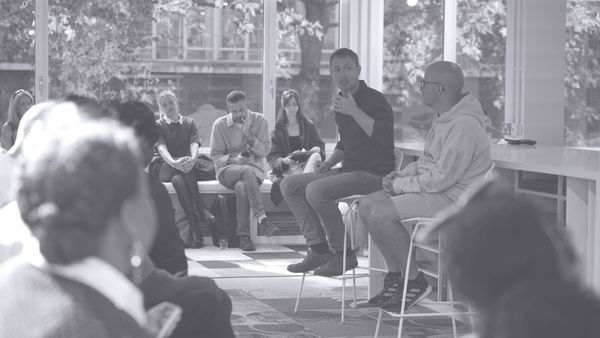
Start Cooking. The Recipe Will Follow.
We're moving everything up a gear. At the last Unreasonable Connection Live in Lewisham, you told us the groups were too random and the curation could be tighter. You were right. 75% of you left with more momentum than you arrived with. The room worked. The curation didn't. The people in the room, the conversations that happen, and how those conversations are curated—it all matters deeply. That's why on May 19th, Tilley Harris and the team from Akou are collaborating with us to facilitate