Why AI Can't Feel the Room: Practical Operations with Carlos Almansa
"The AI cannot feel the space. It can't feel the dynamics or the vibe. But it can free up time for you to talk to your members, to have a coffee with them, to understand and to read people."
— Carlos Almansa Ballesteros
Episode Summary
Most conversations about AI in coworking are either evangelical or dismissive. Carlos Almansa Ballesteros, co-founder of Nexudus and author of the Coworkings AI newsletter, isn't interested in either.
He's been building software for this industry for 13 years. That gives him a specific kind of authority: not hype, not theory, but a long, sober look at what operators actually do and where they keep getting stuck.
His answer to AI is the same one he'd give about any tool. Start with the thing you're already doing. The Wi-Fi question you answer forty times a week?
That's where you start. Not with a grand automation strategy — with the inbox that's eating your afternoon.
Then there's the line you don't cross. The first 60–90 days of a new membership. The kitchen conversation. The introduction on day one. Those stay human. Full stop. Because when someone cancels after six weeks, it's rarely the software that failed them.
No frameworks. No magic. Just what actually works.
Timeline Highlights
00:02 — Bernie sets the episode up: practical AI, not rocket science
01:16 — Carlos introduces himself: Nexudus co-founder, Coworkings AI newsletter author
03:02 — Carlos's first coworking space, and why he's always joined one when moving to a new city
06:41 — The first 60–90 days: how a community manager makes or breaks early membership
09:09 — The London Coworking Assembly AI survey: most people use it for social media captions and don't go further
10:15 — Why the Coworkings AI newsletter exists: cutting through noise to find usable signals for operators
12:54 — The solo operator and AI: actually easier to start when you know all your own processes
15:03 — Practical use case one: automating repetitive help desk replies (Wi-Fi, printing, FAQs)
16:21 — Practical use case two: surfacing data patterns you can't see manually
17:53 — The soul-of-the-space question: automation versus presence
19:36 — Sentiment analysis: feeding community messages into AI to understand the pulse of a space
20:52 — Context is everything: how to give an AI model what it needs to work properly
23:56 — What goes wrong: people who automate everything at once and erode trust
25:21 — The human-in-the-loop rule: never hand your reputation to an unmonitored system
25:56 — Transparency: be honest about AI, always offer a route to a real person
28:42 — Can you automate community? Carlos on what AI can and cannot do in a 300-person space
30:05 — The kitchen conversation: serendipity as the baseline unit of community
31:09 — What community actually is, from random coffee chats to self-organising hackathons
33:47 — Mobile work and the future floor plan: what happens when nobody needs a desk?
Lesson 1: Only Take AI to Something You're Already Doing
The most useful thing Carlos said in the whole conversation is also the least glamorous.
Before you touch any tool, review your processes. Do you actually know them? When you're a solo operator running a space from first enquiry to member induction, you probably do. That's an advantage.
The mistake Carlos sees repeatedly is that people want to automate first and understand later. You end up with ten tools stacked on top of a process that was working fine.
Start somewhere specific. The help desk is a good example.
The same questions come in every week
- How do I connect to the Wi-Fi?
- How do I print?
- Where's the code for the meeting room?
That's exactly the kind of repetitive, low-stakes task where AI earns its place. Automate the reply. Free yourself for the conversation that actually matters.
Carlos, on the starting point:
"The best way to start with AI is to start with something that you are already doing, not trying to implement a new process or a new tool into something that you are not familiar with."
Here is how I look at it: don't ask AI to do something you don't already know how to do. I wouldn't go to AI and say, "Make me a hit record." I go to AI and say, "How do I make a podcast intro?"
Lesson 2: The First 60–90 Days Are on You, Not the Software
When a new member joins, the community manager is doing something no platform can replicate.
They're introducing names. They're reading the room. They're noticing who eats lunch alone and who lights up when someone mentions their industry. Carlos joined coworking spaces in South Spain, Madrid, and London. Every time, the spaces that made it work did the same thing: they put a person in the room who paid attention.
Shared lunches in Madrid led to basketball at weekends. Hot desking in London broke the ice faster than any directory ever could.
The first 60–90 days determine whether someone stays. Carlos is clear on this. And he's equally clear that no amount of automated onboarding email replaces what happens when you walk someone through the kitchen on day one and explain — face to face — how to clean up after yourself.
That small thing sets the tone. It says: " This is a shared space. We're in it together."
AI can surface patterns. It can flag a member who hasn't engaged in three weeks. It cannot do the introduction.
Lesson 3: Your Community's Messages Are Data — Use Them
Members tell you how they're feeling all the time. The problem is they're doing it across email, WhatsApp, Slack, and every other channel simultaneously.
Some of it is friction: "the Wi-Fi's broken again." Some of it is gold: "that event last week genuinely changed something for me." Most of it sits in inboxes, unanalysed, until the member quietly cancels their membership.
Carlos's newsletter recently covered this directly. You can feed your community's communications into an AI, build a sentiment analysis across those messages, and surface patterns that would take weeks to spot manually. Who's frustrated? Who's energised? What topics keep coming up?
That's not automating the community. That's clearing the brush so you can see what's actually there.
Carlos:
"When you have a community of 200 or 300 people in your space, it's not easy to get to know everyone, to know where they are, how they're feeling. AI can help to surface issues and connect people.the But it cannot automate those relationships."
The distinction matters. AI as an insight layer, not as a relationship substitute.
Lesson 4: Never Let AI Go Solo — Your Reputation Is on the Line
Carlos is consistent on this throughout the episode. New technology, new risks. The worst thing you can do is automate a customer-facing process and walk away from it.
If AI is replying to enquiries through your website, you need to be watching those replies for months. The system might not be calibrated yet. One bad reply to a prospective member and you've made a first impression you can't undo.
The related point is transparency. When someone lands on a chat widget, don't dress the AI up with a human name — "Hi, I'm Brad." Carlos didn't say it exactly like that, but Bernie put it plainly: that's obvious, and it immediately damages they can. Be honest. Tell people they can get fast answers here and offer a clear path to a real person when they need one.
Some people just want the answer. Some need the conversation. Build for both.
Carlos:
"You're putting your reputation as a space, as an operator, on the line. You are delegating that into a system that might not be streamlined at the first place. So you need to refine, and you need a human in the loop, at least for a while."
Lesson 5: Give the AI Enough Context to Actually Be Useful
There's a reason most operators get frustrating results when they first try AI tools. They don't give the model enough to work with.
Carlos's analogy is the right one: giving context to an AI is like training a new team member on the front desk. You wouldn't put someone on reception without telling them what the space offers, what questions come up constantly, how you like to communicate with members, and ,what the common issues are with the systems. You'd walk them through it. AI needs the same treatment.
For community sentiment, that means feeding in your actual communications — the tickets, the WhatsApp messages, the emails. For website enquiries, it means giving the model your pricing, your offering, your tone of voice. The more specific the context, the more useful the output.
This is also why Carlos says solo operators may actually have an advantage. When one person runs everything, the processes live in one head. There's no scattered handover across a team, no misalignment. You know what you do and how you do it. Translating that into context for an AI is straightforward once you decide to sit down and do it.
Carlos:
"The context the AI needs — if we were to narrow it down — understanding the sentiment of the community based on the messages they sent, you need to feed the messages, all the communications you have, all the tickets the community raised with you. It's similar to training someone who joins your team at the front desk. Start with one use case. Write down the context for that specific thing. Test it. Refine it. Then move on."
Links & Resources
- Carlos Almansa Ballesteros on LinkedIn
- Coworkings AI newsletter
- Nexudus
- European Coworking Day
- LinkedIn Coworking Group
One More Thing
I've been in this industry long enough to have watched every wave of technology get positioned as the thing that would finally fix the community.
It doesn't. It can't.
Carlos builds software. Thirteen years of it. And the line I keep coming back to from this conversation is one of his most straightforward: the AI cannot feel the space. It's not a limitation he's apologising for. It's a description of reality.
What AI is good at is the grind. The same Wi-Fi question forty times a week. The member's message gets buried under twelve other messages on a Tuesday afternoon. The data patterns that would take you three months to see if you were looking at them manually. Handle that part well, and you get something back: time. Time to be on the floor. Time to notice who's struggling, who's about to leave, who's one good conversation away from their next thing.
That is the actual job.
The spaces I've seen get community right didn't have a community strategy. They had someone paying attention. They had a kitchen that people actually used. They had a culture where it was normal to ask a stranger what they were working on.
AI doesn't build that. But it can stop you from eating the time you'd otherwise spend on it.
That's the deal. Use it right.

Why coworking is measuring the wrong kind of friction (and what Amanda Perry’s terrible Tuesday tells us about sensory hell)
Amanda Perry walked into a coworking space in May, sat down at the one table her day pass entitled her to use, and discovered that while the booking was frictionless, the reality of the room was impossible. She found herself surrounded by people shouting on calls and eating food at their desks with nowhere else to go, an experience she described to her LinkedIn audience as "hell," a sentiment that was met with 157 comments from people who have lived through the same sensory exclusion. "Why in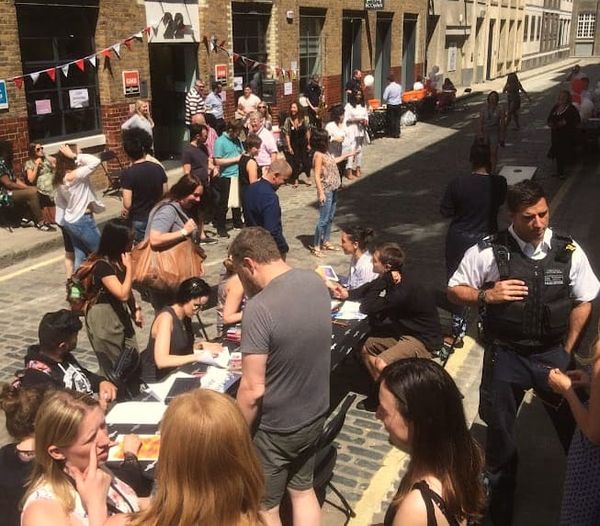
Coworking said out loud at Prime Minister's Questions
In this week's news: * Coworking gets raised at PMQs * Have your MP visit your space * Loneliness Awareness Week * Back the work as a Coworking Community Builder Coworking gets raised at PMQs This week at Prime Minister's Questions, Lauren Edwards MP made the case for coworking. She told the Chamber that flexible and coworking spaces regenerate town centres like hers in Rochester and Strood, bring people onto the high street, and support local economies. Then she put the Valuation Offi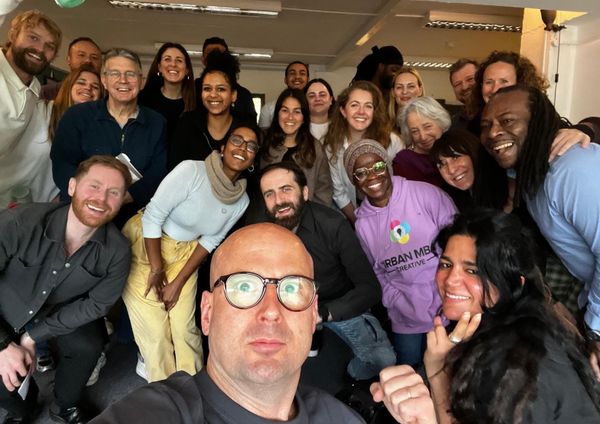
Patagonia vests, kombucha, and a punch in the throat.
Happy Friday London Coworking Community Builders! What happened at Space4 On Tuesday at Space4, I watched people's shoulders drop. Nobody had to explain what their job title meant. Nobody had to justify why they care so much about a building full of people who aren't even their employees. You sat down, looked at the person next to you, and started untangling the actual friction of running a workspace. All enabled by PONT, Nexudus, Coworks, Baseworx, Spacebring Welcome Gateand Cobot | Cowor
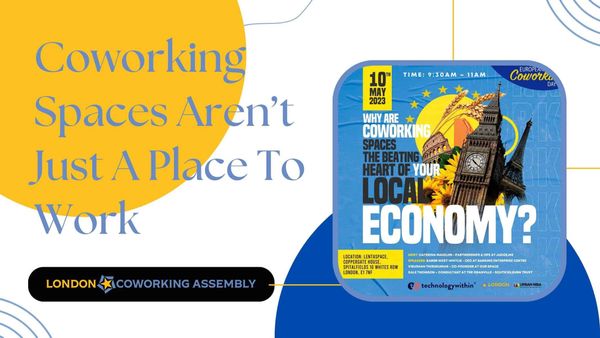
Coworking Spaces Aren’t Just A Place To Work
written by Aceil Haddad from MATT PR To celebrate #EuropeanCoWorkingDay on 10th May 2023, our friends at technologywithin hosted our monthly panel at LentaSpace at Coppergate House in Spitalfields to explore ‘Why are coworking spaces the beating heart of your local economy?’. We had an esteemed panel of experts – Karen West-Whylie (CEO of Barking Enterprise Centre - BEC), Vibushan Thirukumar (Co-Founder of Oru Space) and Dale Thomson (Consultant at The Granville – South Kilburn Trust and forme
What to Expect at Next Week’s Workspace Design Show 2023!
by: Workspace Design Show With only a few days until The Workspace Design Show returns to London’s Business Design Centre, on 27-28 February 2023, here is a taste of what to expect. The show brings together striking features, a thought-provoking programme of talks featuring a whole host of speakers, from developers to architects and their blue-chip clients, along with accomplished exhibitors showcasing the latest workplace interiors innovations. All of this incredible content aligns perfectly w
How Have The Recent Societal Disruptions Transformed The Coworking Model?
Don’t miss the Coworking Symposium 2022! Leading up to the Coworking Symposium 2022, a scholarly conference on coworking and flexible workspaces we sat down with event organiser, Marko Orel to discover all about the conference and what attendees can expect from this year’s event. Who is Marko Orel? Marko Orel is an organisational sociologist who works as an assistant professor and a head of the Centre for Workplace Research (CWER) at Prague University of Economics and Business. He specialise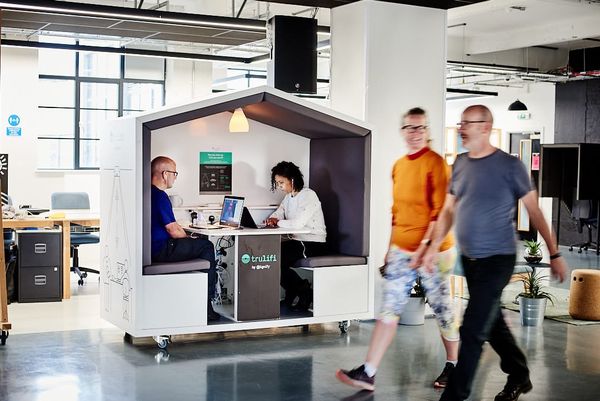
Three Labour MPs Told Their Own Government to Stop Taxing Coworking Spaces
This week three Labour MPs wrote in LabourList that the government should stop taxing the spaces where small businesses are building Britain's future. Josh Dean, Lauren Edwards and Perran Moon published the piece in their own party's publication. They name sole traders, freelancers and small business owners working hard to grow with little margin for error, and they describe flexible workspaces as the places where those people can build something of their own, close to home and rooted in their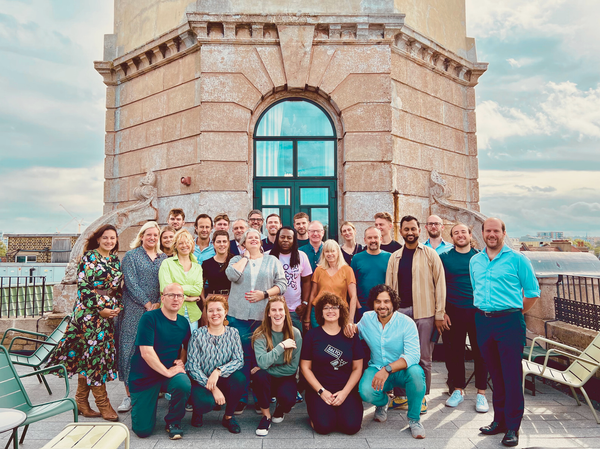
From Consumers to Citizens: Lessons in Community Ownership
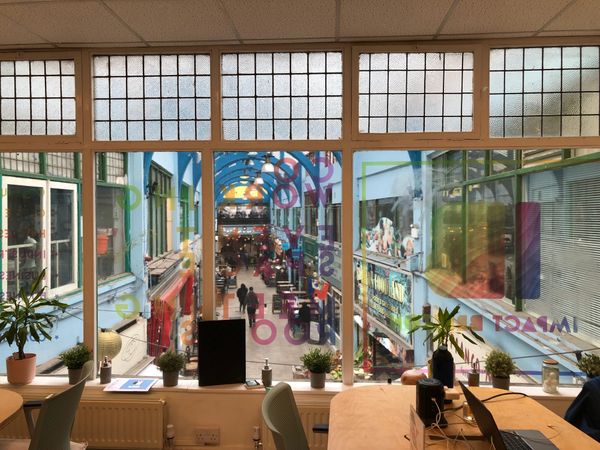
This week two communities shared how they are figuring out how to take back control of their own regeneration before private developers price them out. A pivotal moment for community ownership? Join the movement from Brixton to Frome · Zoom · LumaAs wealth is sucked upwards faster than ever, away from people and communities and into the hands of the world’s first Trillionaire and his peers, a South…Zahra Davidson Buy Back Brixton is trying to raise £50 million to bring Brixton Village and Mark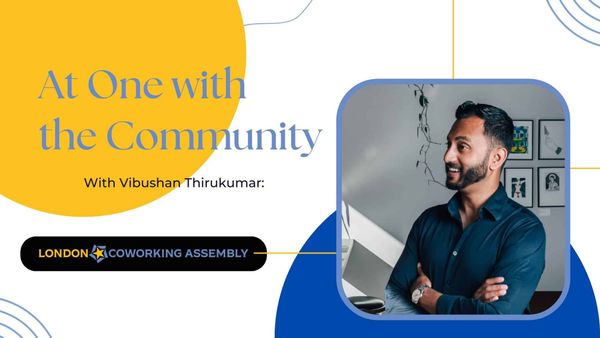
Vibushan Thirukumar: At One with the Community
Joining us at our virtual table is Vibushan Thirukumar, Chief Executive Officer & Co-Founder of Oru Space. Vibushan, fondly known as Vib, talks about the journey of Oru Space. According to him, Oru is a Tamil word that means “at one”. The background of Oru Opened in 2020, Oru is perfectly placed in Zone 3, southeast London, in a pleasant neighbourhood with beautiful scenery and parks. The first phase of Oru started with a cafe, and a few months before opening, the team started hearing about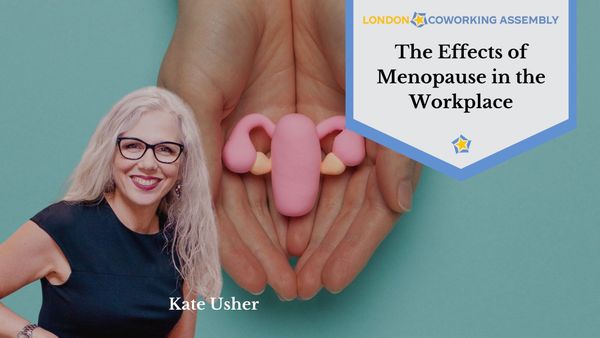
The Effects of Menopause in the Workplace
Kate Usher, a coach and change strategist, for all things menopause and what we need to know about it in the workplace. Kate has more than 15 years of coaching experience and specialises in menopause together with equality, diversity, and inclusion. She is a broadly recognised author on the effects of menopause in the workplace and you can read all about it in her book ‘Your Second Phase’. Menopause has been the butt of jokes for centuries and this is probably due to so little understanding of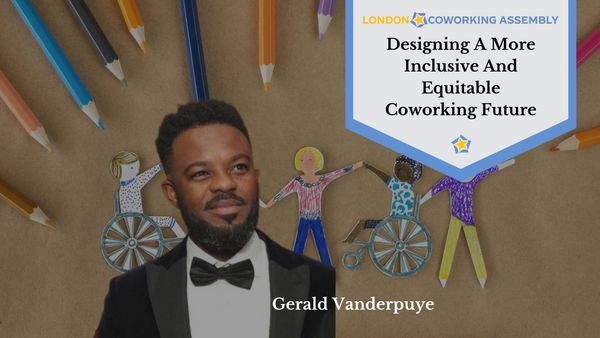
Designing A More Inclusive And Equitable Coworking Future
The London Coworking Assembly hosts a monthly breakfast where they make use of different locations. This creates an opportunity for independent coworking space owners in London, as well as for anyone who owns or works in a coworking space, and even community space managers. To help us understand what it is like to build a coworking space in London, Gerald Vanderpuye, startup founder of Impact Brixton, the only known large-scale black owned coworking space. He talks about how it grew to be a di
Virtual Office VS. Coworking Membership: Friend or Foe? (How to Make Them Play nice)
Right, here’s the big one. The question that gives London coworking operators sleepless nights: Does offering those cheap virtual offices actually pinch your valuable physical memberships? Or, could it be a clever way to draw businesses into your world, a sort of gateway drug to a full-blown desk? Loads of operators are terrified that a low-cost virtual presence will devalue their main offering, attract the wrong crowd, and suck up resources that should be spent looking after their dedicated
Beyond the Postbox: Building a Virtual Office Service That's Actually Valuable (and Compliant)
Right, so you’ve sidestepped the £30k illusion. Navigated (most of) the regulatory minefield. And faced the cold, hard truth about what this virtual office malarkey really costs. You get it now. Offering Virtual Office (VO) services in London isn’t the walk in the park, easy-money gig it’s often cracked up to be. So, what’s next? Pack it all in? Not so fast. The previous articles painted a pretty grim picture of the pitfalls, sure. But there is a way to offer a Virtual Office service th
Is Your London Coworking Space Bleeding Cash on Virtual Offices?
That's fifty quid a month virtual office client. Looks like easy money, doesn’t it? A nice little top-up to your coworking space’s income. Multiply that by, say, 50 clients, and you’re suddenly dreaming of a cool £30,000 dropping into your bank account each year. And for what? Just handling a bit of mail, right? It’s a tempting thought, especially when you’re battling London’s brutal market. But hang on a minute. Before you start mentally spending that cash, let’s ask a really uncomfortab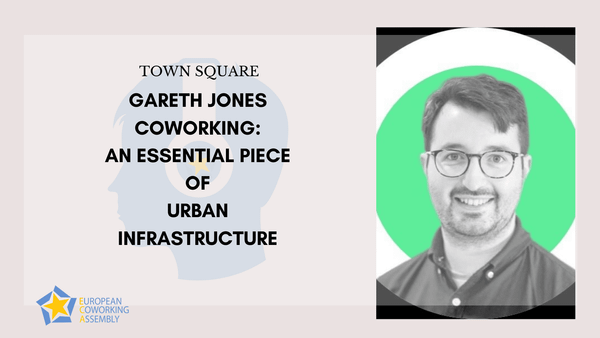
Gareth Jones - Coworking As An Essential Urban Infrastructure
powered by Sounder Hi Folks! Thanks for tuning in to the Coworking Values Podcast. This time our guest is Gareth Jones of Town Square. Gareth started his first Coworking Space in 2011 — Welsh Ice in Caerphilly in South Wales and now with Town Square where their mission is to create town centre meeting places, community spaces in town centres all across the UK. Gareth tells us all about how at first they didn't consider -Welsh Ice, a coworking space or what they’re doing as coworking. He also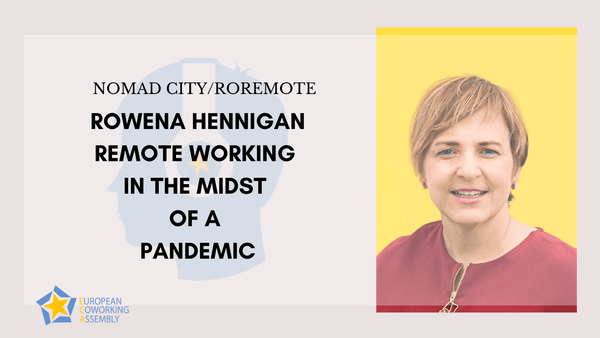
Rowena Hennigan – Remote Working in the Midst of a Pandemic
powered by Sounder Hello Folks! We’re another week in and it’s time for our weekly Coworking Values Podcast. For this episode’s guest, we have Rowena Hennigan of Nomad City. Rowena is a lecturer and project consultant based in Zaragoza, Spain and had been working remotely since 2007. Not only that, but she is also well known for co-founding and authoring the “Management Strategies” for Future of Work module in TU Dublin. She also ran an academic conference on the said subject last April
Black Lives Matter in Coworking too.
I recently wrote a post on my photography blog about Black Lives Matter in photography. It was something I’d wanted to do for a long time, but never had the guts to actually do it. I was too scared that I’d say the wrong thing, offend and rock a delicate boat. Then, with the media storm, I didn’t want to be someone else just jumping on a bandwagon. There are always reasons not to speak up, it would be easy to spend your life in silence. But I know now, through the bravery of so many others,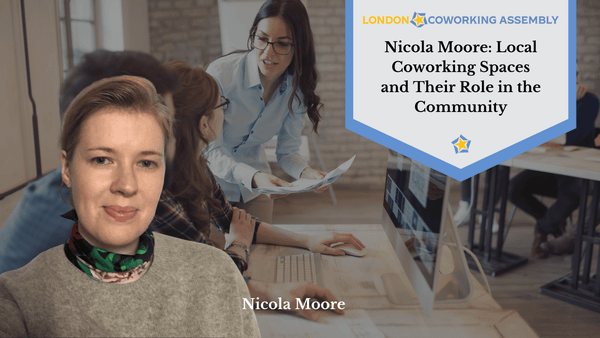
Nicola Moore: Local Coworking Spaces and Their Role in the Community
I had the pleasure of chatting with the talented and superb woman, Nicola Moore, who provides support to startups and SMEs. Nicola joined the British Library’s Business and IP Centre and Haringey Council to develop a cross-sector pilot programme called Start-ups in London Libraries. Nicola had the benefit of living locally prior to launching the programme (she has lived in the borough for nearly ten years). Being a resident and now business provider, Nicola has some insight into some of the nee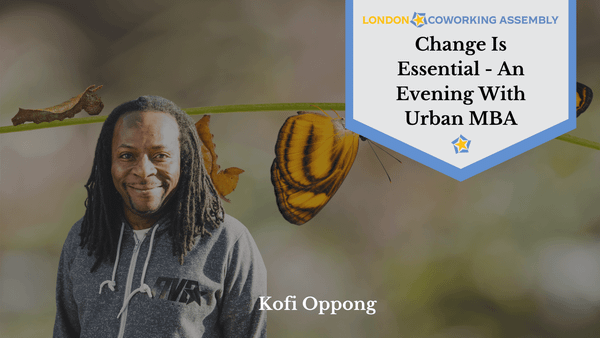
Change Is Essential - An Evening With Urban MBA.
On the 18th of June, the award-winning charity Urban MBA had an open day event at the fabulous coworking space at Beter Space in the Ray Farringdon London, where they highlighted organisations successes, future goals, and strategic objectives. Urban MBA reached the milestone where they felt ready to share their stories and accomplishments in helping marginalised and disengaged young adults by offering enterprise and employment skills and alternative teaching methods to create long-lasting change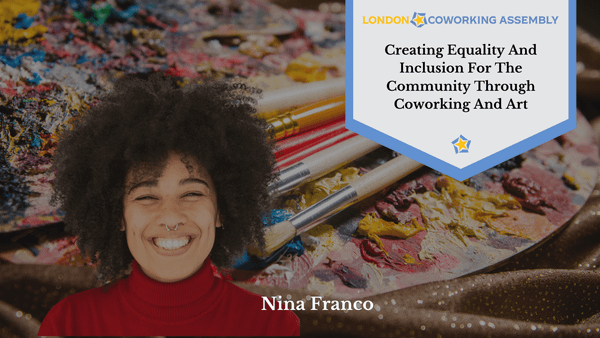
Creating Equality And Inclusion For The Community Through Coworking And Art
It is no longer surprising that my social network has expanded enormously since joining the coworking community, allowing me to have conversations with fellow females who are very passionate about art, workspaces, community and helping others. One example of such blissful interaction is with Nina Franco, whom I met at Creative Works. Nina is a political artist and activist and, needless to say, has a strong sense of identity and autonomy. We chatted about her journey and how her life’s mission lChris Marr
3 posts
No posts yet by this author.
Lucy McInally
2 posts
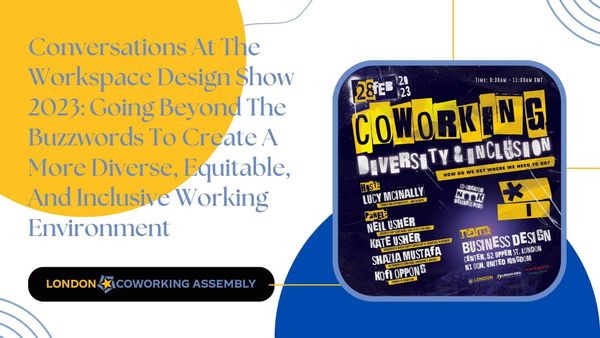
Conversations At The Workspace Design Show 2023: Going Beyond The Buzzwords To Create A More Diverse, Equitable, And Inclusive Working Environment
Diversity, equity, and inclusion, also known as DEI, are needed to create an empathetic, accepting, and progressive working environment. The workplace, however, has historically been a breeding ground for a culture of toxic masculinity which inhibits some members of marginalised communities, including women, members of the LGBTQ+ community, people of colour, neurodiverse, and people with disabilities, amongst others, from thriving in the workplace or in their professional careers. As part of th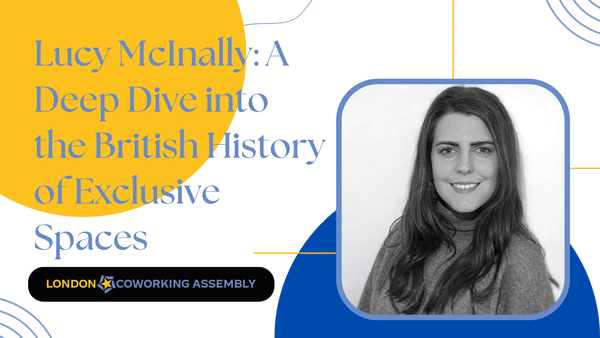
A Deep Dive into the British History of Exclusive Spaces
Author: Lucy McInally Kicking off 2023, the London Coworking breakfast show last month involved a brilliant workshop on the topic of fundamental human needs in a working environment in exclusive spaces. Host Mark Catchlove separated us into groups with a task to define what matters most in the workplace. Our group all agreed that feeling a sense of belonging is truly important. In a workspace, you either feel welcome or you don’t. You might be influenced by your coworkers, their personalitiesCoworking Values Podcast
2 posts
Gareth I. Jones
2 posts
No posts yet by this author.
Jaskiran Mangat
2 posts
No posts yet by this author.
Jen Lowthrop
1 post
No posts yet by this author.
Adrian Segar
1 post
No posts yet by this author.
Lisa Kissane
1 post
No posts yet by this author.
Lauren Hug
1 post
No posts yet by this author.
Caleb Parker
1 post
No posts yet by this author.
Samia Tossio
1 post
No posts yet by this author.
Fanny Marcoux
1 post
No posts yet by this author.
Lucy McInally
1 post
No posts yet by this author.
Suzanne Murdock
1 post
No posts yet by this author.
Dean Connell
1 post
No posts yet by this author.
Peter Block
1 post
No posts yet by this author.
Georgia
1 post
No posts yet by this author.
Mercedes Wilinda Bahame.
1 post